Departments of Hepatobiliary Surgery, The First Affiliated Hospital of Wenzhou Medical University, Wenzhou, China.
Departments of Nursing, The First Affiliated Hospital of Wenzhou Medical University, Wenzhou, China.
J Cell Mol Med. 2021 Feb;25(3):1468-1479. doi: 10.1111/jcmm.16235. Epub 2021 Jan 3.
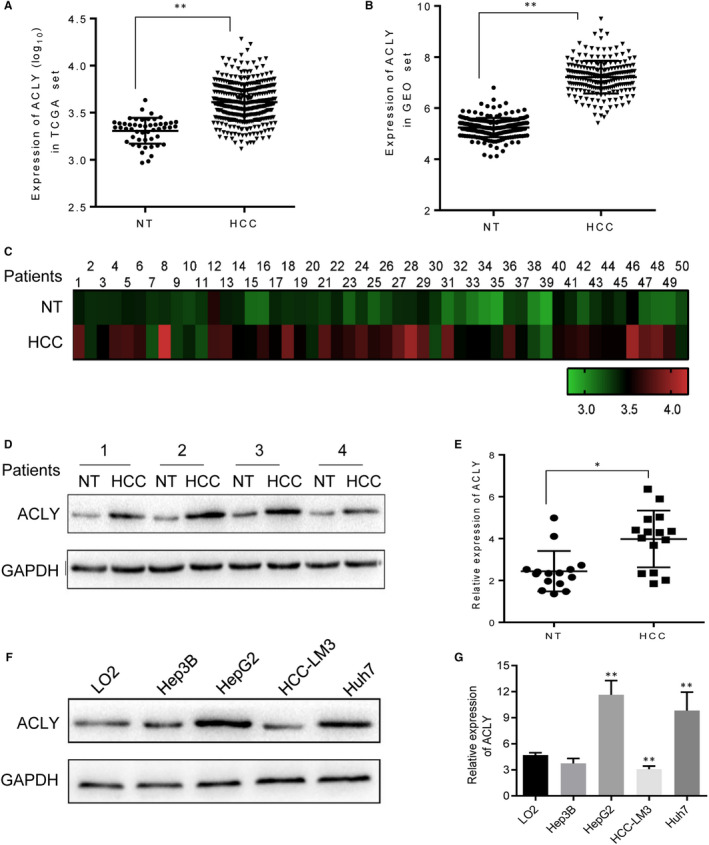
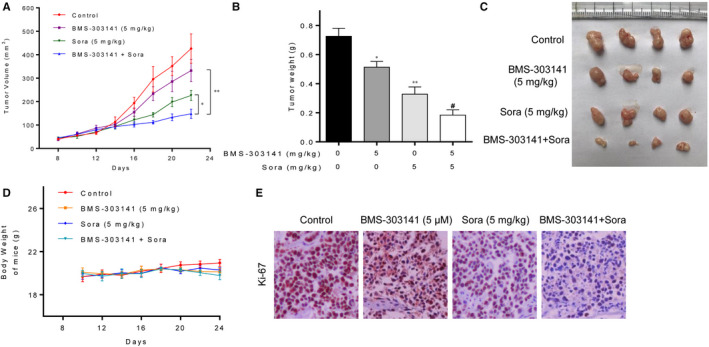
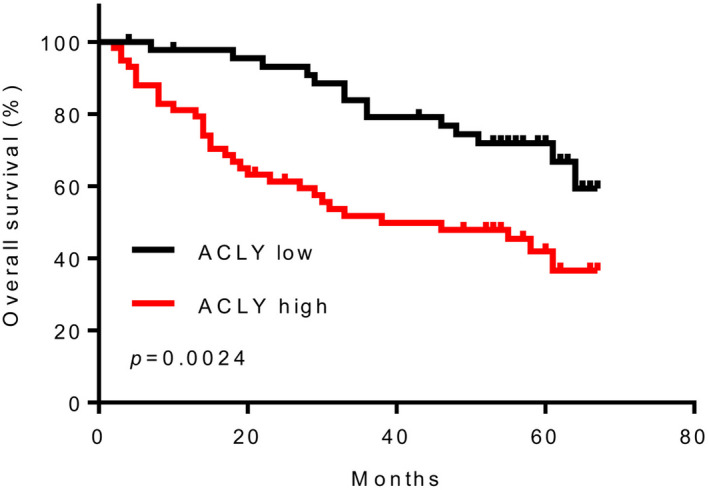
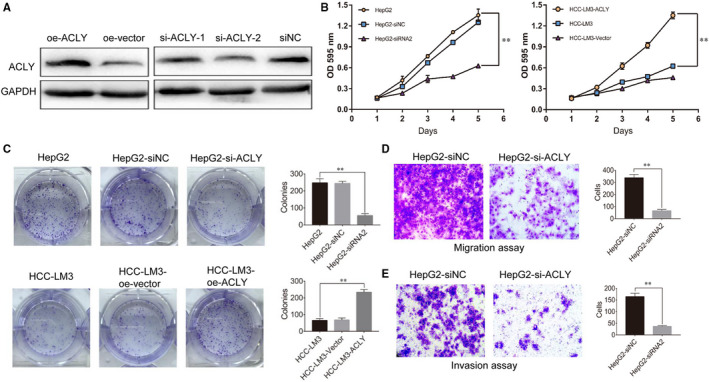
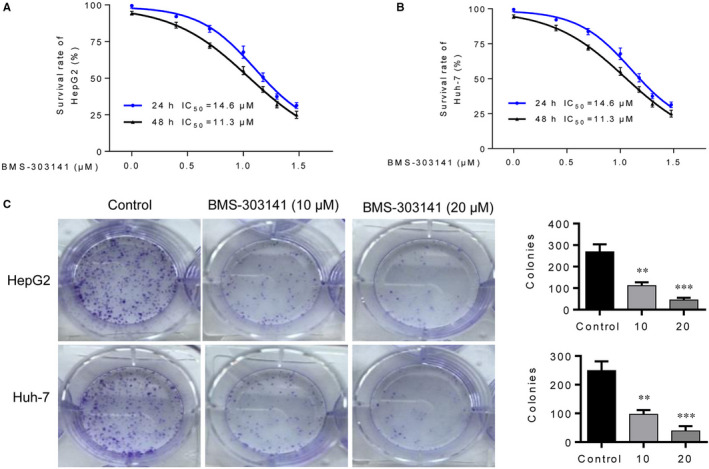
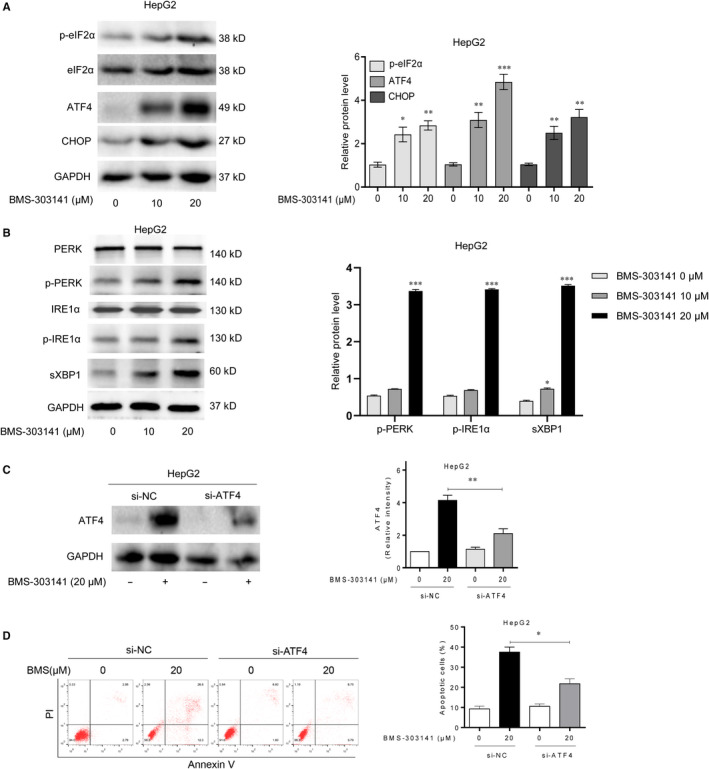
ATP citrate lyase (ACLY), a key enzyme in the metabolic reprogramming of many cancers, is widely expressed in various mammalian tissues. This study aimed to evaluate the effects and mechanisms of ACLY and its inhibitor BMS-303141 on hepatocellular carcinoma (HCC). In this study, ACLY was highly expressed in HCC tissues, especially in HepG2 and Huh7 cells, but was down-regulated in Hep3B and HCC-LM3 cells. Besides, ACLY knockdown inhibited HepG2 proliferation and clone formation, while opposite result was noticed in HCC-LM3 cells with ACLY overexpression. Moreover, ACLY knockdown impeded the migration and invasion abilities of HepG2 cells. Similarly, BMS-303141 suppressed HepG2 and Huh-7 cell proliferation. The p-eIF2α, ATF4, CHOP p-IRE1α, sXBP1 and p-PERK were activated in HepG2 cells stimulated by BMS-303141. In cells where ER stress was induced, ATF4 was involved in BMS-303141-mediated cell death procession, and ATF4 knockdown reduced HCC cell apoptosis stimulated by BMS-303141. In a mouse xenograft model, combined treatment with BMS-303141 and sorafenib reduced HepG2 tumour volume and weight. In addition, ACLY expression was associated with HCC metastasis and tumour-node-metastases staging. Survival analysis and Cox proportional hazards regression model showed that overall survival was lower in HCC patients with high ACLY expression; AFP level, TNM staging, tumour size and ACLY expression level were independent risk factors affecting their overall survival. In conclusion, ACLY might represent a promising target in which BMS-303141 could induce ER stress and activate p-eIF2α/ATF4/CHOP axis to promote apoptosis of HCC cells, and synergized with sorafenib to enhance the efficacy of HCC treatment.
三磷酸腺苷柠檬酸裂解酶(ACLY)是许多癌症代谢重编程的关键酶,广泛表达于各种哺乳动物组织中。本研究旨在评估 ACLY 及其抑制剂 BMS-303141 对肝癌(HCC)的作用和机制。在本研究中,ACLY 在 HCC 组织中高度表达,尤其是在 HepG2 和 Huh7 细胞中,但在 Hep3B 和 HCC-LM3 细胞中下调。此外,ACLY 敲低抑制了 HepG2 的增殖和克隆形成,而在 ACLY 过表达的 HCC-LM3 细胞中则观察到相反的结果。此外,ACLY 敲低抑制了 HepG2 细胞的迁移和侵袭能力。同样,BMS-303141 抑制了 HepG2 和 Huh-7 细胞的增殖。BMS-303141 刺激 HepG2 细胞中 p-eIF2α、ATF4、CHOP p-IRE1α、sXBP1 和 p-PERK 被激活。在 ER 应激诱导的细胞中,ATF4 参与了 BMS-303141 介导的细胞死亡过程,而 ATF4 敲低减少了 BMS-303141 刺激的 HCC 细胞凋亡。在小鼠异种移植模型中,BMS-303141 与索拉非尼联合治疗降低了 HepG2 肿瘤体积和重量。此外,ACLY 表达与 HCC 转移和肿瘤-淋巴结-转移分期有关。生存分析和 Cox 比例风险回归模型显示,ACLY 高表达的 HCC 患者总体生存率较低;AFP 水平、TNM 分期、肿瘤大小和 ACLY 表达水平是影响其总体生存率的独立危险因素。总之,ACLY 可能是一个有前途的靶点,BMS-303141 可以通过诱导 ER 应激和激活 p-eIF2α/ATF4/CHOP 轴来促进 HCC 细胞凋亡,并与索拉非尼协同增强 HCC 治疗的疗效。