Guerin Family Congenital Heart Program, Smidt Heart Institute, Cedars-Sinai Medical Center, Los Angeles, CA, USA.
Department of Pediatrics, Cedars-Sinai Medical Center, Los Angeles, CA, USA.
Pediatr Cardiol. 2021 Mar;42(3):628-636. doi: 10.1007/s00246-020-02523-8. Epub 2021 Jan 4.
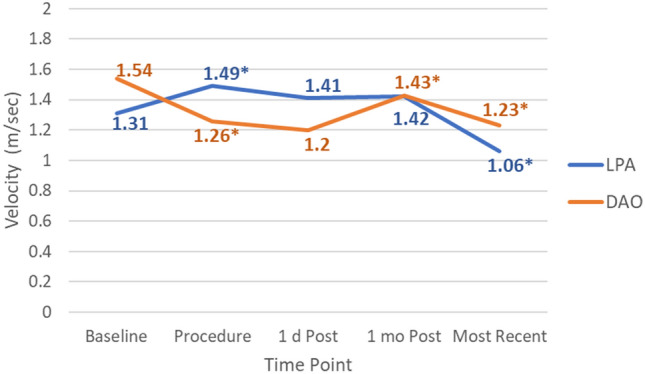
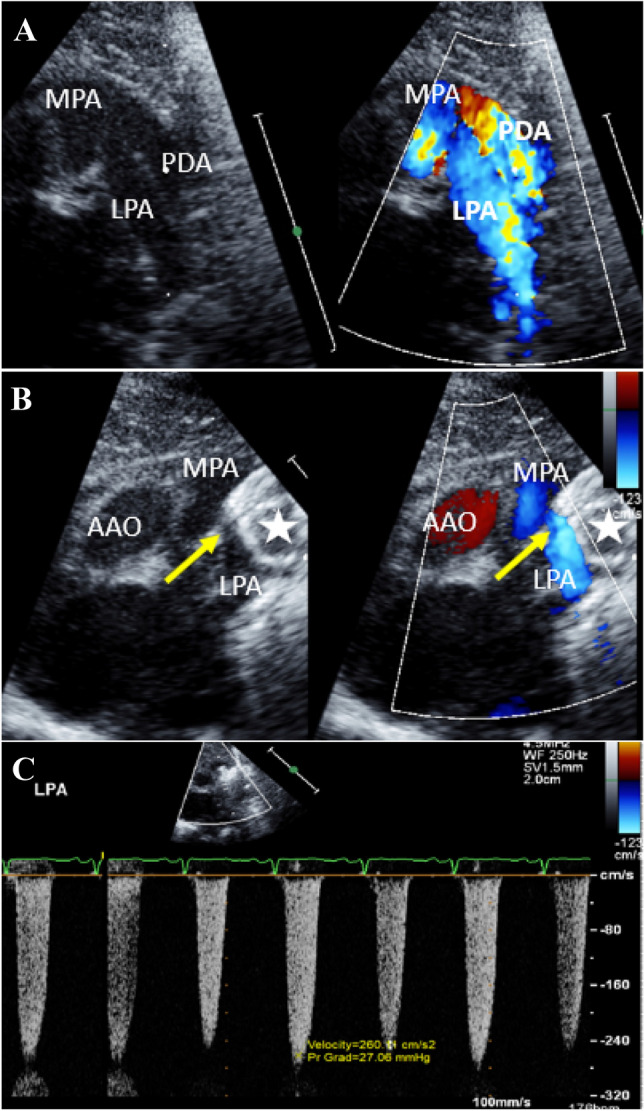
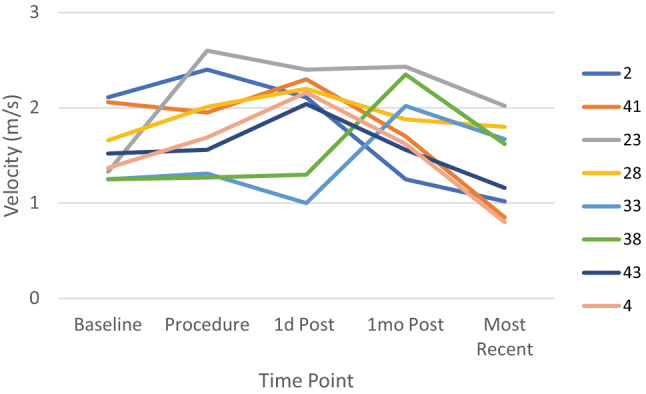
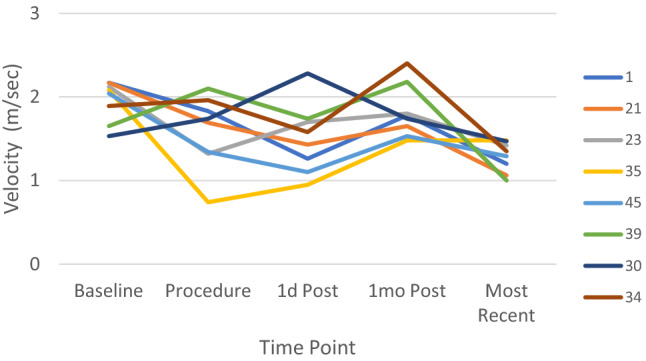
Transcatheter patent ductus arteriosus closure (TCPC) is an emerging treatment for low birth weight extremely premature neonates (EPNs). Left pulmonary artery (LPA) and descending aorta (DAO) obstruction are described device-related complications, however, data on mid- and long-term vascular outcomes are lacking. A retrospective analysis of EPNs who underwent successful TCPC at our institution from 03/2013 to 12/2018 was performed. Two-dimensional echocardiography and spectral Doppler velocities from various time points before and after TCPC were used to identify LPA and DAO flow disturbances. A total of 44 EPNs underwent successful TCPC at a median (range) procedural weight of 1150 g (755-2500 g). Thirty-two (73%) patients were closed with the AVP II and 12 (27%) with the Amplatzer Piccolo device. LPA and DAO velocities on average remained within normal limits and improved spontaneously in long-term follow up (26.1 months, range 1-75 months). One patient, who had concerning LPA flow characteristics immediately after device implant (peak velocity 2.6 m/s) developed progressive LPA stenosis requiring stent placement 3 months post-procedure. In the remaining infants, including 7 (16%) who developed LPA and 3 (7%) who developed DAO flow disturbances (range 2-2.4 m/s), all had progressive normalization of flow velocities over time. TCPC can be performed safely in EPNs with a low incidence of LPA and DAO obstruction. In the absence of significant progressive vascular obstruction in the early post-procedure period, mild increases in LPA and DAO flow velocities tend to improve spontaneously and normalize in long-term follow-up.
经导管动脉导管未闭封堵术(TCPC)是一种新兴的治疗极低出生体重早产儿(EPNs)的方法。左肺动脉(LPA)和降主动脉(DAO)阻塞是与器械相关的并发症,但缺乏关于中期和长期血管结果的数据。对 2013 年 3 月至 2018 年 12 月期间在我院成功接受 TCPC 的 EPNs 进行了回顾性分析。使用二维超声心动图和 TCPC 前后各个时间点的频谱多普勒速度来识别 LPA 和 DAO 血流紊乱。共有 44 例 EPNs 在中位数(范围)手术体重为 1150g(755-2500g)时成功接受 TCPC。32 例(73%)患者使用 AVP II 关闭,12 例(27%)患者使用 Amplatzer Piccolo 装置关闭。LPA 和 DAO 速度平均仍在正常范围内,并在长期随访中自发性改善(26.1 个月,范围 1-75 个月)。一名患者在器械植入后立即出现 LPA 血流特征异常(峰值速度 2.6m/s),术后 3 个月进展为 LPA 狭窄,需要支架置入。在其余婴儿中,包括 7 例(16%)出现 LPA 血流紊乱和 3 例(7%)出现 DAO 血流紊乱(范围 2-2.4m/s),所有婴儿的血流速度均随时间逐渐正常化。TCPC 可安全地应用于 EPNs,其 LPA 和 DAO 阻塞发生率较低。在术后早期无明显进展性血管阻塞的情况下,LPA 和 DAO 血流速度轻度增加倾向于自发性改善,并在长期随访中恢复正常。