Trojanová Zuzanka, Drozd Zdeněk, Halmešová Kristýna, Džugan Ján, Škraban Tomáš, Minárik Peter, Németh Gergely, Lukáč Pavel
Faculty of Mathematics and Physics, Charles University, Ke Karlovu 5, 12116 Praha 2, Czech Republic.
COMTES FHT a.s., Průmyslová 995, 33441 Dobřany, Czech Republic.
Materials (Basel). 2020 Dec 31;14(1):157. doi: 10.3390/ma14010157.
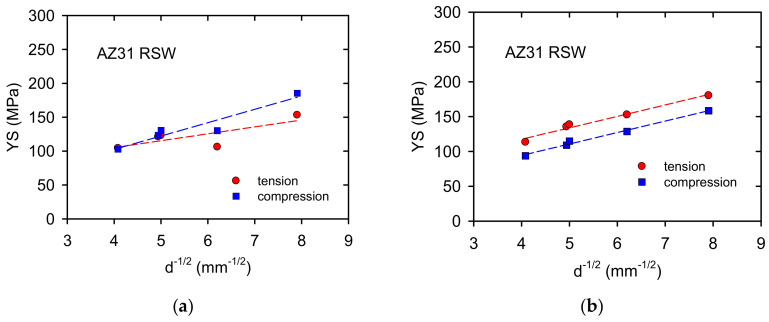
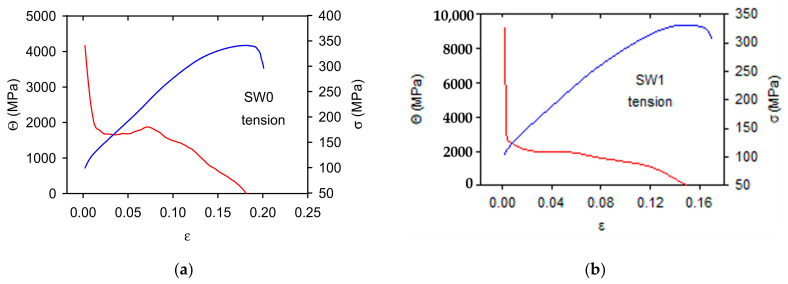
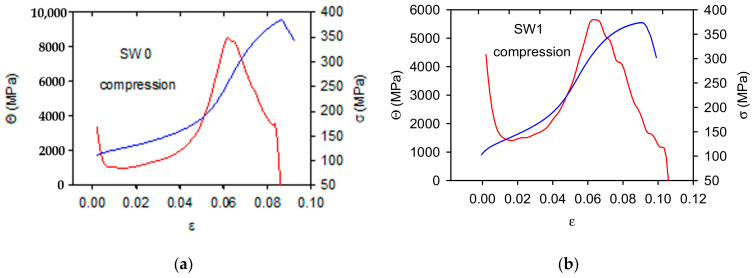
An extruded magnesium AZ31 magnesium alloy was processed by rotary swaging (RSW) and then deformed by tension and compression at room temperature. The work-hardening behaviour of 1-5 times swaged samples was analysed using Kocks-Mecking plots. Accumulation of dislocations on dislocation obstacles and twin boundaries is the deciding factor for the strain hardening. Profuse twinning in compression seems to be the reason for the higher hardening observed during compression. The main softening mechanism is apparently the cross-slip between the pyramidal planes of the second and first order. A massive twinning observed at the deformation beginning influences the Hall-Petch parameters.
一种挤压态镁 AZ31 镁合金先通过旋转锻造(RSW)进行加工,然后在室温下进行拉伸和压缩变形。使用科克斯 - 梅金图分析了旋转锻造 1 - 5 次的样品的加工硬化行为。位错在位错障碍和孪晶界上的堆积是应变硬化的决定性因素。压缩过程中大量的孪生似乎是压缩时观察到更高硬化程度的原因。主要的软化机制显然是一阶和二阶锥面之间的交滑移。在变形开始时观察到的大量孪生会影响霍尔 - 佩奇参数。