Xu Tianqi, Ding Haozhong, Vorobyeva Anzhelika, Oroujeni Maryam, Orlova Anna, Tolmachev Vladimir, Gräslund Torbjörn
Department of Immunology, Genetics and Pathology, Uppsala University, 751 85 Uppsala, Sweden.
Department of Protein Science, KTH Royal Institute of Technology, Roslagstullsbacken 21, 114 17 Stockholm, Sweden.
Cancers (Basel). 2020 Dec 30;13(1):85. doi: 10.3390/cancers13010085.
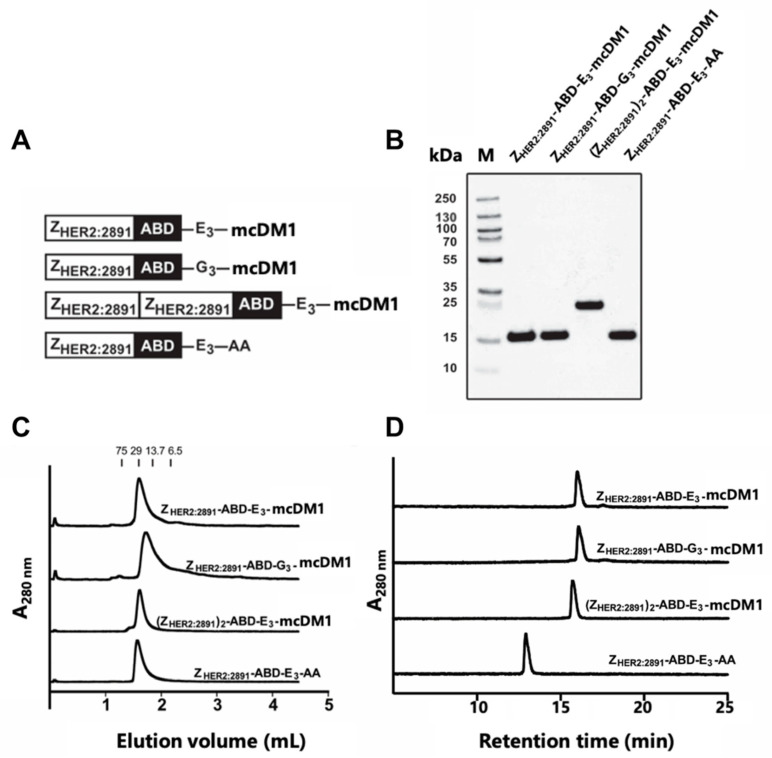
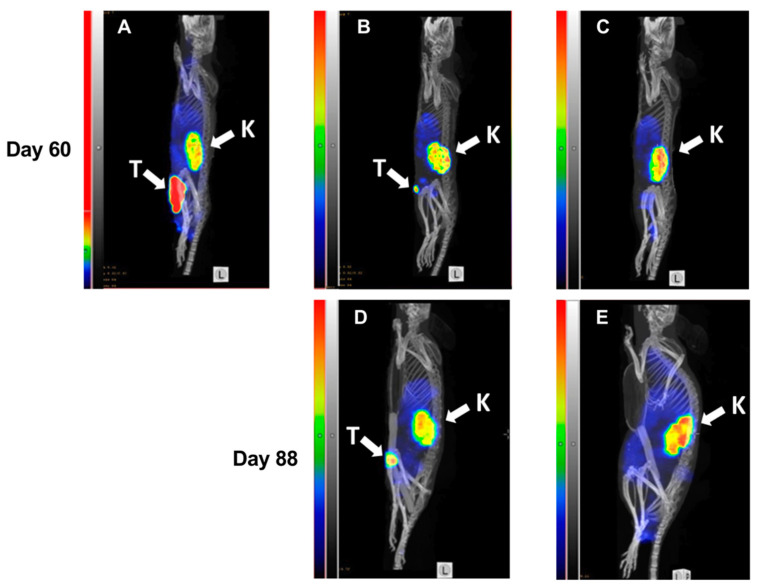
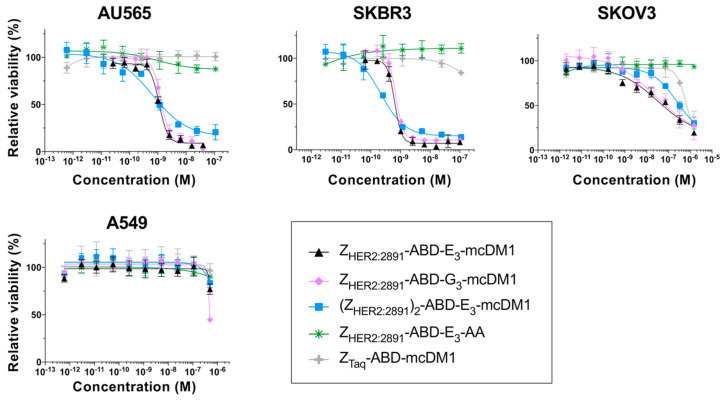
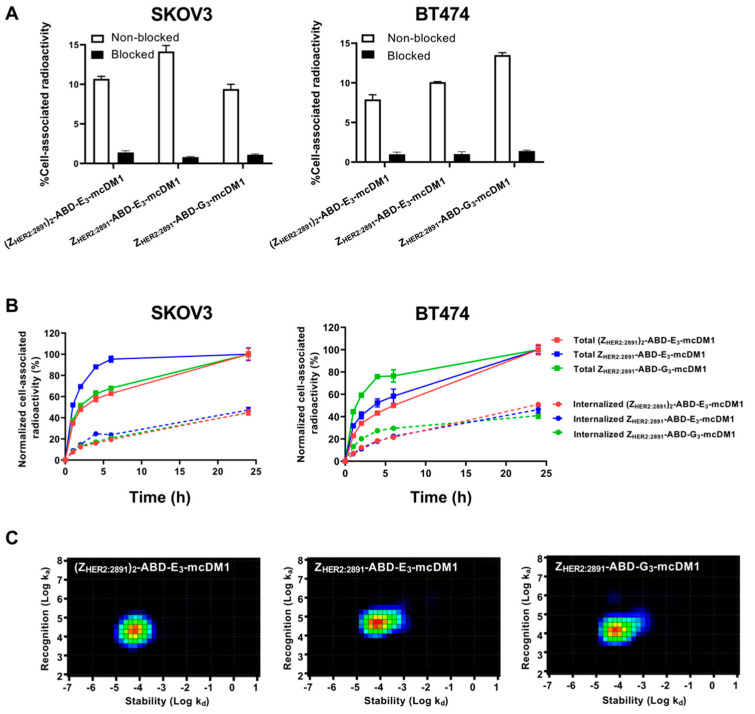
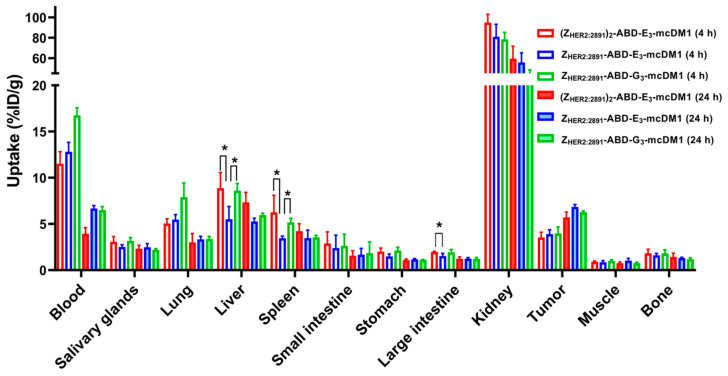
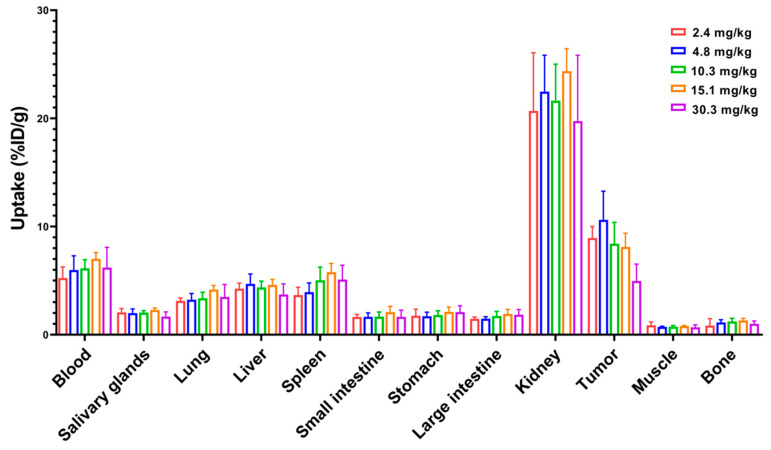
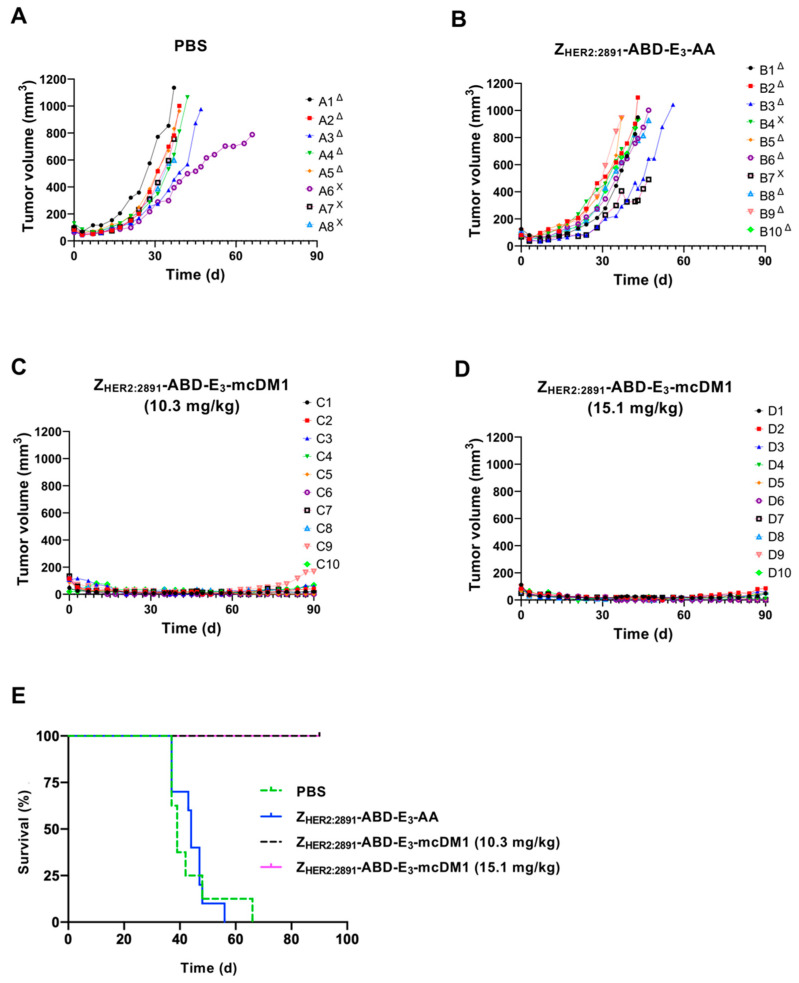
The human epidermal growth factor receptor 2 (HER2) is frequently overexpressed in a variety of cancers and therapies targeting HER2 are routinely used in the clinic. Recently, small engineered scaffold proteins, such as affibody molecules, have shown promise as carriers of cytotoxic drugs, and these drug conjugates may become complements or alternatives to the current HER2-targeting therapies. Here, we investigated if a monovalent HER2-binding affibody molecule, Z, fused with a plasma half-life extending albumin binding domain (ABD), may be used as carrier of the cytotoxic maytansine derivate mcDM1. We found that the resulting drug conjugate, Z-ABD-E-mcDM1, had strong affinity for its cognate molecular targets: HER2 and serum albumin. Z-ABD-E-mcDM1 displayed potent cytotoxic activity towards cells with high HER2 expression, with IC values ranging from 0.6 to 33 nM. In vivo, an unspecific increase in uptake in the liver, imparted by the hydrophobic mcDM1, was counteracted by incorporation of hydrophilic and negatively charged glutamate residues near the site of mcDM1 conjugation. A dose-escalation experiment showed that increasing doses up to 15.1 mg/kg gave a proportional increase in uptake in xenografted HER2-overexpressing SKOV3 tumors, after which the tumors became saturated. Experimental therapy with four once-weekly injection of 10.3 or 15.1 mg/kg led to efficient regression of tumors in all animals and complete regression in some. Weight loss was detected for some animals in the group receiving the highest dose, suggesting that it was close to the maximum tolerated dose. In conclusion, the monovalent HER2-targeting affibody drug conjugate presented herein have potent anti-tumor activity in vivo.
人表皮生长因子受体2(HER2)在多种癌症中经常过度表达,针对HER2的疗法在临床上常规使用。最近,小型工程化支架蛋白,如亲和体分子,已显示出作为细胞毒性药物载体的潜力,这些药物偶联物可能成为当前HER2靶向疗法的补充或替代方案。在此,我们研究了与血浆半衰期延长白蛋白结合域(ABD)融合的单价HER2结合亲和体分子Z是否可用作细胞毒性美登素衍生物mcDM1的载体。我们发现,所得的药物偶联物Z-ABD-E-mcDM1对其同源分子靶点HER2和血清白蛋白具有很强的亲和力。Z-ABD-E-mcDM1对HER2高表达的细胞显示出强大的细胞毒性活性,IC值范围为0.6至33 nM。在体内,疏水性mcDM1导致肝脏摄取的非特异性增加,通过在mcDM1偶联位点附近引入亲水性和带负电荷的谷氨酸残基来抵消。剂量递增实验表明,剂量增加至15.1 mg/kg会使异种移植的HER2过表达SKOV3肿瘤的摄取成比例增加,此后肿瘤达到饱和。每周一次注射4次10.3或15.1 mg/kg的实验性治疗导致所有动物的肿瘤有效消退,部分动物完全消退。在接受最高剂量的组中,一些动物出现体重减轻,这表明该剂量接近最大耐受剂量。总之,本文介绍的单价HER2靶向亲和体药物偶联物在体内具有强大的抗肿瘤活性。