Veleva Lyubomira, Hähner Peter, Dubinko Andrii, Khvan Tymofii, Terentyev Dmitry, Ruiz-Moreno Ana
European Commission, Joint Research Centre, Directorate G: Nuclear Safety and Security, Westerduinweg 3, 1755 LE Petten, The Netherlands.
SCK•CEN, Nuclear Materials Science Institute, Boeretang 200, 2400 Mol, Belgium.
Nanomaterials (Basel). 2020 Dec 30;11(1):71. doi: 10.3390/nano11010071.
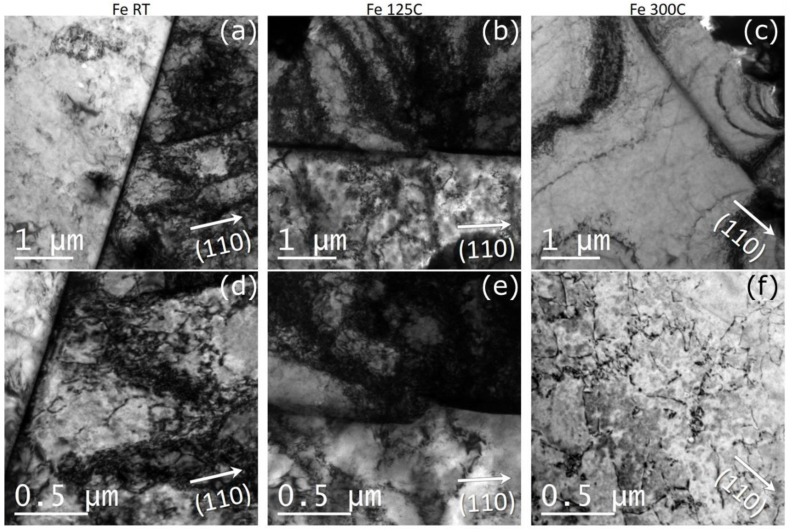
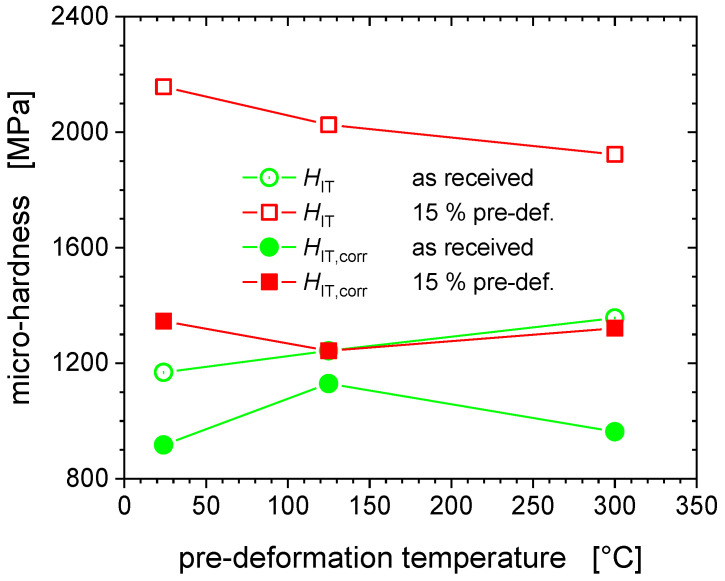
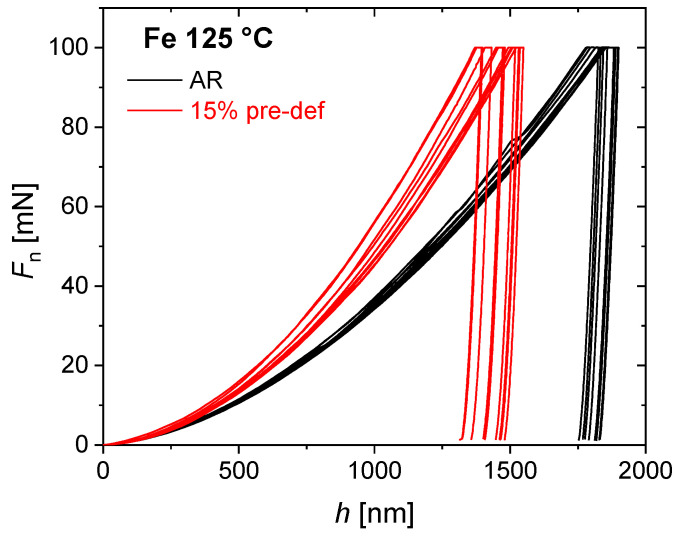
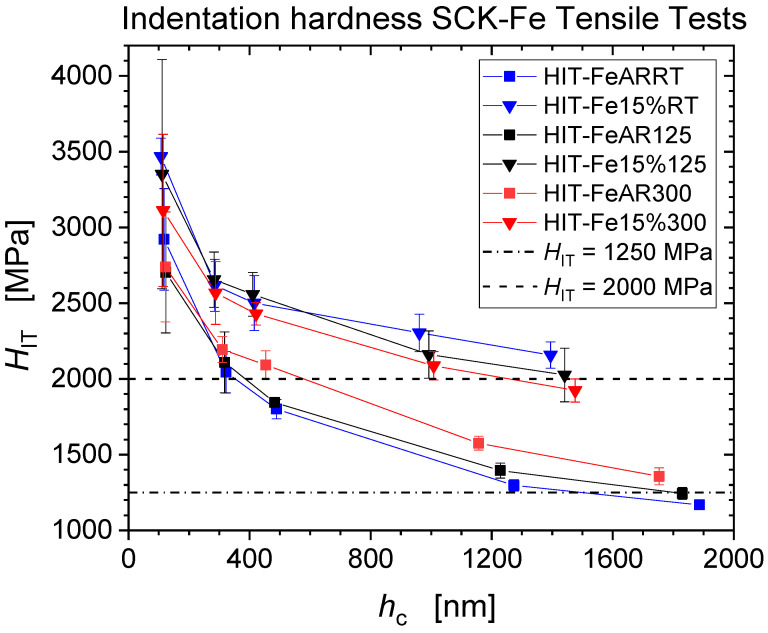
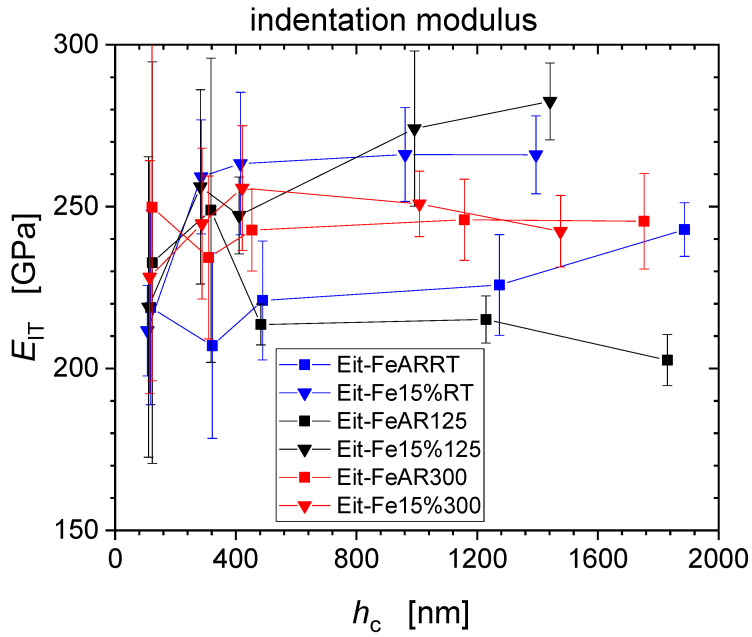
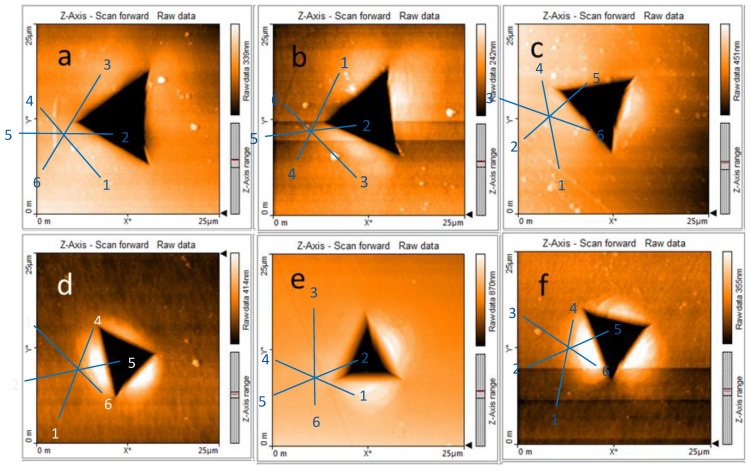
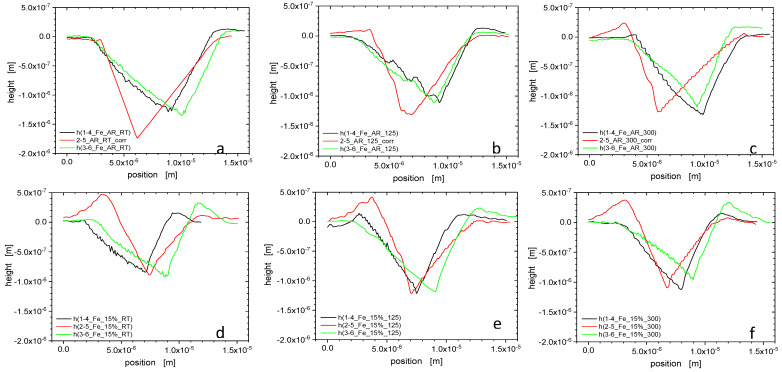
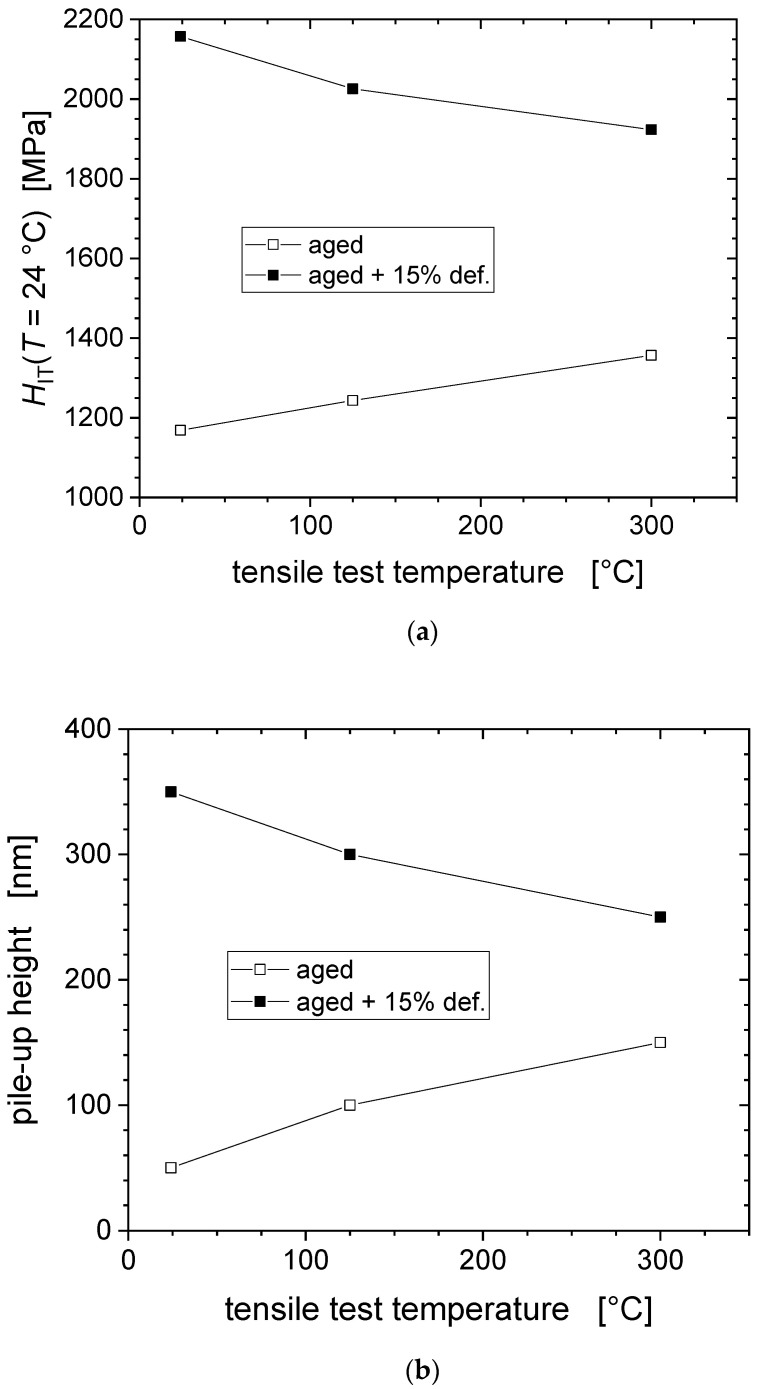
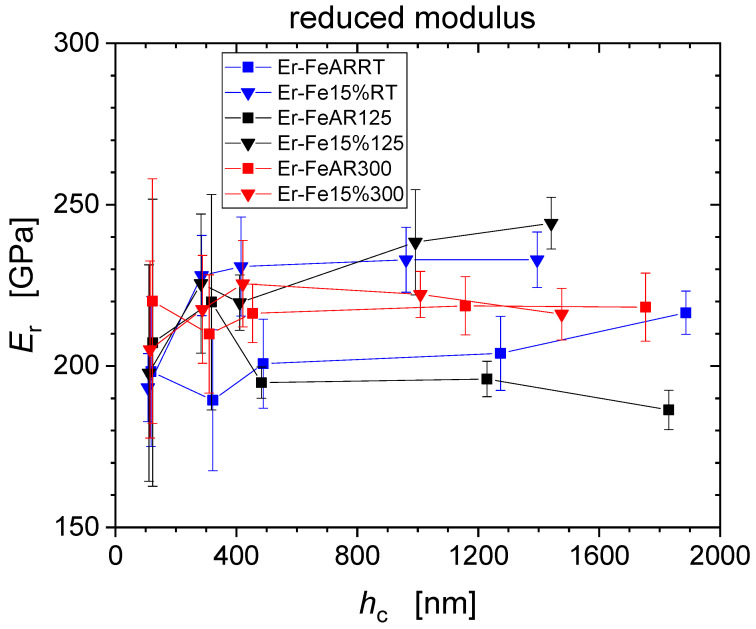
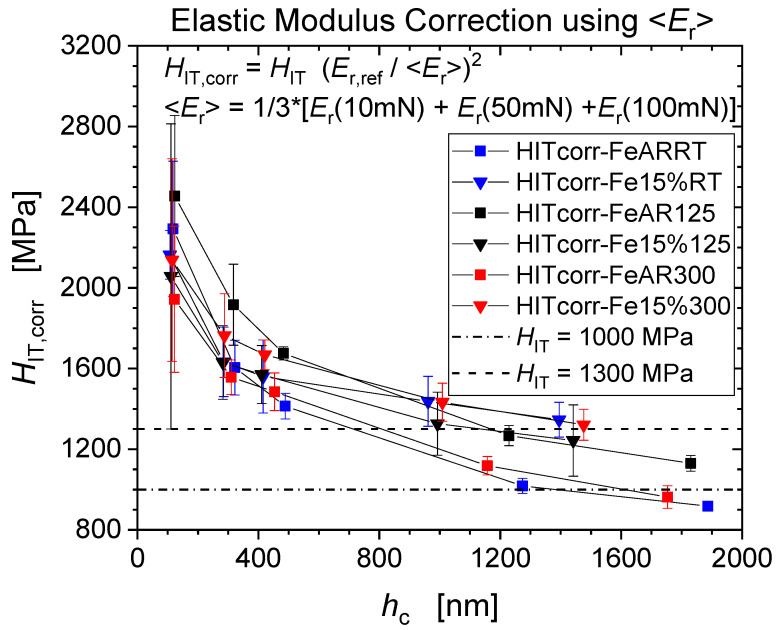
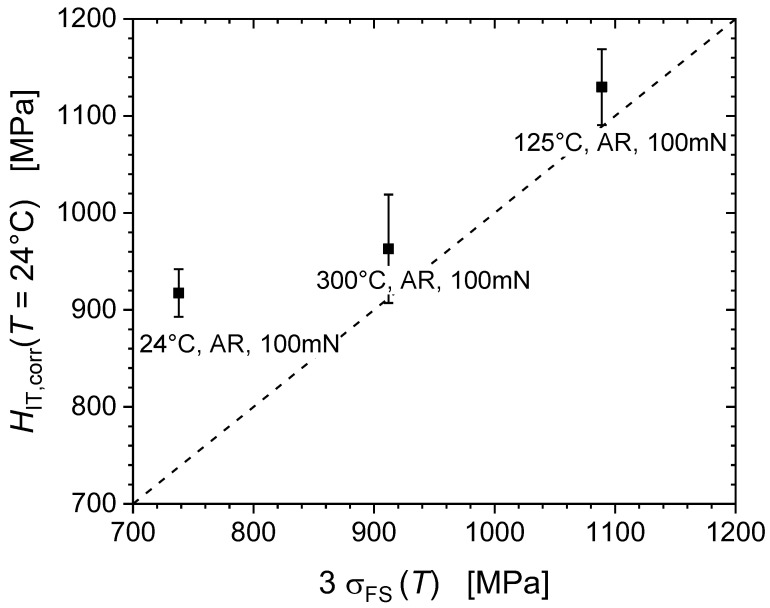
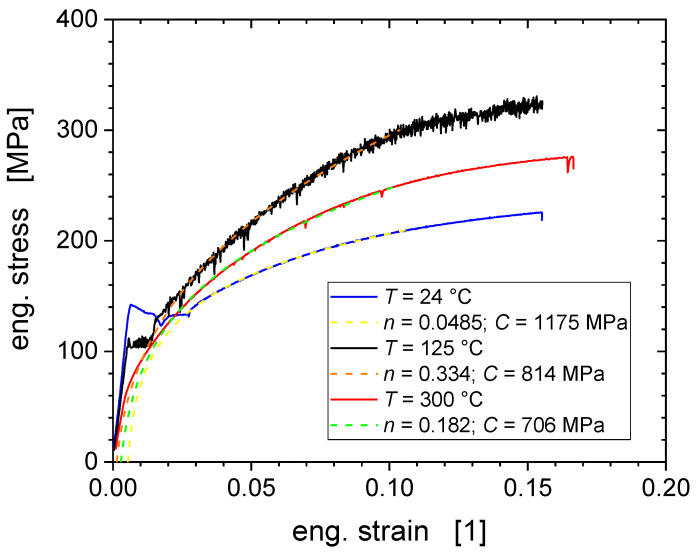
This work reports results from quasi-static nanoindentation measurements of iron, in the un-strained state and subjected to 15% tensile pre-straining at room temperature, 125 °C and 300 °C, in order to extract room temperature hardness and elastic modulus as a function of indentation depth. The material is found to exhibit increased disposition for pile-up formation due to the pre-straining, affecting the evaluation of the mechanical properties of the material. Nanoindentation data obtained with and without pre-straining are compared with bulk tensile properties derived from the tensile pre-straining tests at various temperatures. A significant mismatch between the hardness of the material and the tensile test results is observed and attributed to increased pile-up behaviour of the material after pre-straining, as evidenced by atomic force microscopy. The observations can be quantitatively reconciled by an elastic modulus correction applied to the nanoindentation data, and the remaining discrepancies explained by taking into account that strain hardening behaviour and nano-hardness results are closely affected by dynamic strain ageing caused by carbon interstitial impurities, which is clearly manifested at the intermediate temperature of 125 °C.
这项工作报告了铁在未受应变状态以及在室温、125°C和300°C下经受15%拉伸预应变后的准静态纳米压痕测量结果,以便提取室温硬度和弹性模量作为压痕深度的函数。发现该材料由于预应变而表现出增加的堆积形成倾向,这影响了对材料力学性能的评估。将有预应变和无预应变时获得的纳米压痕数据与在不同温度下的拉伸预应变试验得出的体拉伸性能进行比较。观察到材料硬度与拉伸试验结果之间存在显著不匹配,并归因于预应变后材料堆积行为的增加,原子力显微镜证明了这一点。通过对纳米压痕数据应用弹性模量校正,可以定量地协调这些观察结果,而考虑到应变硬化行为和纳米硬度结果受到碳间隙杂质引起的动态应变时效的密切影响,这在125°C的中间温度下明显表现出来,可以解释其余的差异。