Department of Epidemiology, School of Public Health and Safety, Shahid Beheshti University of Medical Sciences, Tehran, Iran.
Department of Infectious Diseases, Faculty of Medicine, Tehran University of Medical Sciences, Tehran, Iran.
BMC Infect Dis. 2021 Jan 4;21(1):3. doi: 10.1186/s12879-020-05687-z.
Surgical Site Infections (SSIs) are among the leading causes of the postoperative complications. This study aimed at investigating the epidemiologic characteristics of orthopedic SSIs and estimating the under-reporting of registries using the capture-recapture method.
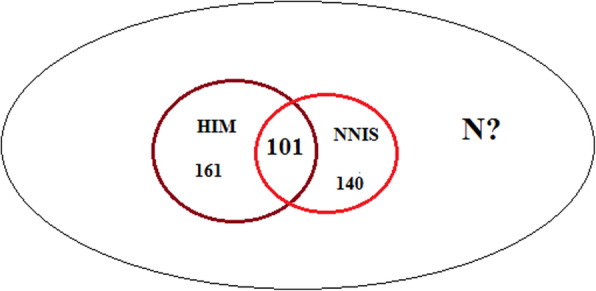
This study, which was a registry-based, cross-sectional one, was conducted in six educational hospitals in Tehran during a one-year period, from March, 2017 to March, 2018. The data were collected from two hospital registries (National Nosocomial Infection Surveillance System (NNIS) and Health Information Management database (HIM)). First, all orthopedic SSIs registered in these sources were used to perform capture-recapture (N = 503). Second, 202 samples were randomly selected to assess patients` characteristics.
Totally, 76.24% of SSIs were detected post-discharge. Staphylococcus aureus (11.38%) was the most frequently detected bacterium in orthopedic SSIs. The median time between the detection of a SSI and the discharge was 17 days. The results of a study done on 503 SSIs showed that the coverage of NNIS and HIM was 59.95 and 65.17%, respectively. After capture-recapture estimation, it was found that about 221 of orthopedic SSIs were not detected by two sources among six hospitals and the real number of SSIs were estimated to be 623 ± 36.58 (95% CI, 552-695) and under-reporting percentage was 63.32%.
To recognize the trends of SSIs mortality and morbidity in national level, it is significant to have access to a registry with minimum underestimated data. Therefore, according to the weak coverage of NNIS and HIM among Iranian hospitals, a plan for promoting the national Infection Prevention and Control (IPC) programs and providing updated protocols is recommended.
手术部位感染(SSI)是术后并发症的主要原因之一。本研究旨在调查骨科 SSI 的流行病学特征,并使用捕获-再捕获法估计登记处的漏报率。
这是一项基于登记的横断面研究,于 2017 年 3 月至 2018 年 3 月在德黑兰的六所教学医院进行。数据来自两个医院登记处(国家医院感染监测系统(NNIS)和健康信息管理数据库(HIM))。首先,使用这两个来源登记的所有骨科 SSI 进行捕获-再捕获(N=503)。其次,随机抽取 202 例样本评估患者特征。
SSI 出院后检出率为 76.24%。金黄色葡萄球菌(11.38%)是骨科 SSI 中最常检测到的细菌。SSI 检出与出院之间的中位数时间为 17 天。对 503 例 SSI 进行的研究结果表明,NNIS 和 HIM 的覆盖率分别为 59.95%和 65.17%。通过捕获-再捕获估计,发现六个医院中约有 221 例骨科 SSI 未被两个来源检测到,实际 SSI 数估计为 623±36.58(95%CI,552-695),漏报率为 63.32%。
为了在国家层面了解 SSI 的死亡率和发病率趋势,获得一个数据低估最少的登记处是很重要的。因此,根据 NNIS 和 HIM 在伊朗医院的覆盖率较低,建议制定促进国家感染预防和控制(IPC)计划并提供最新方案的计划。