Department of Radiology, University of Michigan, Ann Arbor, MI, USA.
Department of Radiology, University of Michigan, Ann Arbor, MI, USA; Department of Biomedical Engineering, University of Michigan, Ann Arbor, MI, USA; Applied Physics Program, University of Michigan, Ann Arbor, MI, USA.
Ultrason Sonochem. 2021 Apr;72:105430. doi: 10.1016/j.ultsonch.2020.105430. Epub 2020 Dec 24.
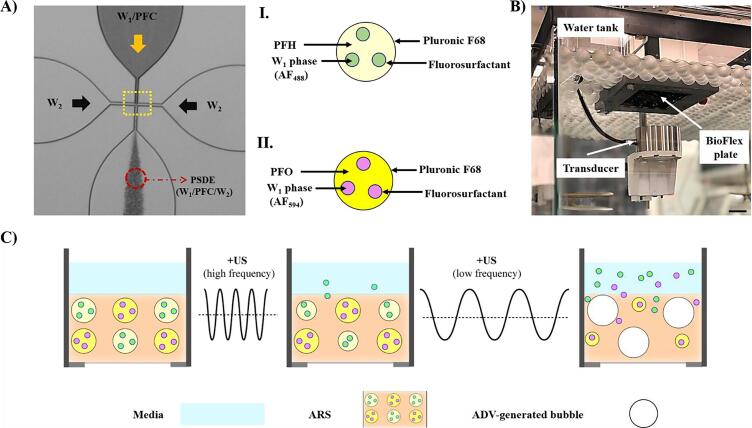
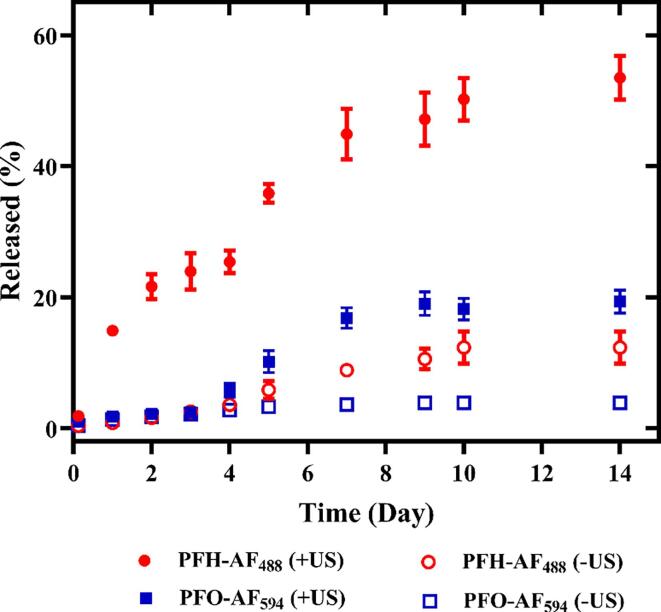
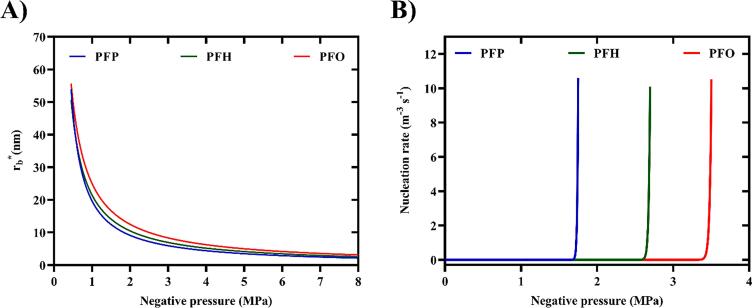
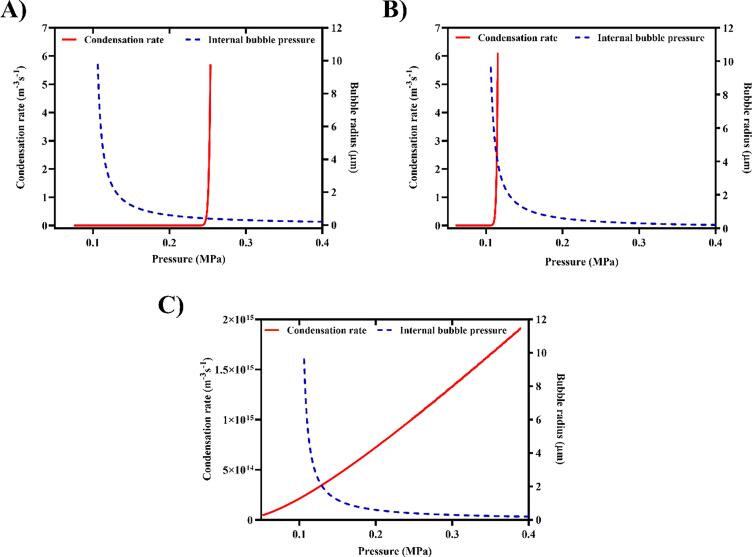
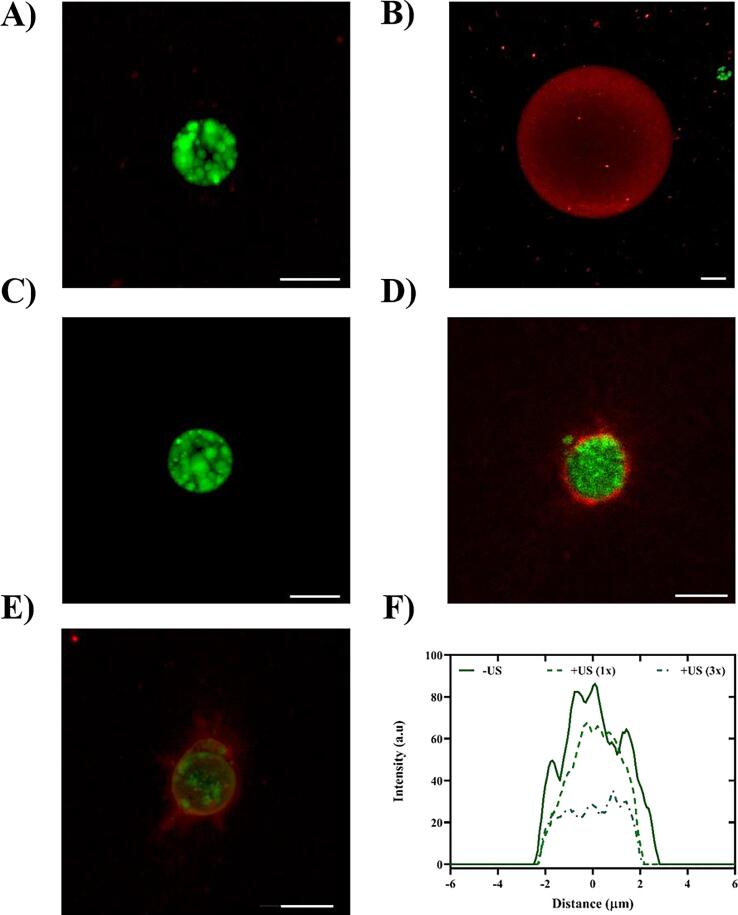
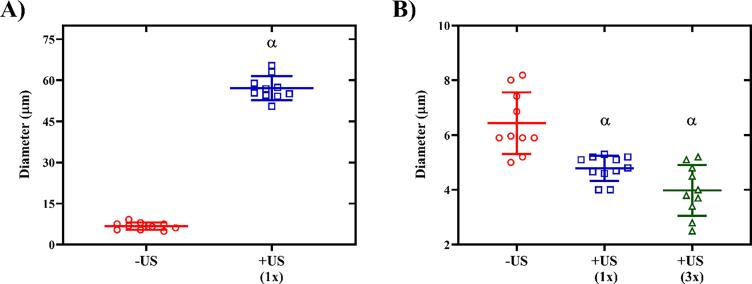
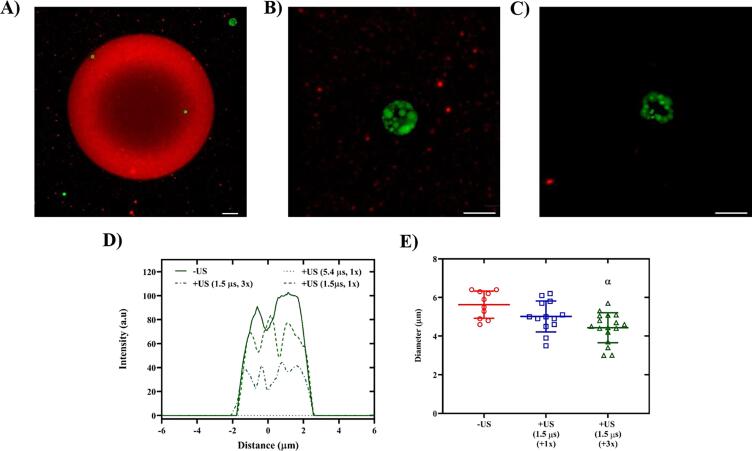
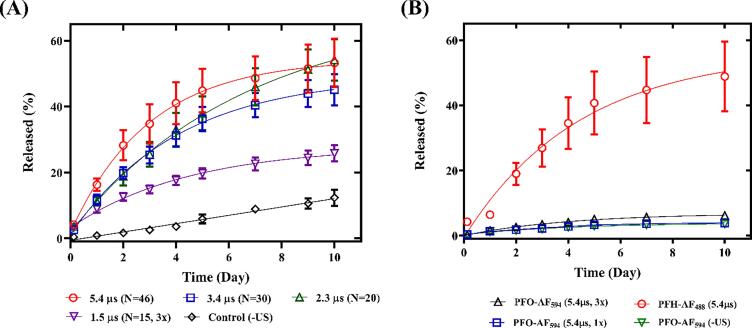
Acoustically-responsive scaffolds (ARSs), which are fibrin hydrogels containing monodispersed perfluorocarbon (PFC) emulsions, respond to ultrasound in an on-demand, spatiotemporally-controlled manner via a mechanism termed acoustic droplet vaporization (ADV). Previously, ADV has been used to control the release of bioactive payloads from ARSs to stimulate regenerative processes. In this study, we used classical nucleation theory (CNT) to predict the nucleation pressure in emulsions of different PFC cores as well as the corresponding condensation pressure of the ADV-generated bubbles. According to CNT, the threshold bubble radii above which ADV-generated bubbles remain stable against condensation were 0.4 µm and 5.2 µm for perfluoropentane (PFP) and perfluorohexane (PFH) bubbles, respectively, while ADV-generated bubbles of any size in perfluorooctane (PFO) condense back to liquid at ambient condition. Additionally, consistent with the CNT findings, stable bubble formation from PFH emulsion was experimentally observed using confocal imaging while PFO emulsion likely underwent repeated vaporization and recondensation during ultrasound pulses. In further experimental studies, we utilized this unique feature of ADV in generating stable or transient bubbles, through tailoring the PFC core and ultrasound parameters (excitation frequency and pulse duration), for sequential delivery of two payloads from PFC emulsions in ARSs. ADV-generated stable bubbles from PFH correlated with complete release of the payload while transient ADV resulted in partial release, where the amount of payload release increased with the number of ultrasound exposure. Overall, these results can be used in developing drug delivery strategies using ARSs.
声响应支架(ARSs)是一种含有单分散全氟碳(PFC)乳液的纤维蛋白水凝胶,通过称为声致液滴汽化(ADV)的机制以按需、时空可控的方式对超声产生响应。先前,ADV 已被用于控制从 ARS 中释放生物活性有效载荷以刺激再生过程。在这项研究中,我们使用经典成核理论(CNT)来预测不同 PFC 核乳液的成核压力以及 ADV 产生的气泡的相应凝结压力。根据 CNT,ADV 产生的气泡在稳定的情况下,其阈值气泡半径大于 0.4 µm 和 5.2 µm,分别对应于全氟戊烷(PFP)和全氟己烷(PFH)气泡,而任何大小的 ADV 产生的气泡在环境条件下都会凝结回液体。此外,与 CNT 的发现一致,使用共聚焦成像实验观察到来自 PFH 乳液的稳定气泡形成,而 PFO 乳液在超声脉冲期间可能经历了反复的汽化和再凝结。在进一步的实验研究中,我们通过调整 PFC 核和超声参数(激励频率和脉冲持续时间),利用 ADV 生成稳定或瞬态气泡的独特特性,从 ARS 中的 PFC 乳液中顺序递两个有效载荷。来自 PFH 的 ADV 产生的稳定气泡与有效载荷的完全释放相关,而瞬态 ADV 则导致部分释放,其中有效载荷释放量随超声暴露次数的增加而增加。总的来说,这些结果可用于开发使用 ARS 的药物输送策略。