Palamidi Artemis, Kapourani Afroditi, Christodoulou Evi, Klonos Panagiotis A, Kontogiannopoulos Konstantinos N, Kyritsis Apostolos, Bikiaris Dimitrios N, Barmpalexis Panagiotis
Department of Pharmaceutical Technology, School of Pharmacy, Aristotle University of Thessaloniki, 54124 Thessaloniki, Greece.
Laboratory of Polymer Chemistry and Technology, Department of Chemistry, Aristotle University of Thessaloniki, 54124 Thessaloniki, Greece.
Polymers (Basel). 2021 Jan 1;13(1):146. doi: 10.3390/polym13010146.
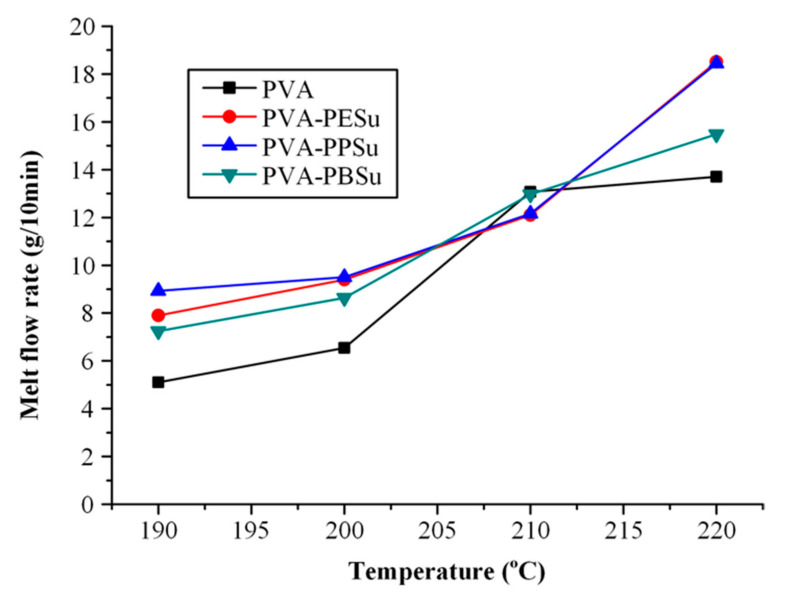
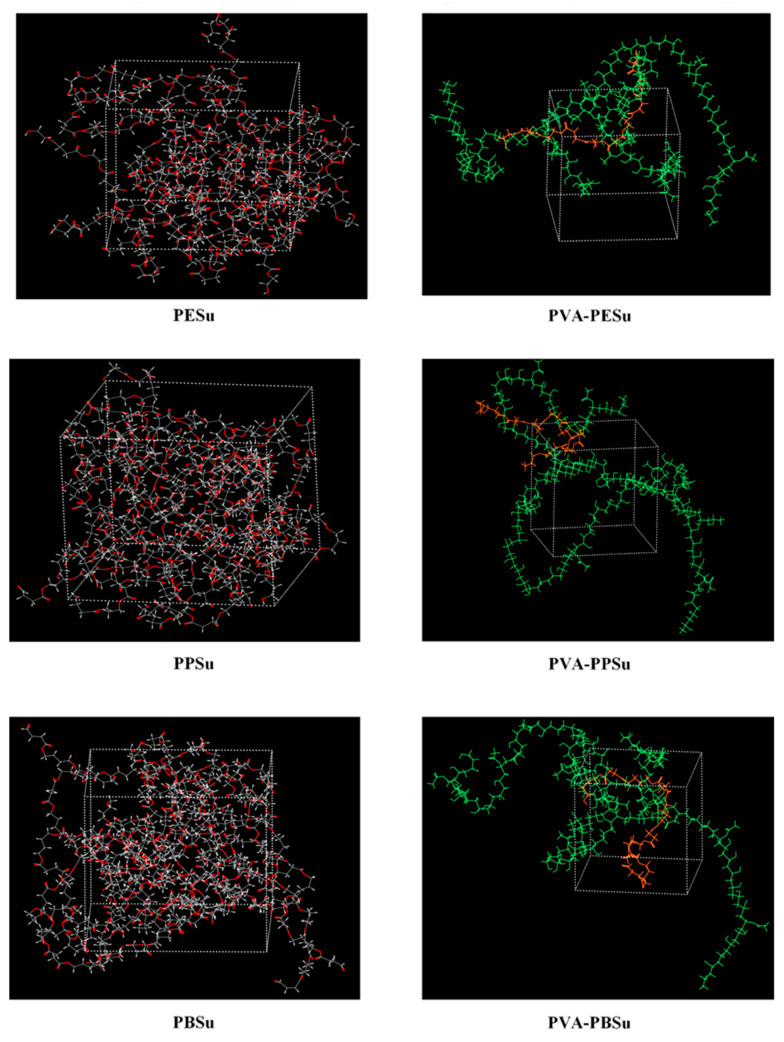
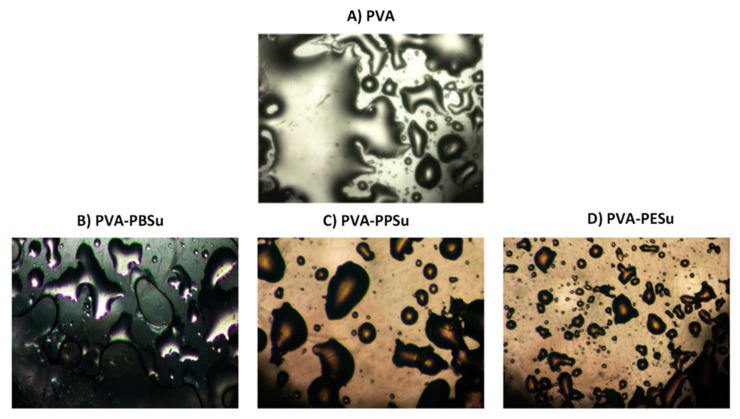
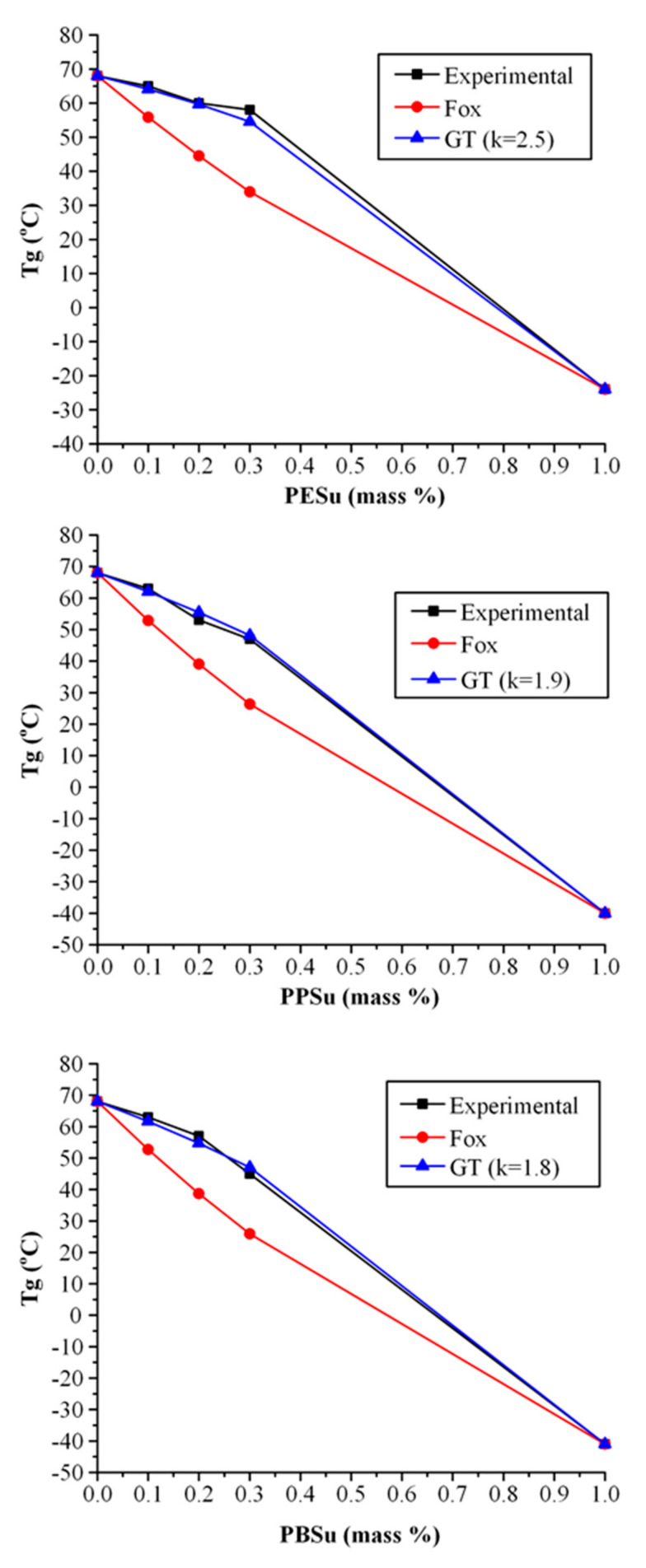
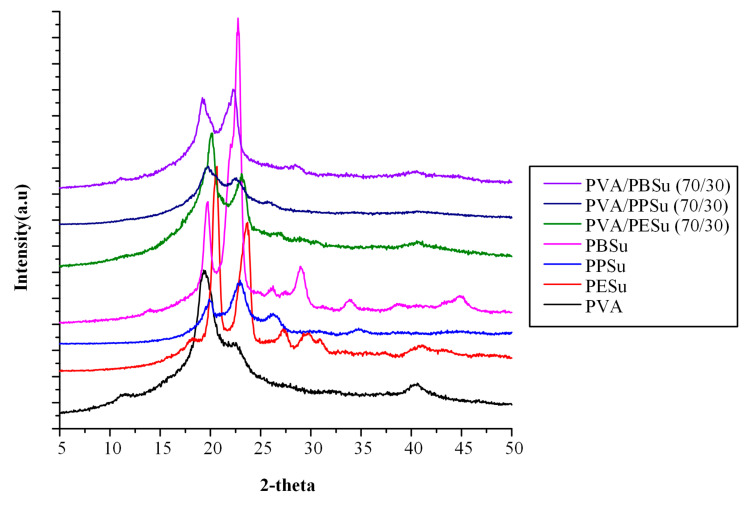
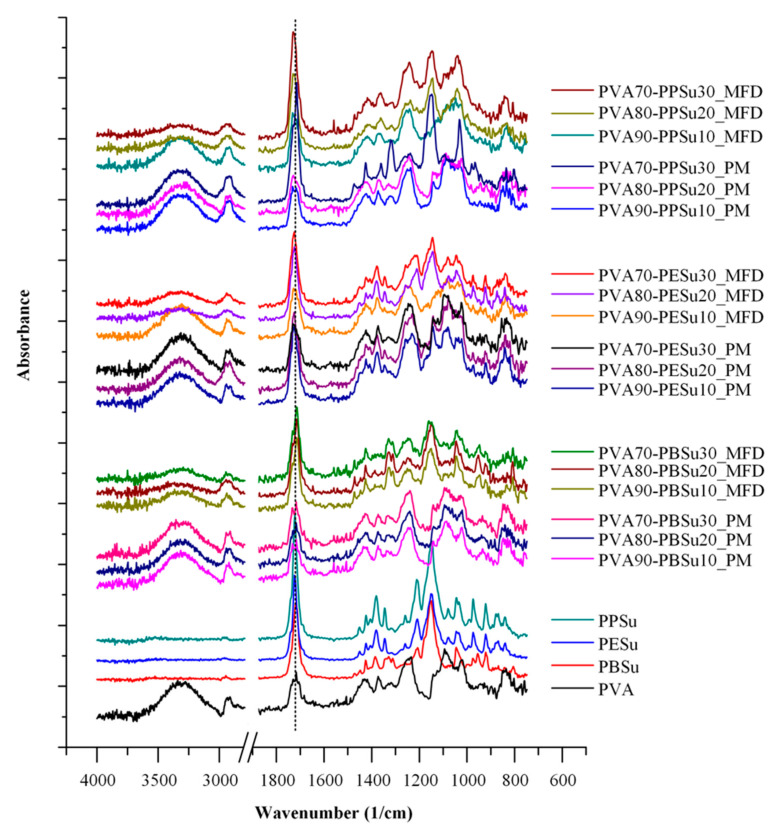
The plasticizing effect of three low molecular weight oligomers of aliphatic poly(alkylene succinate) polyesters, namely poly(butylene succinate) (PBSu), poly(ethylene succinate) (PESu), and poly(propylene succinate) (PPSu), on partially hydrolyzed poly(vinyl alcohol) (PVA) used in melt-based pharmaceutical applications, was evaluated for the first time. Initially, the three aliphatic polyesters were prepared by the melt polycondensation process and characterized by differential scanning calorimetry (DSC), H NMR, intrinsic viscosity, and size exclusion chromatography (SEC). Subsequently, their effect on the thermophysical and physicochemical properties of PVA was thoroughly evaluated. According to the obtained results, PVA was completely miscible with all three polyesters, while PESu induced PVA's thermal degradation, with the phenomenon starting from ~220 °C, in contrast to PBSu and PPSu, where a thermal profile similar to PVA was observed. Furthermore, molecular interactions between PVA and the prepared poly(alkylene succinate) polyesters were revealed by DSC, ATR-FTIR, and molecular dynamics simulations. Finally, melt flow index (MFI) measurements showed that, in contrast to PBSu, the use of PESu or PPSu significantly improved PVA's melt flow properties. Hence, according to findings of the present work, only the use of low molecular weight PPSu is suitable in order to reduce processing temperature of PVA and improve its melt flow properties (plasticizing ability) without affecting its thermal decomposition.
首次评估了三种低分子量脂肪族聚(亚烷基琥珀酸酯)聚酯,即聚(丁二酸丁二醇酯)(PBSu)、聚(丁二酸乙二酯)(PESu)和聚(丁二酸丙二醇酯)(PPSu),对用于熔融法药物应用的部分水解聚(乙烯醇)(PVA)的增塑效果。最初,通过熔融缩聚法制备了这三种脂肪族聚酯,并通过差示扫描量热法(DSC)、核磁共振氢谱(¹H NMR)、特性粘度和尺寸排阻色谱法(SEC)对其进行了表征。随后,全面评估了它们对PVA热物理和物理化学性质的影响。根据所得结果,PVA与所有三种聚酯完全互溶,而PESu会引发PVA的热降解,该现象从约220°C开始,这与PBSu和PPSu不同,在PBSu和PPSu中观察到与PVA相似的热曲线。此外,通过DSC、衰减全反射傅里叶变换红外光谱(ATR-FTIR)和分子动力学模拟揭示了PVA与制备的聚(亚烷基琥珀酸酯)聚酯之间的分子相互作用。最后,熔体流动指数(MFI)测量表明,与PBSu不同,使用PESu或PPSu可显著改善PVA的熔体流动性能。因此,根据本工作的研究结果,仅使用低分子量的PPSu适合降低PVA的加工温度并改善其熔体流动性能(增塑能力),而不影响其热分解。