The Lawrence D. Longo Center for Perinatal Biology, Department of Basic Sciences, Loma Linda University School of Medicine, Loma Linda, CA, 92350, USA.
J Neuroinflammation. 2021 Jan 5;18(1):6. doi: 10.1186/s12974-020-02068-w.
Neonatal hypoxic-ischemic (HI) brain injury is a leading cause of acute mortality and chronic disability in newborns. Our previous studies demonstrated that HI insult significantly increased microRNA-210 (miR-210) in the brain of rat pups and inhibition of brain endogenous miR-210 by its inhibitor (LNA) provided neuroprotective effect in HI-induced brain injury. However, the molecular mechanisms underpinning this neuroprotection remain unclear.
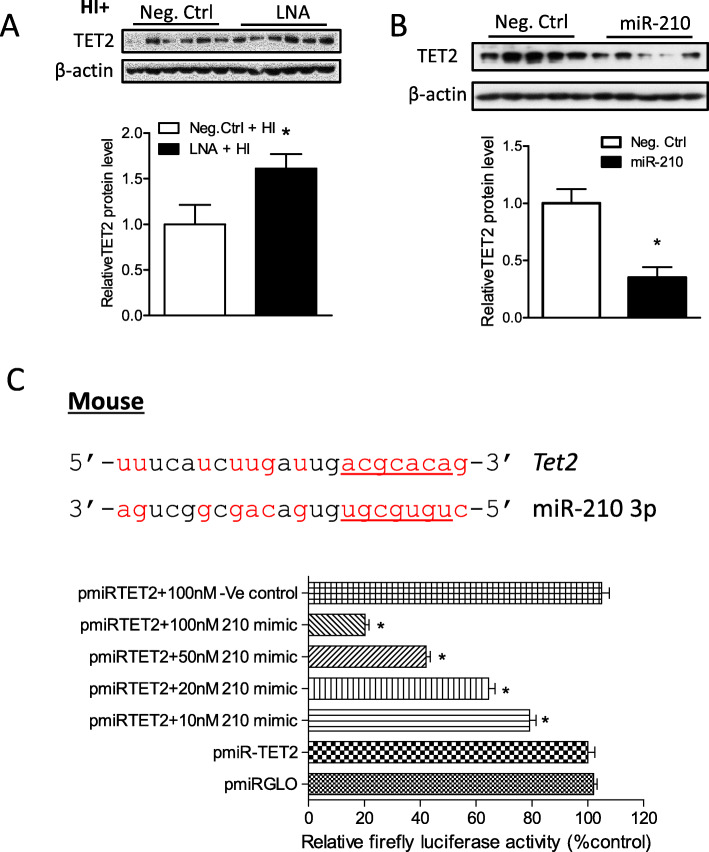
We made a neonatal HI brain injury model in mouse pups of postnatal day 7 to uncover the mechanism of miR-210 in targeting the ten eleven translocation (TET) methylcytosine dioxygenase 2 that is a transcriptional suppressor of pro-inflammatory cytokine genes in the neonatal brain. TET2 silencing RNA was used to evaluate the role of TET2 in the neonatal HI-induced pro-inflammatory response and brain injury. MiR-210 mimic and inhibitor (LNA) were delivered into the brain of mouse pups to study the regulation of miR-210 on the expression of TET2. Luciferase reporter gene assay was performed to validate the direct binding of miR-210 to the 3' untranslated region of the TET2 transcript. Furthermore, BV2 mouse microglia cell line was employed to confirm the role of miR-210-TET2 axis in regulating pro-inflammatory response in microglia. Post-assays included chromatin immunoprecipitation (ChIP) assay, co-immunoprecipitation, RT-PCR, brain infarct assay, and neurobehavioral test. Student's t test or one-way ANOVA was used for statistical analysis.
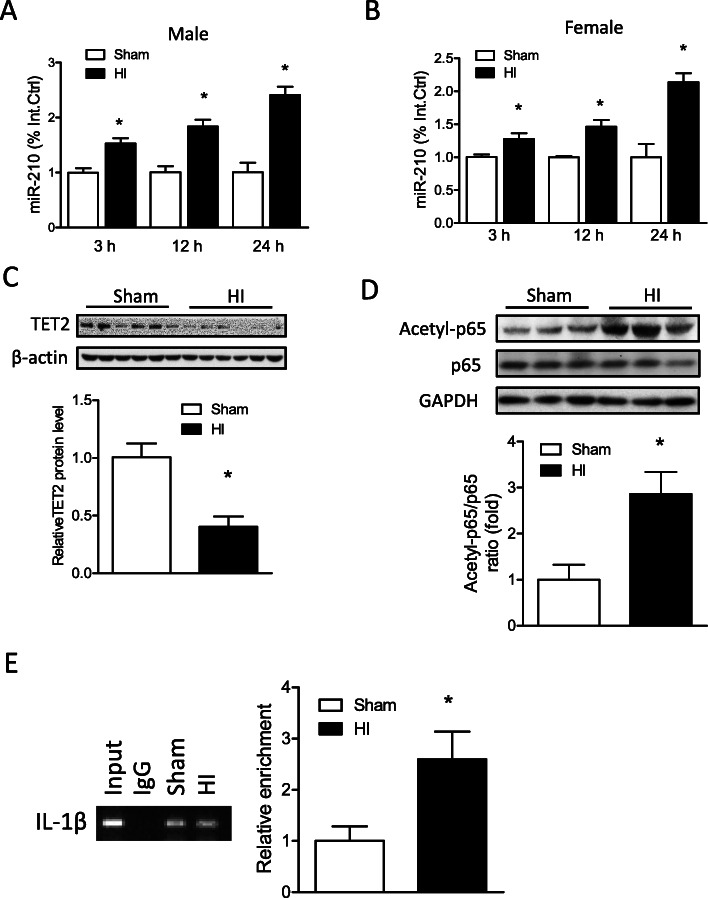
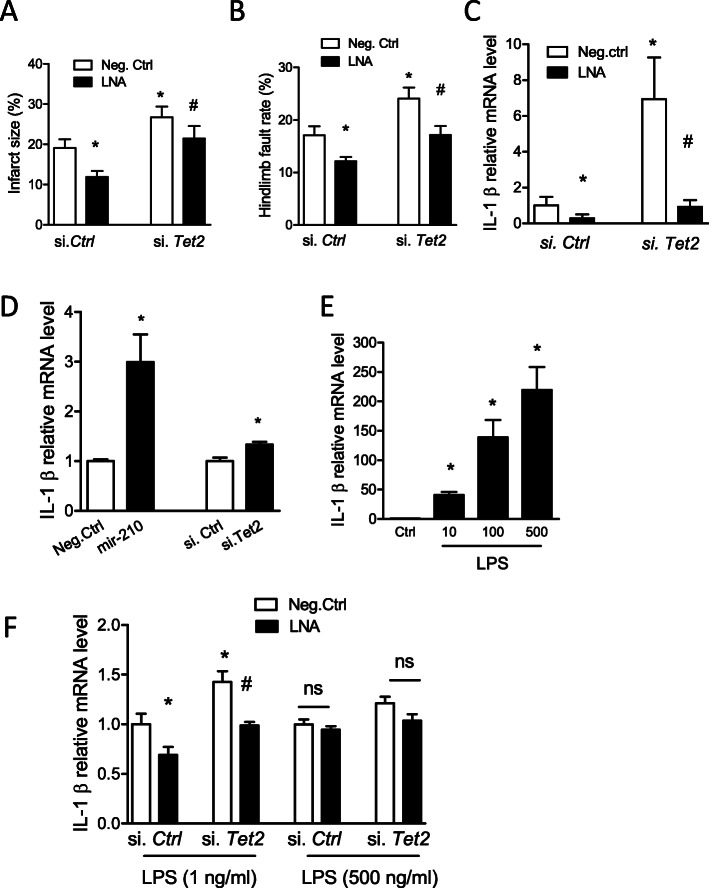
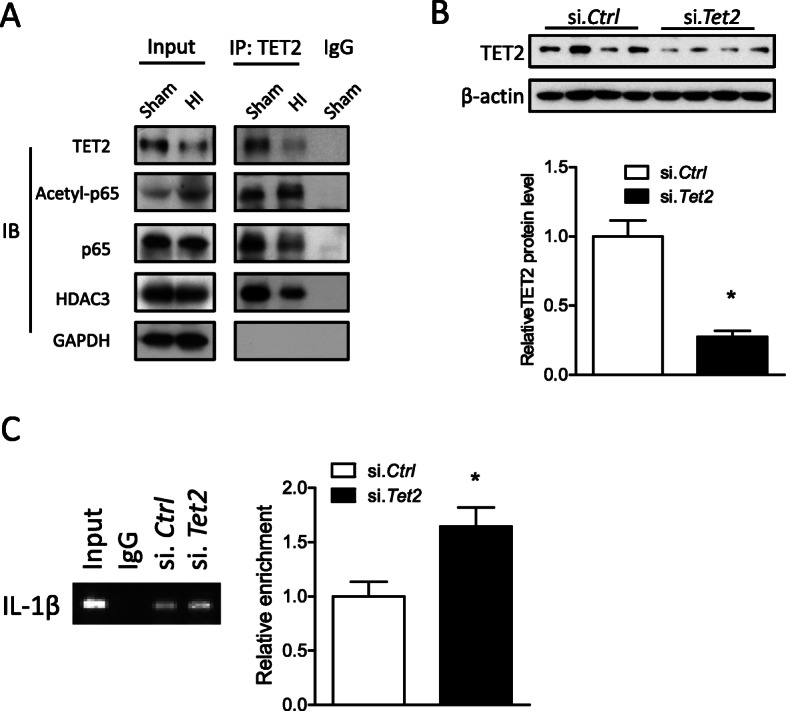
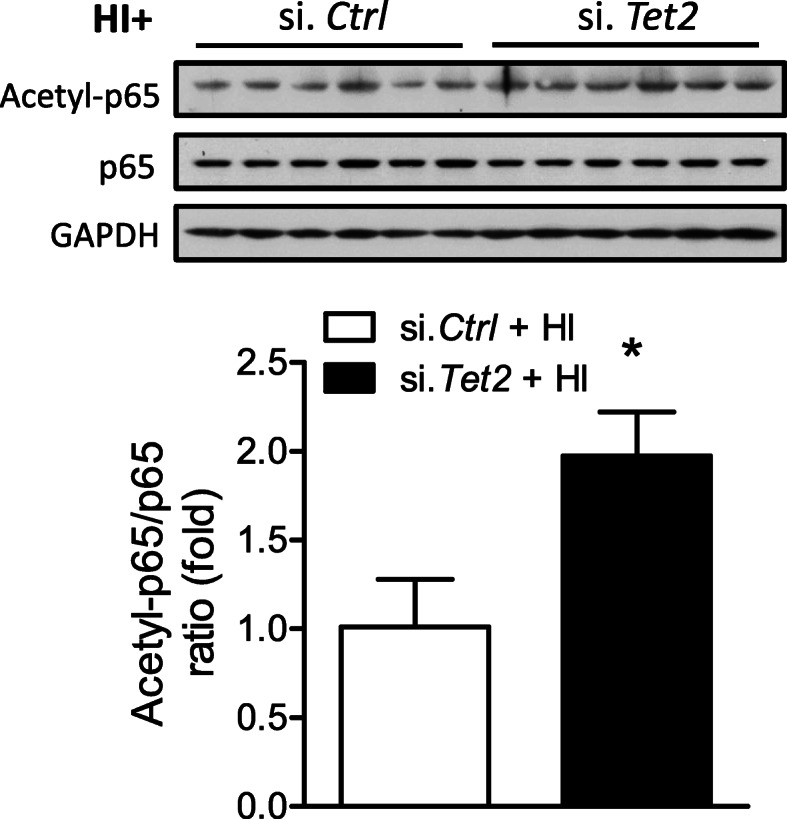
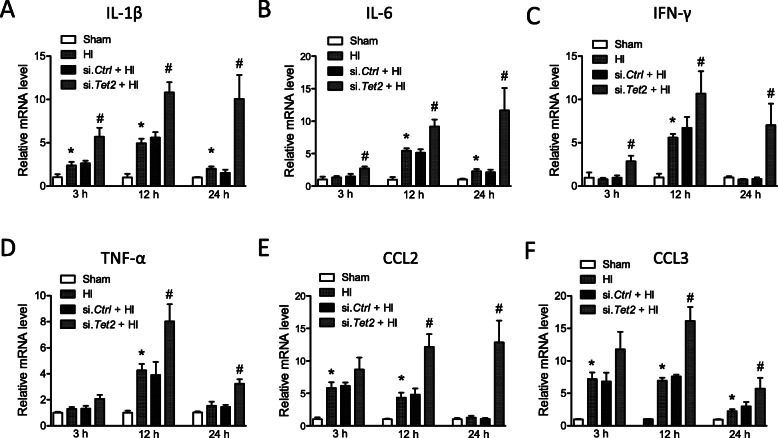
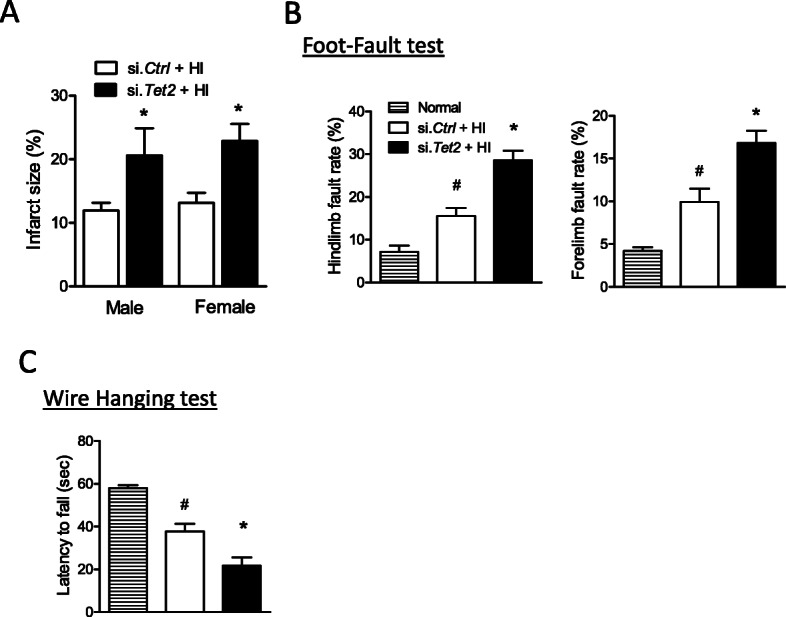
HI insult significantly upregulated miR-210, downregulated TET2 protein abundance, and increased NF-κB subunit p65 acetylation level and its DNA binding capacity to the interleukin 1 beta (IL-1β) promoter in the brain of mouse pups. Inhibition of miR-210 rescued TET2 protein level from HI insult and miR-210 mimic decreased TET2 protein level in the brain of mouse pups, suggesting that TET2 is a functional target of miR-210. The co-immunoprecipitation was performed to reveal the role of TET2 in HI-induced inflammatory response in the neonatal brain. The result showed that TET2 interacted with NF-κB subunit p65 and histone deacetylase 3 (HDAC3), a co-repressor of gene transcription. Furthermore, TET2 knockdown increased transcriptional activity of acetyl-p65 on IL-1β gene in the neonatal brain and enhanced HI-induced upregulation of acetyl-p65 level and pro-inflammatory cytokine expression. Of importance, TET2 knockdown exacerbated brain infarct size and neurological deficits and counteracted the neuroprotective effect of miR-210 inhibition. Finally, the in vitro results demonstrated that the miR-210-TET2 axis regulated pro-inflammatory response in BV2 mouse microglia cell line.
The miR-210-TET2 axis regulates pro-inflammatory cytokine expression in microglia, contributing to neonatal HI brain injury.
新生儿缺氧缺血性(HI)脑损伤是导致新生儿急性死亡和慢性残疾的主要原因。我们之前的研究表明,HI 损伤显著增加了新生鼠脑内 microRNA-210(miR-210)的含量,而脑内内源性 miR-210 抑制剂(LNA)抑制 miR-210 可提供 HI 诱导脑损伤的神经保护作用。然而,这种神经保护作用的分子机制尚不清楚。
我们制作了新生鼠 HI 脑损伤模型,以揭示 miR-210 靶向 ten eleven translocation(TET)甲基胞嘧啶双加氧酶 2 的机制,TET 是新生脑内促炎细胞因子基因的转录抑制因子。使用 TET2 沉默 RNA 来评估 TET2 在新生 HI 诱导的促炎反应和脑损伤中的作用。将 miR-210 模拟物和抑制剂(LNA)递送至新生鼠脑内,研究 miR-210 对 TET2 表达的调节作用。通过荧光素酶报告基因检测验证 miR-210 与 TET2 转录物 3'非翻译区的直接结合。此外,我们还使用 BV2 小鼠小胶质细胞系证实了 miR-210-TET2 轴在调节小胶质细胞促炎反应中的作用。在进行的实验中包括染色质免疫沉淀(ChIP)检测、共免疫沉淀、RT-PCR、脑梗死检测和神经行为测试。使用 Student's t 检验或单因素方差分析进行统计分析。
HI 损伤显著上调 miR-210,下调 TET2 蛋白丰度,并增加新生鼠脑内 NF-κB 亚基 p65 乙酰化水平及其与白细胞介素 1β(IL-1β)启动子的 DNA 结合能力。miR-210 抑制剂可挽救 HI 损伤引起的 TET2 蛋白水平降低,而 miR-210 模拟物可降低新生鼠脑内的 TET2 蛋白水平,提示 TET2 是 miR-210 的功能靶点。共免疫沉淀实验揭示了 TET2 在新生脑 HI 诱导的炎症反应中的作用。结果表明,TET2 与 NF-κB 亚基 p65 和组蛋白去乙酰化酶 3(HDAC3)相互作用,后者是基因转录的共抑制因子。此外,TET2 敲低增加了乙酰化 p65 在 IL-1β 基因上的转录活性,并增强了 HI 诱导的乙酰化 p65 水平和促炎细胞因子表达的上调。重要的是,TET2 敲低加重了脑梗死体积和神经功能缺损,并拮抗了 miR-210 抑制剂的神经保护作用。最后,体外实验结果表明,miR-210-TET2 轴调节了 BV2 小鼠小胶质细胞系的促炎反应。
miR-210-TET2 轴调节小胶质细胞中促炎细胞因子的表达,导致新生儿 HI 脑损伤。