Sim Erinn Zixuan, Shiraki Nobuaki, Kume Shoen
School of Life Science and Technology, Tokyo Institute of Technology, 4259-B-25 Nagatsuta-cho, Midori-ku, Yokohama, Kanagawa, 226-8501, Japan.
Inflamm Regen. 2021 Jan 5;41(1):1. doi: 10.1186/s41232-020-00152-5.
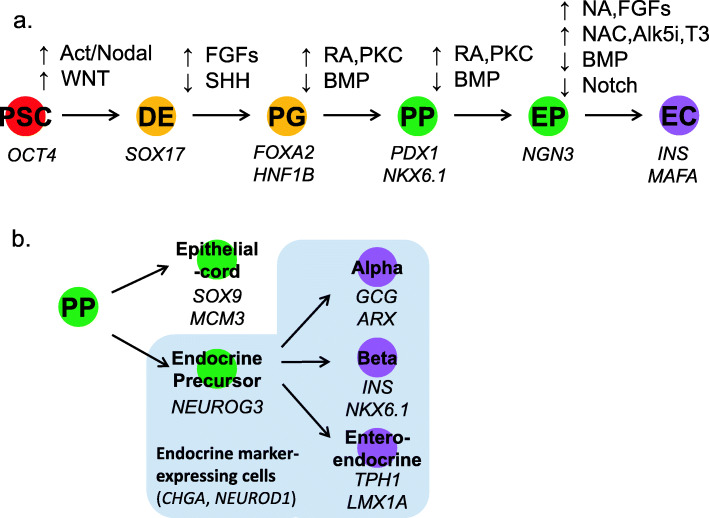
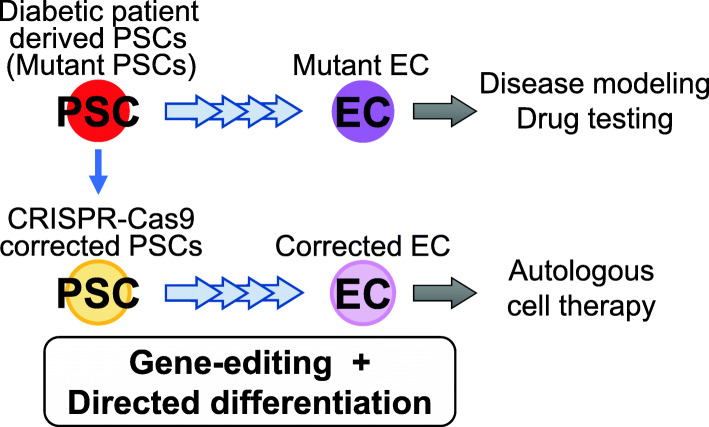
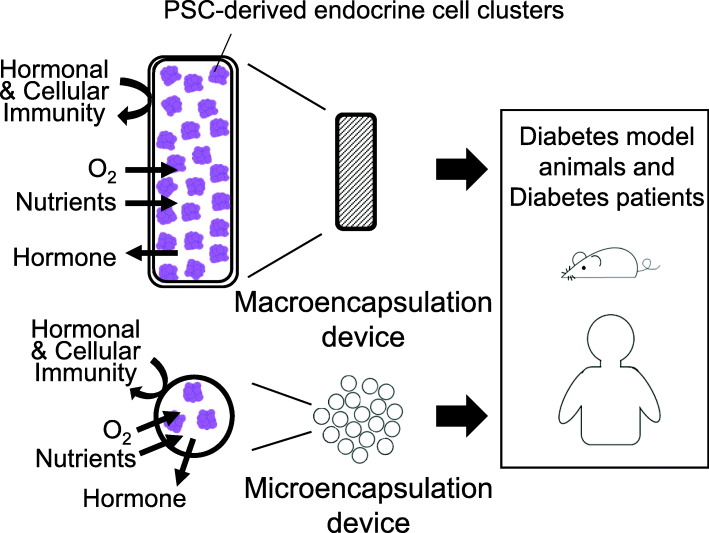
Human pluripotent stem cells (PSCs), including human embryonic stem cells and induced pluripotent stem cells, are promising cell sources in regenerating pancreatic islets through in vitro directed differentiation. Recent progress in this research field has made it possible to generate glucose-responsive pancreatic islet cells from PSCs. Single-cell RNA sequencing techniques have been applied to analyze PSC-derived endocrine beta-cells, which are then compared with human islets. This has led to the identification of novel signaling pathways and molecules involved in lineage commitment during pancreatic differentiation and maturation processes. Single-cell transcriptomics are also used to construct a detailed map of in vivo endocrine differentiation of developing mouse embryos to study pancreatic islet development. Mimicking those occurring in vivo, it was reported that differentiating PSCs can generate similar islet cell structures, while metabolomics analysis highlighted key components involved in PSC-derived pancreatic islet cell function, providing information for the improvement of in vitro pancreatic maturation procedures. In addition, cell transplantation into diabetic animal models, together with the cell delivery system, is studied to ensure the therapeutic potentials of PSC-derived pancreatic islet cells. Combined with gene-editing technology, the engineered mutation-corrected PSC lines originated from diabetes patients could be differentiated into functional pancreatic islet cells, suggesting possible autologous cell therapy in the future. These PSC-derived pancreatic islet cells are a potential tool for studies of disease modeling and drug testing. Herein, we outlined the directed differentiation procedures of PSC-derived pancreatic islet cells, novel findings through transcriptome and metabolome studies, and recent progress in disease modeling.
人类多能干细胞(PSCs),包括人类胚胎干细胞和诱导多能干细胞,是通过体外定向分化再生胰岛的有前景的细胞来源。该研究领域的最新进展使得从PSCs生成葡萄糖反应性胰岛细胞成为可能。单细胞RNA测序技术已被应用于分析PSCs来源的内分泌β细胞,然后将其与人类胰岛进行比较。这导致了在胰腺分化和成熟过程中参与谱系定向的新信号通路和分子的鉴定。单细胞转录组学也被用于构建发育中小鼠胚胎体内内分泌分化的详细图谱,以研究胰岛发育。据报道,模仿体内发生的情况,分化的PSCs可以产生类似的胰岛细胞结构,而代谢组学分析突出了PSCs来源的胰岛细胞功能中涉及的关键成分,为改进体外胰腺成熟程序提供了信息。此外,还研究了将细胞移植到糖尿病动物模型中以及细胞递送系统,以确保PSCs来源的胰岛细胞的治疗潜力。结合基因编辑技术,源自糖尿病患者的工程化突变校正PSCs系可以分化为功能性胰岛细胞,这表明未来可能进行自体细胞治疗。这些PSCs来源的胰岛细胞是疾病建模和药物测试研究的潜在工具。在此,我们概述了PSCs来源的胰岛细胞的定向分化程序、通过转录组和代谢组研究的新发现以及疾病建模的最新进展。