Institute for Cancer Genetics, Columbia University Medical Center, New York, NY.
Department of Biology, Columbia University, New York, NY.
J Cell Biol. 2021 Feb 1;220(2). doi: 10.1083/jcb.201807163.
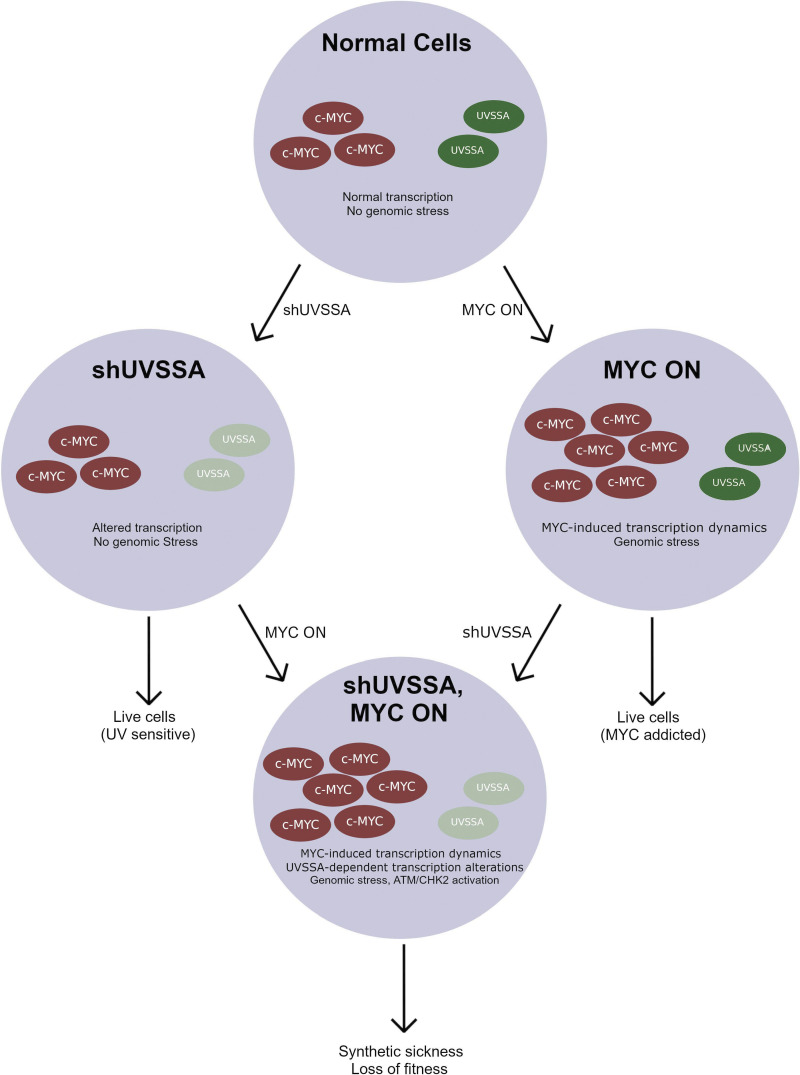
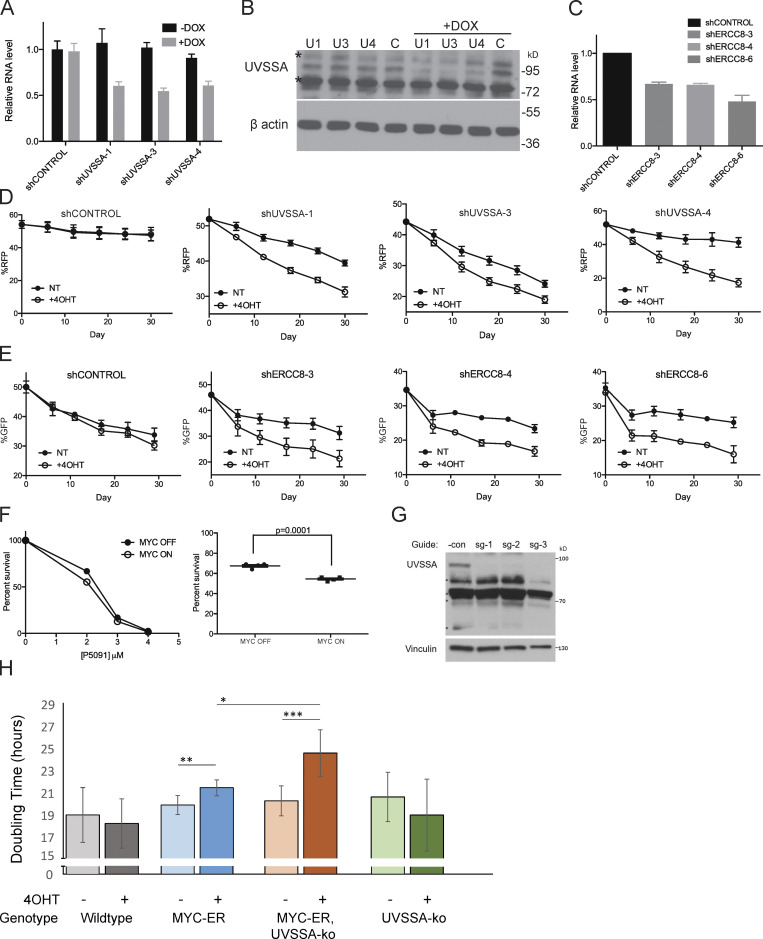
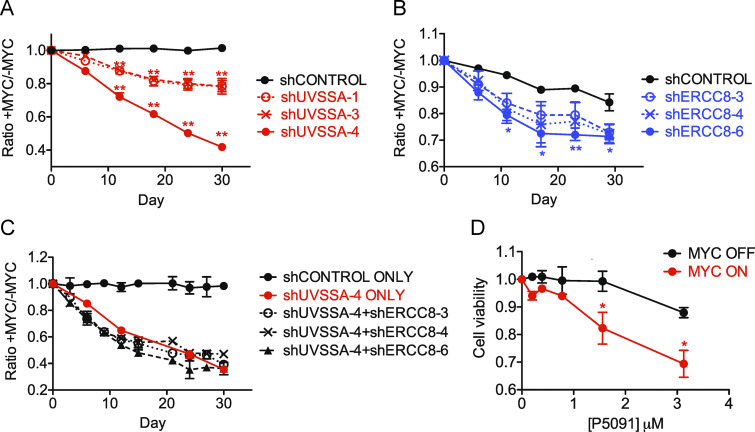
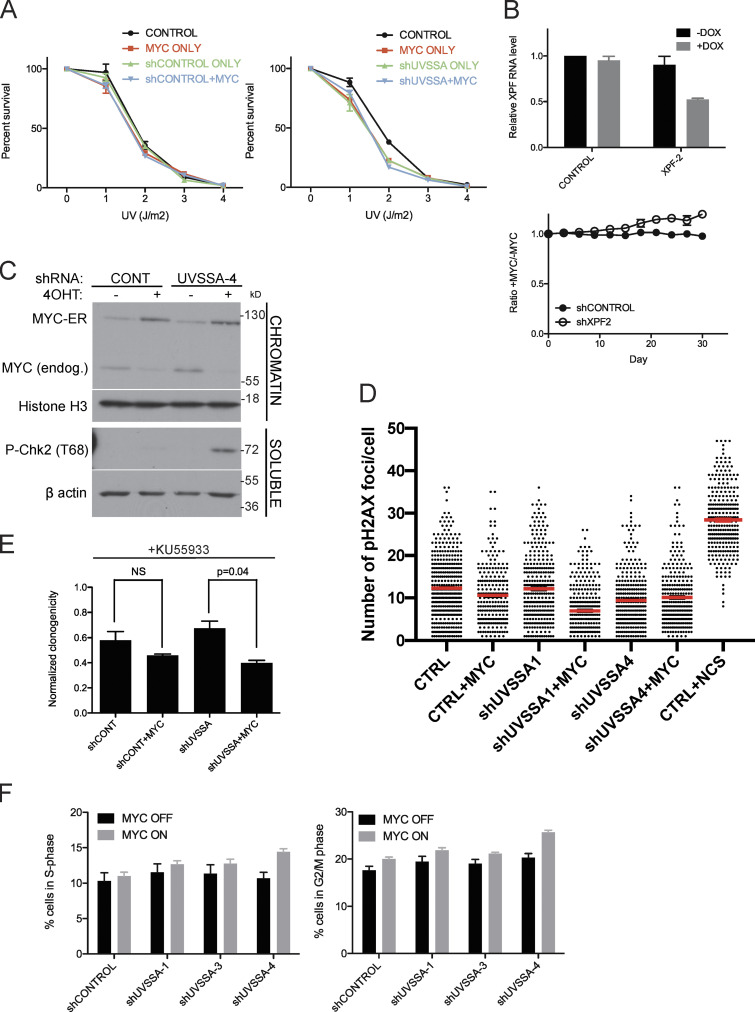
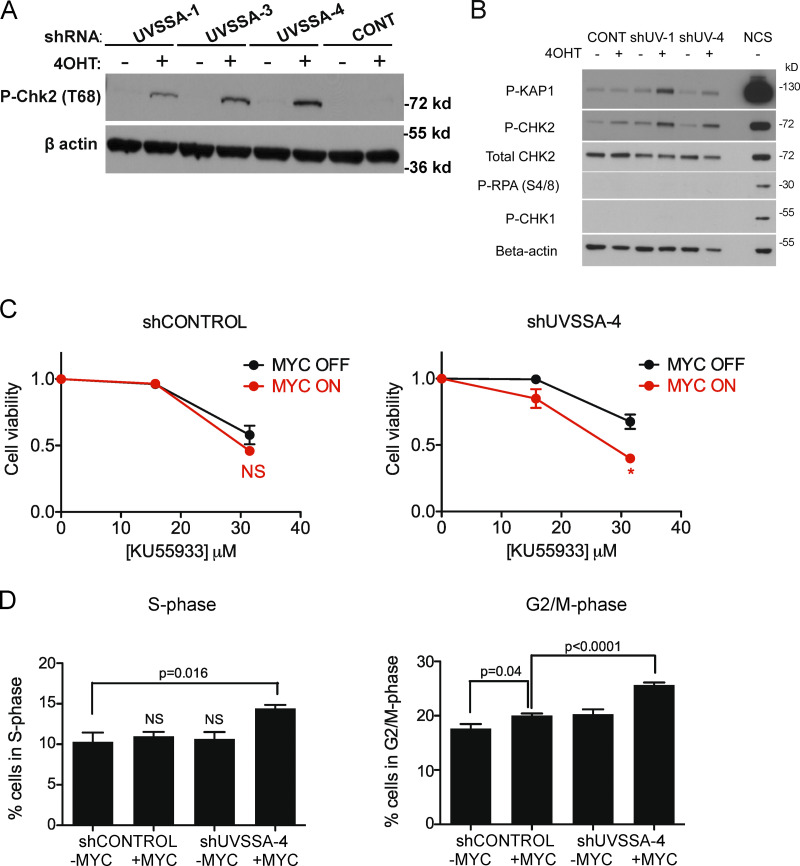
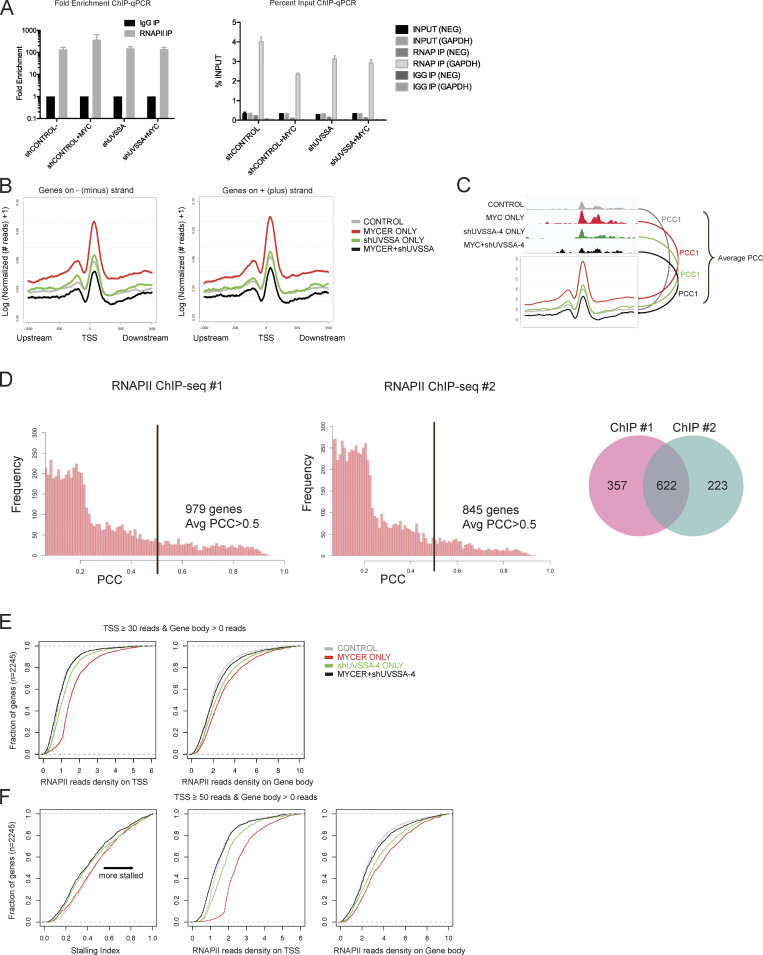
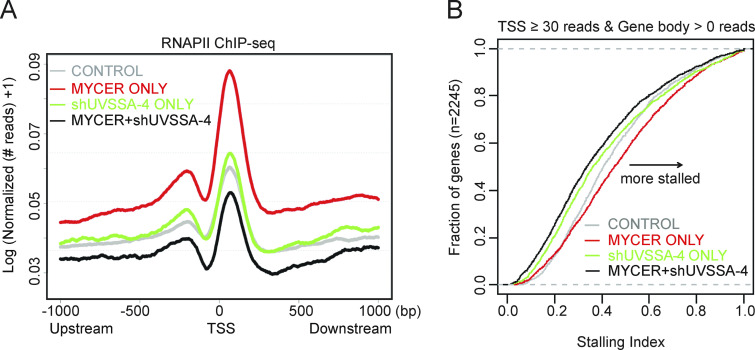
Cancer cells develop strong genetic dependencies, enabling survival under oncogenic stress. MYC is a key oncogene activated across most cancers, and identifying associated synthetic lethality or sickness can provide important clues about its activity and potential therapeutic strategies. On the basis of previously conducted genome-wide screenings in MCF10A cells expressing MYC fused to an estrogen receptor fragment, we identified UVSSA, a gene involved in transcription-coupled repair, whose knockdown or knockout decreased cell viability when combined with MYC expression. Synthetic sick interactions between MYC expression and UVSSA down-regulation correlated with ATM/CHK2 activation, suggesting increased genome instability. We show that the synthetic sick interaction is diminished by attenuating RNA polymerase II (RNAPII) activity; yet, it is independent of UV-induced damage repair, suggesting that UVSSA has a critical function in regulating RNAPII in the absence of exogenous DNA damage. Supporting this hypothesis, RNAPII ChIP-seq revealed that MYC-dependent increases in RNAPII promoter occupancy are reduced or abrogated by UVSSA knockdown, suggesting that UVSSA influences RNAPII dynamics during MYC-dependent transcription. Taken together, our data show that the UVSSA complex has a significant function in supporting MYC-dependent RNAPII dynamics and maintaining cell survival during MYC addiction. While the role of UVSSA in regulating RNAPII has been documented thus far only in the context of UV-induced DNA damage repair, we propose that its activity is also required to cope with transcriptional changes induced by oncogene activation.
癌细胞会产生强烈的遗传依赖性,使其能够在致癌压力下存活。MYC 是一种在大多数癌症中被激活的关键致癌基因,鉴定与之相关的合成致死性或疾病可以提供关于其活性和潜在治疗策略的重要线索。基于之前在表达 MYC 融合到雌激素受体片段的 MCF10A 细胞中进行的全基因组筛选,我们鉴定了 UVSSA,这是一个参与转录偶联修复的基因,当与 MYC 表达结合时,其敲低或敲除会降低细胞活力。MYC 表达和 UVSSA 下调之间的合成致死相互作用与 ATM/CHK2 激活相关,表明基因组不稳定性增加。我们表明,通过减弱 RNA 聚合酶 II(RNAPII)活性,合成的病态相互作用会减弱;然而,它独立于 UV 诱导的损伤修复,表明在没有外源性 DNA 损伤的情况下,UVSSA 在调节 RNAPII 方面具有关键功能。支持这一假设,RNAPII ChIP-seq 显示,MYC 依赖性增加的 RNAPII 启动子占据被 UVSSA 敲低减少或消除,表明 UVSSA 在 MYC 依赖性转录过程中影响 RNAPII 的动力学。综上所述,我们的数据表明,UVSSA 复合物在支持 MYC 依赖性 RNAPII 动力学和维持 MYC 成瘾期间的细胞存活方面具有重要功能。虽然迄今为止 UVSSA 在调节 RNAPII 方面的作用仅在 UV 诱导的 DNA 损伤修复的背景下得到了证实,但我们提出,其活性也需要应对由癌基因激活诱导的转录变化。