• 文献检索
  • 文档翻译
  • 深度研究
  • 学术资讯
  • Suppr Zotero 插件Zotero 插件
  • 邀请有礼
  • 套餐&价格
  • 历史记录
应用&插件
Suppr Zotero 插件Zotero 插件浏览器插件Mac 客户端Windows 客户端微信小程序
定价
高级版会员购买积分包购买API积分包
服务
文献检索文档翻译深度研究API 文档MCP 服务
关于我们
关于 Suppr公司介绍联系我们用户协议隐私条款
关注我们

Suppr 超能文献

核心技术专利:CN118964589B侵权必究
粤ICP备2023148730 号-1Suppr @ 2026

文献检索

告别复杂PubMed语法,用中文像聊天一样搜索,搜遍4000万医学文献。AI智能推荐,让科研检索更轻松。

立即免费搜索

文件翻译

保留排版,准确专业,支持PDF/Word/PPT等文件格式,支持 12+语言互译。

免费翻译文档

深度研究

AI帮你快速写综述,25分钟生成高质量综述,智能提取关键信息,辅助科研写作。

立即免费体验

COVID-19 发病病例预测:延迟早期的基于数据的分析。

Forecasting of COVID-19 onset cases: a data-driven analysis in the early stage of delay.

机构信息

School of Mathematics and Statistics, Beijing Technology and Business University, Beijing, 100048, China.

School of Science, Beijing University of Posts and Telecommunications, Beijing, 100876, China.

出版信息

Environ Sci Pollut Res Int. 2021 Apr;28(16):20240-20246. doi: 10.1007/s11356-020-11859-w. Epub 2021 Jan 6.

DOI:10.1007/s11356-020-11859-w
PMID:33405171
原文链接:https://pmc.ncbi.nlm.nih.gov/articles/PMC7786867/
Abstract

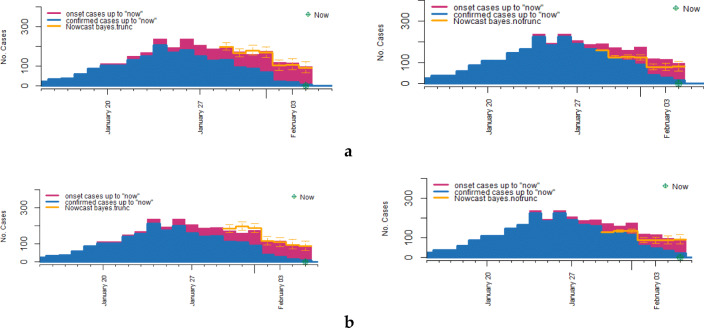
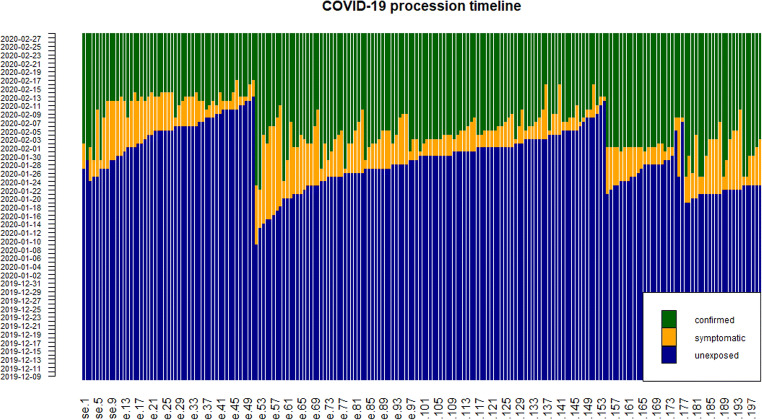
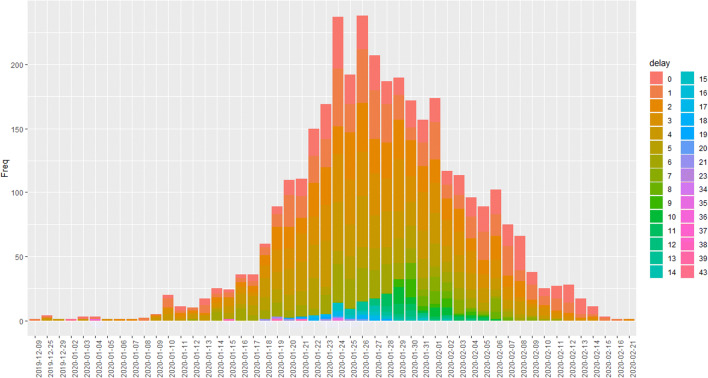
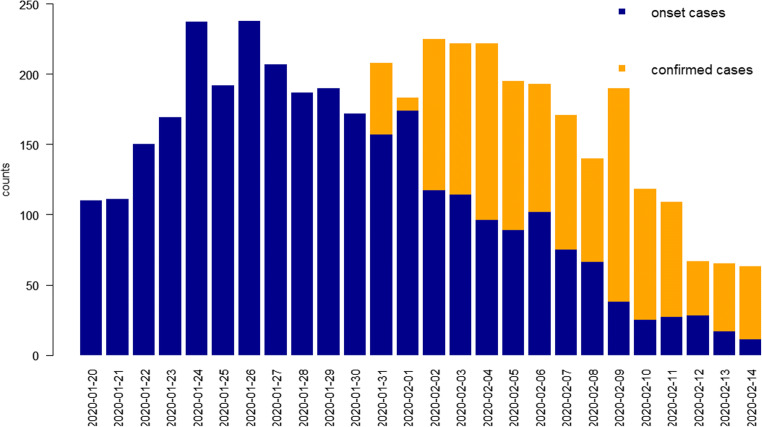
The outbreak of COVID-19 has become a global public health event. Many researchers have proposed many epidemiological models to predict the outbreak trend of COVID-19, but all use confirmed cases to predict "onset cases." In this article, a total of 5434 cases were collected from National Health Commission and other provincial Health Commission in China, spanning from 1 December 2019 to 23 February 2020. We studied the delayed distribution of patients from onset to be confirmed. The delay is divided into two stages, which takes about 15 days or even longer. Therefore, considering the right truncation of the data, we proposed a "predict-in-advance" method, used the number of "visiting hospital cases" to predict the number of "onset cases." The results not only show that our prediction shortens the delay of the second stage, but also the predicted value of onset cases is quite close to the real value of onset cases, which can effectively predict the epidemic trend of sudden infectious diseases, and provide an important reference for the government to formulate control measures in advance.

摘要

新型冠状病毒肺炎疫情的爆发已成为全球公共卫生事件。许多研究人员提出了许多流行病学模型来预测 COVID-19 的爆发趋势,但都使用确诊病例来预测“发病病例”。本文从国家卫健委和其他省级卫健委共收集了 5434 例病例,时间跨度为 2019 年 12 月 1 日至 2020 年 2 月 23 日。我们研究了患者从发病到确诊的延迟分布。延迟分为两个阶段,大约需要 15 天甚至更长时间。因此,考虑到数据的右截断,我们提出了一种“提前预测”方法,使用“就诊病例”数来预测“发病病例”数。结果不仅表明我们的预测缩短了第二阶段的延迟,而且发病病例的预测值与发病病例的实际值非常接近,这可以有效预测突发传染病的流行趋势,为政府提前制定防控措施提供重要参考。
https://cdn.ncbi.nlm.nih.gov/pmc/blobs/a54c/7786867/539a3d5fd514/11356_2020_11859_Fig4_HTML.jpg
https://cdn.ncbi.nlm.nih.gov/pmc/blobs/a54c/7786867/2dbbca7ebbcc/11356_2020_11859_Fig1_HTML.jpg
https://cdn.ncbi.nlm.nih.gov/pmc/blobs/a54c/7786867/bffb9d0322d6/11356_2020_11859_Fig2_HTML.jpg
https://cdn.ncbi.nlm.nih.gov/pmc/blobs/a54c/7786867/4c58c4ee10cc/11356_2020_11859_Fig3_HTML.jpg
https://cdn.ncbi.nlm.nih.gov/pmc/blobs/a54c/7786867/539a3d5fd514/11356_2020_11859_Fig4_HTML.jpg
https://cdn.ncbi.nlm.nih.gov/pmc/blobs/a54c/7786867/2dbbca7ebbcc/11356_2020_11859_Fig1_HTML.jpg
https://cdn.ncbi.nlm.nih.gov/pmc/blobs/a54c/7786867/bffb9d0322d6/11356_2020_11859_Fig2_HTML.jpg
https://cdn.ncbi.nlm.nih.gov/pmc/blobs/a54c/7786867/4c58c4ee10cc/11356_2020_11859_Fig3_HTML.jpg
https://cdn.ncbi.nlm.nih.gov/pmc/blobs/a54c/7786867/539a3d5fd514/11356_2020_11859_Fig4_HTML.jpg

相似文献

1
Forecasting of COVID-19 onset cases: a data-driven analysis in the early stage of delay.COVID-19 发病病例预测:延迟早期的基于数据的分析。
Environ Sci Pollut Res Int. 2021 Apr;28(16):20240-20246. doi: 10.1007/s11356-020-11859-w. Epub 2021 Jan 6.
2
A Bayesian Approach to Real-Time Monitoring and Forecasting of Chinese Foodborne Diseases.贝叶斯方法在实时监测和预测中国食源性疾病中的应用
Int J Environ Res Public Health. 2018 Aug 13;15(8):1740. doi: 10.3390/ijerph15081740.
3
The spatial transmission of SARS-CoV-2 in China under the prevention and control measures at the early outbreak.疫情初期防控措施下新型冠状病毒在中国的空间传播。
Arch Public Health. 2021 Jan 13;79(1):8. doi: 10.1186/s13690-021-00529-z.
4
[Fitting and forecasting the trend of COVID-19 by SEIR(+CAQ) dynamic model].基于SEIR(+CAQ)动态模型拟合与预测新型冠状病毒肺炎疫情趋势
Zhonghua Liu Xing Bing Xue Za Zhi. 2020 Apr 10;41(4):470-475. doi: 10.3760/cma.j.cn112338-20200216-00106.
5
A COVID-19 Pandemic Artificial Intelligence-Based System With Deep Learning Forecasting and Automatic Statistical Data Acquisition: Development and Implementation Study.一种基于人工智能的新冠肺炎大流行深度学习预测与自动统计数据采集系统:开发与实施研究
J Med Internet Res. 2021 May 20;23(5):e27806. doi: 10.2196/27806.
6
Risk estimation and prediction of the transmission of coronavirus disease-2019 (COVID-19) in the mainland of China excluding Hubei province.中国大陆(不含湖北省) 2019 年冠状病毒病(COVID-19)传播的风险估计和预测。
Infect Dis Poverty. 2020 Aug 24;9(1):116. doi: 10.1186/s40249-020-00683-6.
7
Tracking and forecasting milepost moments of the epidemic in the early-outbreak: framework and applications to the COVID-19.追踪和预测疫情早期的里程碑时刻:COVID-19 的框架和应用
F1000Res. 2020 May 6;9:333. doi: 10.12688/f1000research.23107.2. eCollection 2020.
8
Outbreak Trends of Coronavirus Disease-2019 in India: A Prediction.印度 2019 年冠状病毒病疫情趋势预测。
Disaster Med Public Health Prep. 2020 Oct;14(5):e33-e38. doi: 10.1017/dmp.2020.115. Epub 2020 Apr 22.
9
Forecasting the long-term trend of COVID-19 epidemic using a dynamic model.利用动态模型预测 COVID-19 疫情的长期趋势。
Sci Rep. 2020 Dec 3;10(1):21122. doi: 10.1038/s41598-020-78084-w.
10
Insights on defeating coronavirus disease (COVID-19) outbreak and predicting tourist arrival on the Chinese Hainan Leisure Island during the COVID-19 pandemic.关于战胜冠状病毒病(COVID-19)疫情以及预测COVID-19大流行期间中国海南休闲岛游客到访情况的见解。
Medicine (Baltimore). 2021 Oct 15;100(41):e27516. doi: 10.1097/MD.0000000000027516.

引用本文的文献

1
Predicting COVID-19 cases using bidirectional LSTM on multivariate time series.基于多变量时间序列的双向 LSTM 预测 COVID-19 病例。
Environ Sci Pollut Res Int. 2021 Oct;28(40):56043-56052. doi: 10.1007/s11356-021-14286-7. Epub 2021 May 27.