Department of Neurological Surgery, Feinberg School of Medicine, Northwestern University, Chicago, IL 60611, USA; Department of Cancer Biology, The University of Texas MD Anderson Cancer Center, Houston, TX 77030, USA.
Department of Cancer Biology, The University of Texas MD Anderson Cancer Center, Houston, TX 77030, USA.
Cell Rep. 2021 Jan 5;34(1):108597. doi: 10.1016/j.celrep.2020.108597.
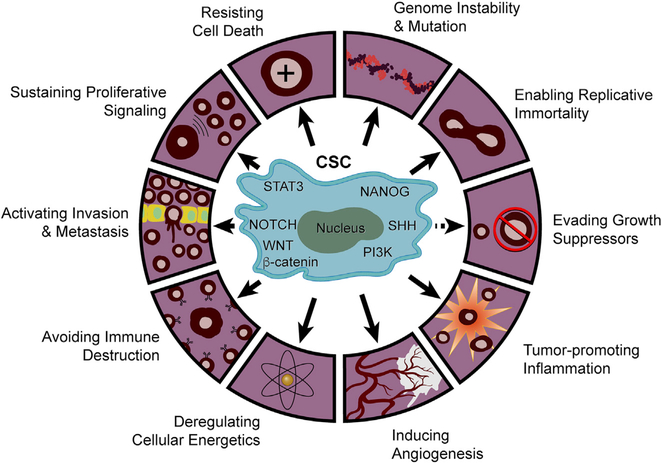
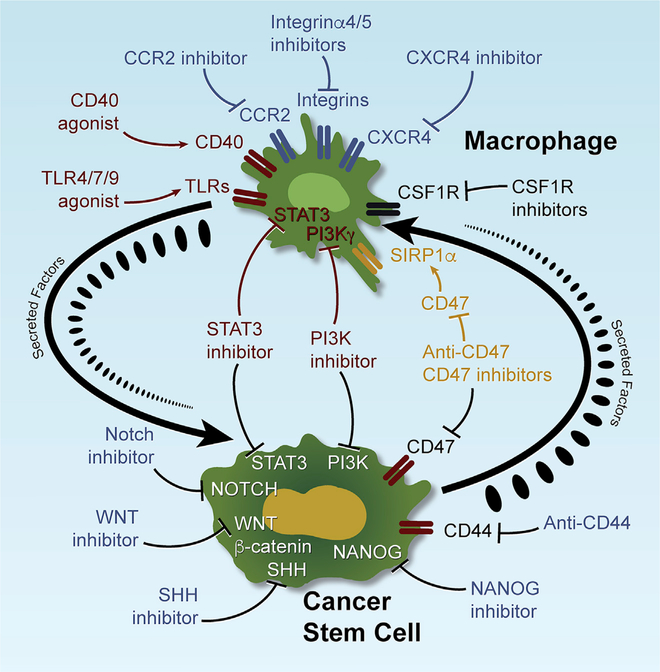
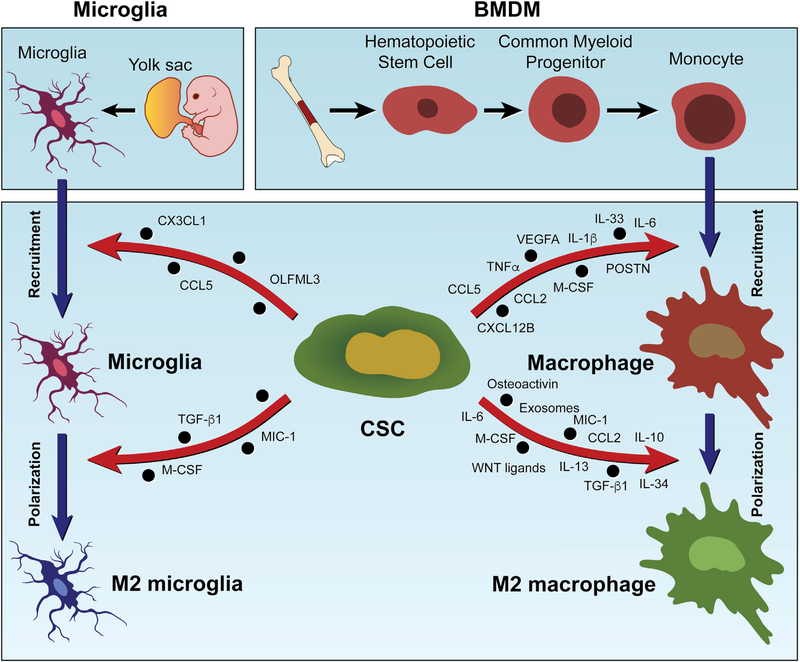
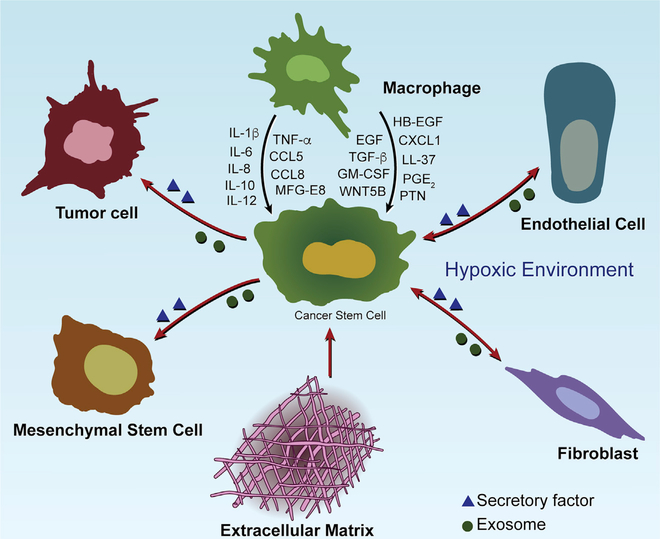
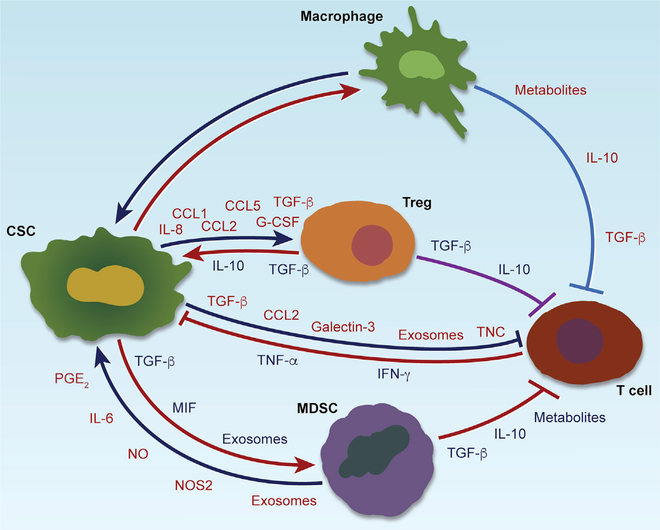
Cancer stem cells (CSCs) are self-renewing cells that facilitate tumor initiation, promote metastasis, and enhance cancer therapy resistance. Transcriptomic analyses across many cancer types have revealed a prominent association between stemness and immune signatures, potentially implying a biological interaction between such hallmark features of cancer. Emerging experimental evidence has substantiated the influence of CSCs on immune cells, including tumor-associated macrophages, myeloid-derived suppressor cells, and T cells, in the tumor microenvironment and, reciprocally, the importance of such immune cells in sustaining CSC stemness and its survival niche. This review covers the cellular and molecular mechanisms underlying the symbiotic interactions between CSCs and immune cells and how such heterotypic signaling maintains a tumor-promoting ecosystem and informs therapeutic strategies intercepting this co-dependency.
癌症干细胞(CSCs)是具有自我更新能力的细胞,能够促进肿瘤的起始、转移,并增强癌症治疗的抗性。在许多癌症类型中进行的转录组分析表明,干性和免疫特征之间存在显著关联,这可能意味着癌症的这些标志性特征之间存在生物学相互作用。新兴的实验证据证实了 CSCs 对肿瘤微环境中的免疫细胞(包括肿瘤相关巨噬细胞、髓系来源的抑制细胞和 T 细胞)的影响,反之亦然,这些免疫细胞在维持 CSC 干性及其生存龛位方面的重要性。本综述涵盖了 CSCs 和免疫细胞之间共生相互作用的细胞和分子机制,以及这种异型信号如何维持促进肿瘤的生态系统,并为阻断这种相互依赖的治疗策略提供信息。