
难治性肠炎伴纵向鹅卵石样外观溃疡的慢性活动性 EBV 感染:一例尸检病例报告。
Chronic active EBV infection in refractory enteritis with longitudinal ulcers with a cobblestone appearance: an autopsied case report.
机构信息
Department of Gastroenterology and Hepatology, Nara Prefecture General Medical Center, Nara, Japan.
Department of Gastroenterology and Hepatology, Nara Medical University, 840 Shijo-cho, Kashihara, Nara, 634-8522, Japan.
出版信息
BMC Gastroenterol. 2021 Jan 6;21(1):6. doi: 10.1186/s12876-020-01589-1.
BACKGROUND
Chronic active Epstein-Barr virus infection (CAEBV) is defined as Epstein-Barr virus (EBV)-positive T/NK cell-related neoplasia, and its major clinical symptom is systemic inflammation presenting as infectious mononucleocytosis, whereas enteritis and diarrhea are minor clinical symptoms. The complex mixture of tumorigenic processes of EBV-positive cells and physical symptoms of systemic inflammatory disease constitutes the varied phenotypes of CAEBV. Herein, we describe a case of CAEBV that was initially diagnosed as Crohn's disease (CD) based on ileal ulcers and clinical symptoms of enteritis.
CASE PRESENTATION
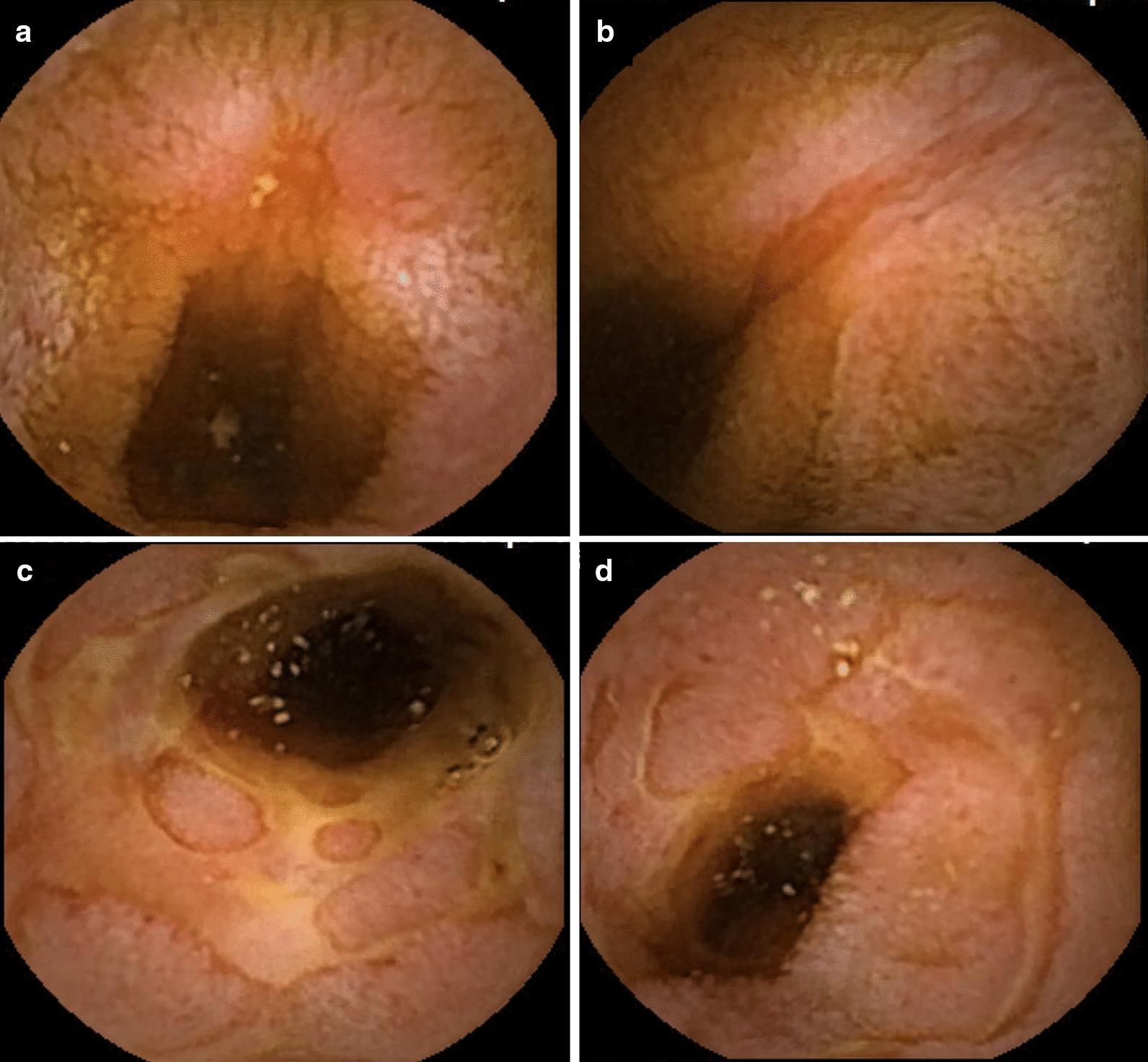
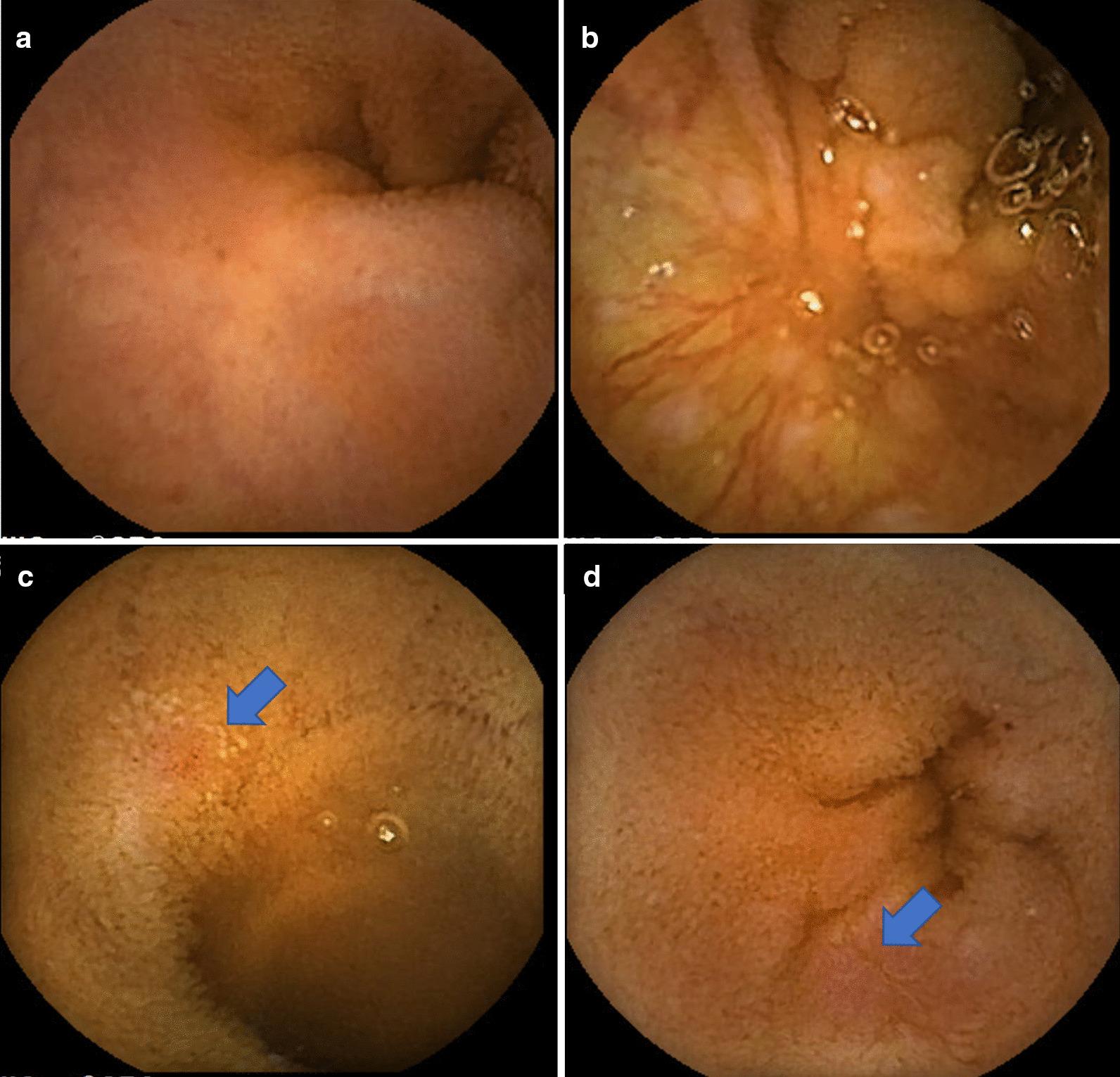
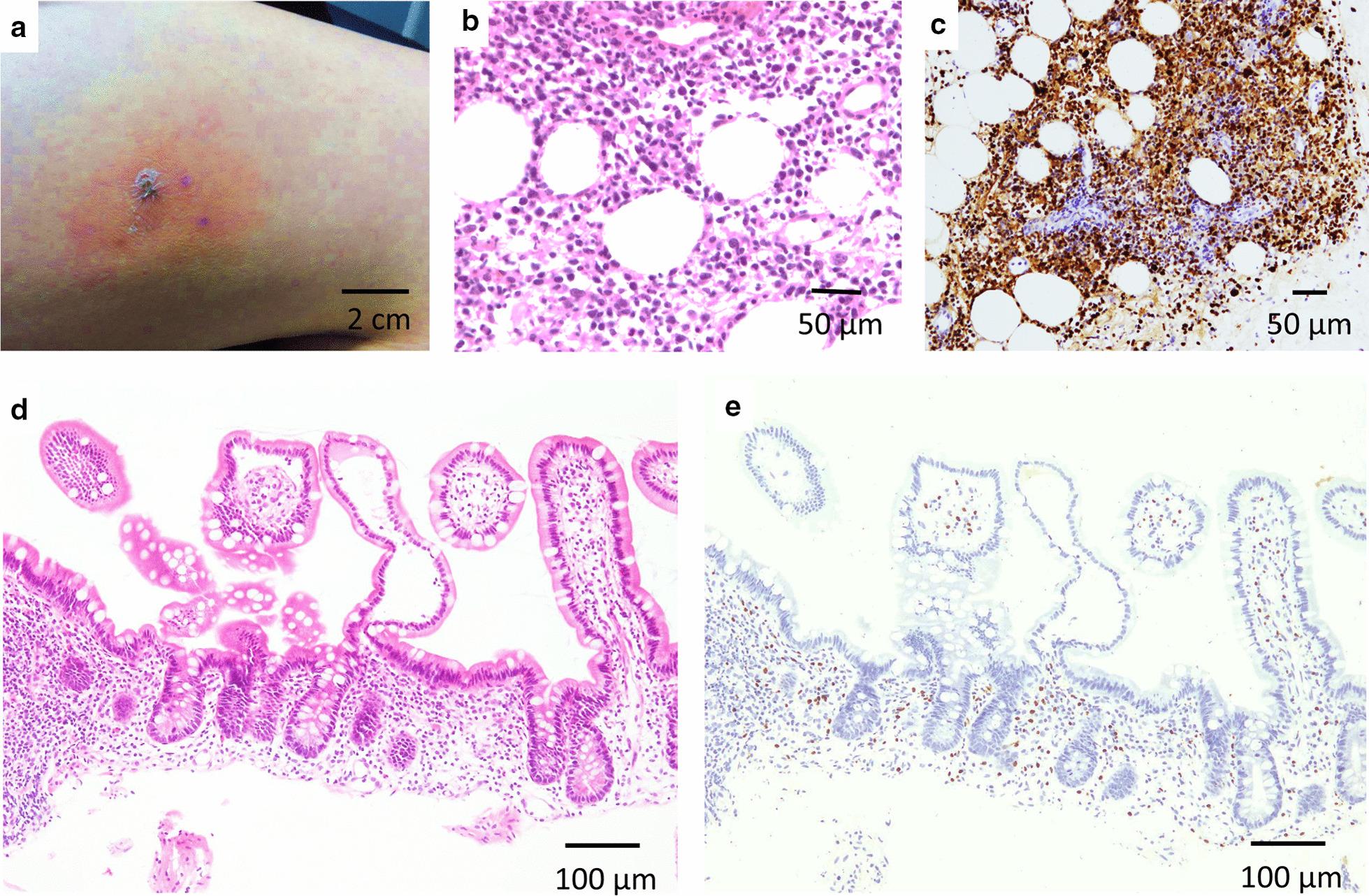
A 19-year-old woman complained of abdominal pain and fever. Blood examination showed normal blood cell counts without atypical lymphocyte but detected modest inflammation, hypoalbuminemia, slight liver dysfunction, and evidence of past EBV infection. The esophagogastroduodenoscopic findings were normal. However, colonoscopy revealed a few small ulcers in the terminal ileum. The jejunum and ileum also exhibited various forms of ulcers, exhibiting a cobblestone appearance, on capsule endoscopy. Based on these clinical findings, she was strongly suspected with CD. In the course of treatment by steroid and biologics for refractory enteritis, skin ulcers appeared about 50 months after her initial hospital visit. Immunohistology of her skin biopsy revealed proliferation of EBV-encoded small RNA (EBER)-positive atypical lymphocytes. We retrospectively assessed her previous ileal ulcer biopsy before treatment and found many EBER-positive lymphocytes. Blood EBV DNA was also positive. Therefore, she was diagnosed with extranodal NK/T-cell lymphoma with CAEBV-related enteritis rather than CD. She was treated with cyclosporine and prednisolone combination therapy for CAEBV-related systemic inflammation and chemotherapy for malignant lymphoma. Unfortunately, her disease continued to progress, leading to multiple organ failure and death at the age of 23 years.
CONCLUSION
Clinicians need to remember the possibility of CAEBV as a differential diagnosis of refractory enteritis. Enteritis with intestinal ulcer is a rare symptom of CAEBV, and it is impossible to acquire a definitive diagnosis by ulcer morphology only. In cases where the possibility of CAEBV remains, tissue EBVR expression should be checked by in situ hybridization and blood EBV DNA.
背景
慢性活动性 EBV 感染(CAEBV)被定义为 EBV 阳性 T/NK 细胞相关性肿瘤,其主要临床症状为全身炎症表现为传染性单核细胞增多症,而肠炎和腹泻则为次要临床症状。EBV 阳性细胞的肿瘤发生过程与全身炎症性疾病的物理症状的复杂混合构成了 CAEBV 的多种表型。在此,我们描述了一例 CAEBV 病例,该病例最初基于回肠溃疡和肠炎的临床症状被诊断为克罗恩病(CD)。
病例介绍
一名 19 岁女性因腹痛和发热就诊。血液检查显示血白细胞计数正常,无异型淋巴细胞,但存在中度炎症、低白蛋白血症、轻度肝功能异常和 EBV 既往感染的证据。食管胃十二指肠镜检查正常。然而,结肠镜检查显示末端回肠有几个小溃疡。胶囊内镜检查显示空肠和回肠也有各种形式的溃疡,呈现鹅卵石样外观。基于这些临床发现,强烈怀疑她患有 CD。在类固醇和生物制剂治疗难治性肠炎的过程中,她在初次就诊后约 50 个月时出现皮肤溃疡。皮肤活检的免疫组织化学显示 EBV 编码的小 RNA(EBER)阳性异型淋巴细胞增殖。我们回顾性评估了她在治疗前的回肠溃疡活检,发现许多 EBER 阳性淋巴细胞。血液 EBV DNA 也呈阳性。因此,她被诊断为结外 NK/T 细胞淋巴瘤伴 CAEBV 相关性肠炎,而非 CD。她接受了环孢素和泼尼松龙联合治疗 CAEBV 相关全身炎症和化疗恶性淋巴瘤。不幸的是,她的疾病持续进展,导致多器官衰竭并于 23 岁时死亡。
结论
临床医生需要记住 CAEBV 作为难治性肠炎鉴别诊断的可能性。伴有肠溃疡的肠炎是 CAEBV 的罕见症状,仅通过溃疡形态无法获得明确诊断。在 CAEBV 的可能性仍然存在的情况下,应通过原位杂交和血液 EBV DNA 检查组织中的 EBV 表达。


 Zotero 插件