Michalak Krzysztof Piotr, Michalak Amelia Zofia
Laboratory of Vision Science and Optometry, Physics and Astronomy Faculty, Adam Mickiewicz University in Poznań, Poznań, Poland.
Faculty of Medicine, Poznań University of Medical Sciences, Poznań, Poland.
Front Immunol. 2025 Apr 8;16:1558263. doi: 10.3389/fimmu.2025.1558263. eCollection 2025.
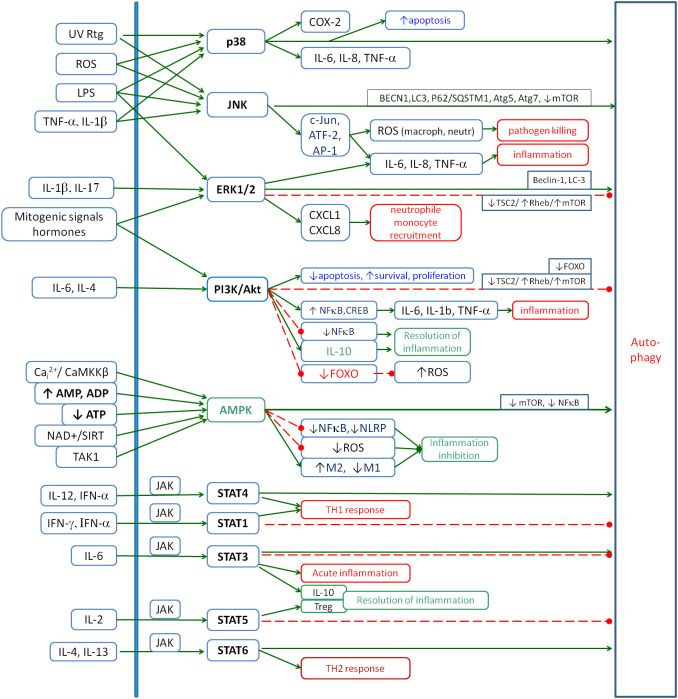
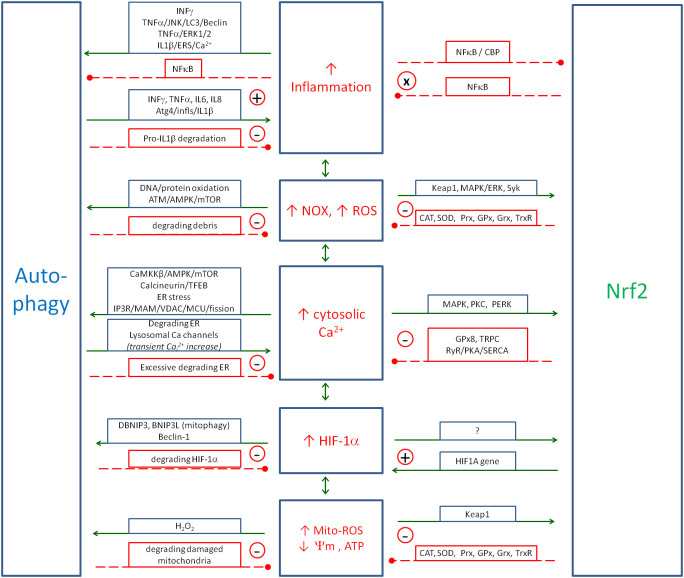
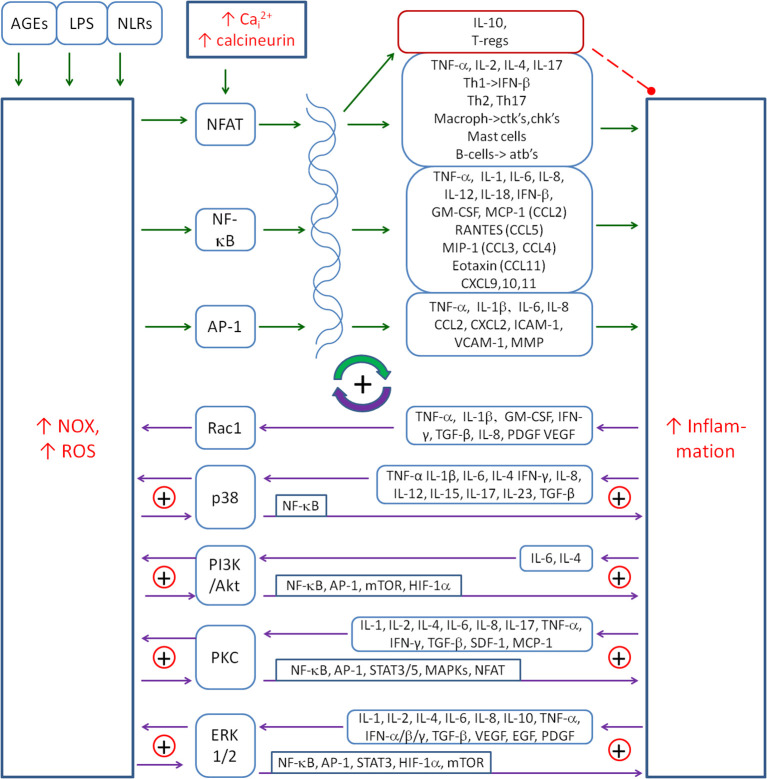
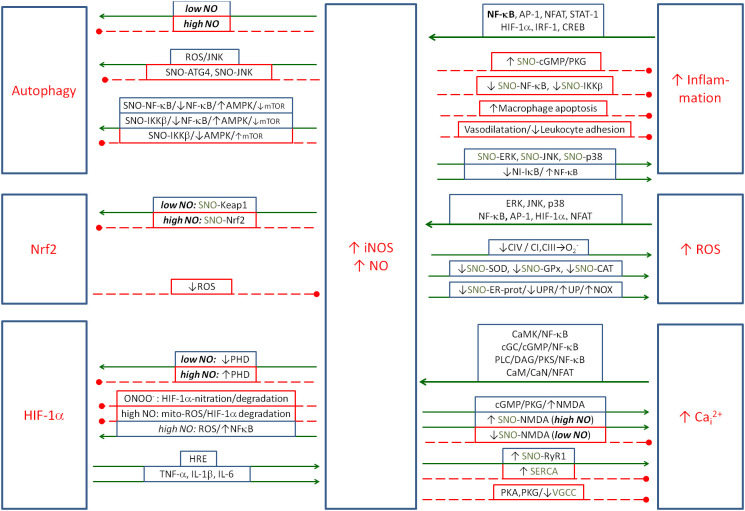
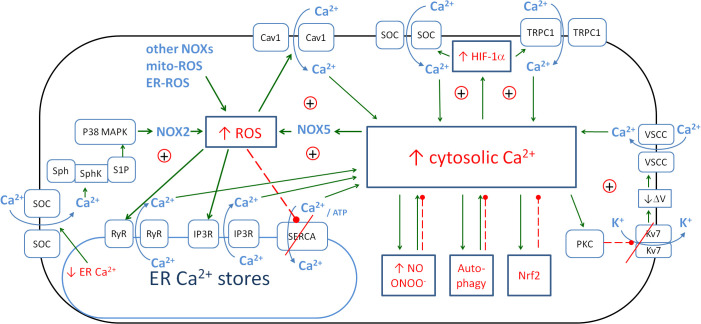
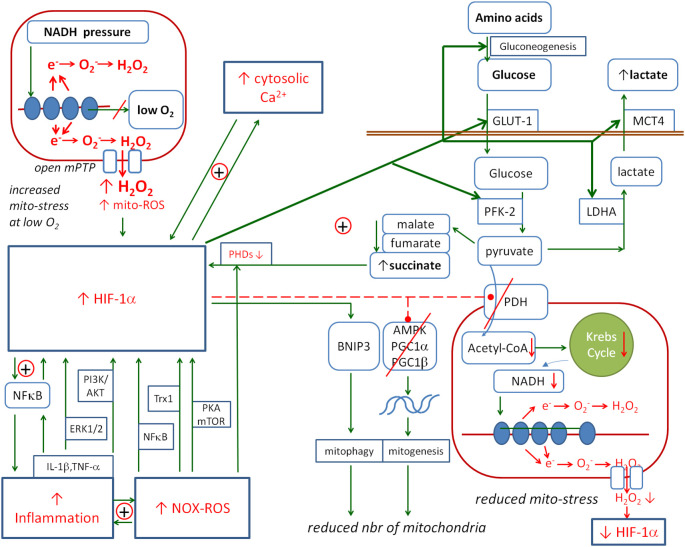
Chronic inflammation is an important component of many diseases, including autoimmune diseases, intracellular infections, dysbiosis and degenerative diseases. An important element of this state is the mainly positive feedback between inflammatory cytokines, reactive oxygen species (ROS), nitric oxide (NO), increased intracellular calcium, hypoxia-inducible factor 1-alpha (HIF-1α) stabilisation and mitochondrial oxidative stress, which, under normal conditions, enhance the response against pathogens. Autophagy and the nuclear factor erythroid 2-related factor 2 (Nrf2)-mediated antioxidant response are mainly negatively coupled with the above-mentioned elements to maintain the defence response at a level appropriate to the severity of the infection. The current review is the first attempt to build a multidimensional model of cellular self-regulation of chronic inflammation. It describes the feedbacks involved in the inflammatory response and explains the possible pathways by which inflammation becomes chronic. The multiplicity of positive feedbacks suggests that symptomatic treatment of chronic inflammation should focus on inhibiting multiple positive feedbacks to effectively suppress all dysregulated elements including inflammation, oxidative stress, calcium stress, mito-stress and other metabolic disturbances.
慢性炎症是许多疾病的重要组成部分,包括自身免疫性疾病、细胞内感染、生态失调和退行性疾病。这种状态的一个重要因素是炎症细胞因子、活性氧(ROS)、一氧化氮(NO)、细胞内钙增加、缺氧诱导因子1α(HIF-1α)稳定和线粒体氧化应激之间主要为正反馈,在正常情况下,这些因素会增强对病原体的反应。自噬和核因子红细胞2相关因子2(Nrf2)介导的抗氧化反应主要与上述因素呈负相关,以将防御反应维持在与感染严重程度相适应的水平。本综述首次尝试构建慢性炎症细胞自我调节的多维模型。它描述了炎症反应中涉及的反馈,并解释了炎症转为慢性的可能途径。正反馈的多样性表明,慢性炎症的对症治疗应侧重于抑制多个正反馈,以有效抑制所有失调因素,包括炎症、氧化应激、钙应激、线粒体应激和其他代谢紊乱。