Li Quan, Yu Wei, Qu Yun, Wang Jin-Qiu, Mao Ning, Kang Hai
Department of Emergency, Affiliated Yantai Yuhuangding Hospital of Qingdao University, 264000, Yantai, China.
Department of Neurology, Affiliated Yantai Yuhuangding Hospital of Qingdao University, Yantai, China.
BMC Neurol. 2021 Jan 7;21(1):8. doi: 10.1186/s12883-020-02034-2.
Clinically, bromadiolone poisoning is characterized by severe bleeding complications in various organs and tissues. Bromadiolone-induced toxic encephalopathy is extremely rare. Here, we report a special case of bromadiolone-induced reversible toxic encephalopathy in a patient who had symmetrical lesions in the deep white matter.
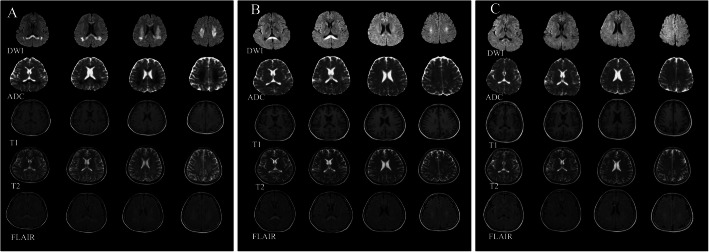
A 23-year-old woman mainly presented with dizziness, fatigue, alalia and unsteady gait after the ingestion of bromadiolone. The laboratory examinations showed normal coagulation levels. Brain magnetic resonance imaging (MRI) showed apparent diffusion restriction in the bilateral deep white matter. The clinical manifestations and MRI alterations were reversible within one month of treatment with vitamin K. The neuropsychological assessment showed no neurodegenerative changes at the 2-year follow-up.
With the increased use of bromadiolone as a rodenticide, more cases of ingestion have been reported annually over the past several years. Bromadiolone-induced toxic encephalopathy has no special clinical manifestations and is potentially reversible with timely treatment. Because of the reversible restricted diffusion on diffusion-weighted images (DWI) and low apparent diffusion coefficient (ADC) values, transient intramyelinic cytotoxic oedema is thought to be the cause rather than persistent ischaemia. The underlying pathophysiological mechanism is still unknown and may be coagulant-independent. This clinical case extends the current knowledge about neurotoxicity in cases of bromadiolone poisoning and indicates that MRI is useful for the early detection of bromadiolone-induced toxic encephalopathy.
临床上,溴敌隆中毒的特征是各器官和组织出现严重出血并发症。溴敌隆诱发的中毒性脑病极为罕见。在此,我们报告一例溴敌隆诱发的可逆性中毒性脑病特殊病例,该患者深部白质有对称性病变。
一名23岁女性在摄入溴敌隆后主要表现为头晕、乏力、言语不清和步态不稳。实验室检查显示凝血水平正常。脑磁共振成像(MRI)显示双侧深部白质有明显的扩散受限。经维生素K治疗1个月内,临床表现和MRI改变均可逆。2年随访时神经心理学评估显示无神经退行性改变。
随着溴敌隆作为灭鼠剂使用的增加,在过去几年中每年报告的摄入病例增多。溴敌隆诱发的中毒性脑病无特殊临床表现,及时治疗可能可逆。由于扩散加权成像(DWI)上可逆的扩散受限及表观扩散系数(ADC)值较低,推测其原因是短暂的髓鞘内细胞毒性水肿而非持续性缺血。潜在的病理生理机制仍不清楚,可能与凝血无关。该临床病例扩展了目前关于溴敌隆中毒神经毒性的认识,并表明MRI有助于早期发现溴敌隆诱发的中毒性脑病。