Department of Hepatology, The First Hospital of Jilin University, 71 Xinmin Street, Changchun, 130021, Jilin Province, China.
Department of Infectious Diseases, The Fourth Hospital of Harbin Medical University, Harbin, 150001, Heilongjiang Province, China.
Virol J. 2021 Jan 6;18(1):4. doi: 10.1186/s12985-020-01471-2.
Serum hepatitis B virus RNA (HBV RNA) has been reported to be a surrogate marker of intrahepatic cccDNA during nucleos(t)ide analogs therapy. However, in HBeAg-positive patients treated with peg-interferon (peg-IFN), whether HBV RNA is superior to other HBV markers in reflecting cccDNA profile is still unclear.
Serum HBV RNA, HBcrAg, HBV DNA, and HBsAg were longitudinally assessed among 30 HBeAg-positive patients during 48-week peg-IFN treatment. Besides, intrahepatic cccDNA was detected at baseline and week 48 respectively. Then, the individual correlations between HBV RNA, HBcrAg, HBV DNA, HBsAg, and cccDNA were statistically analyzed.
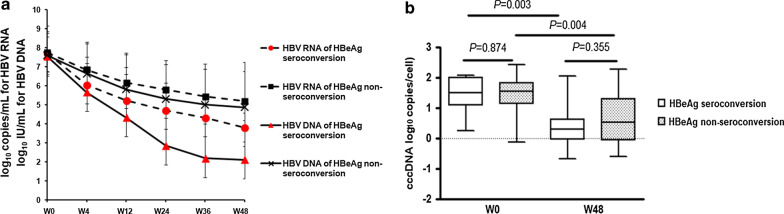
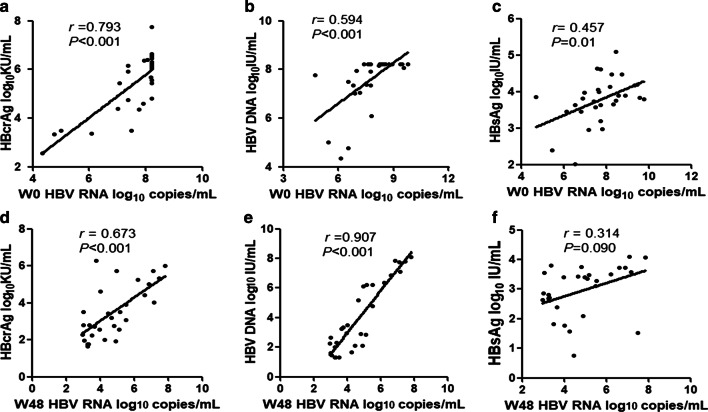
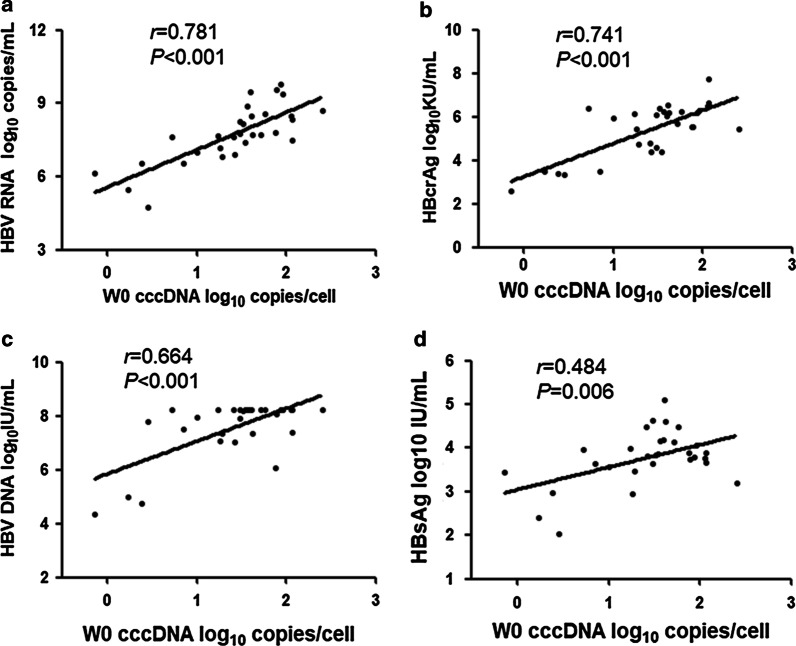
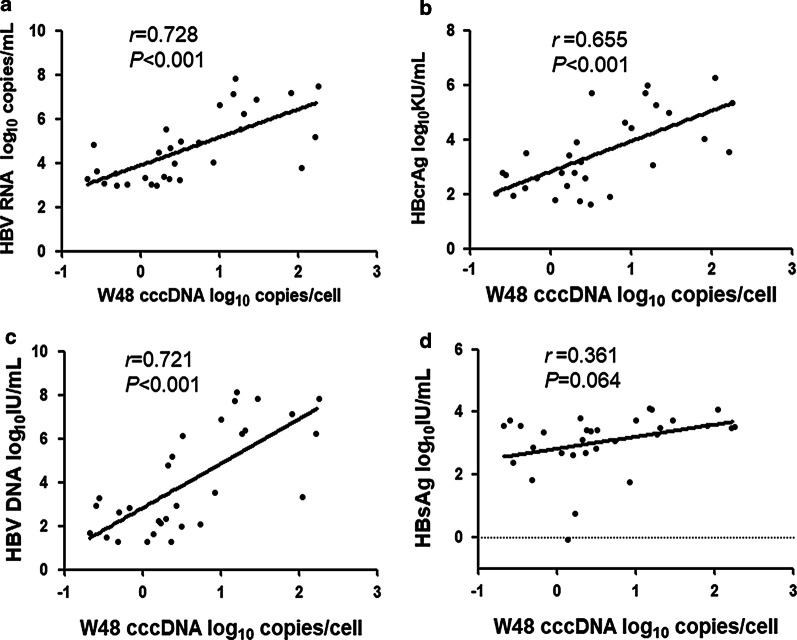
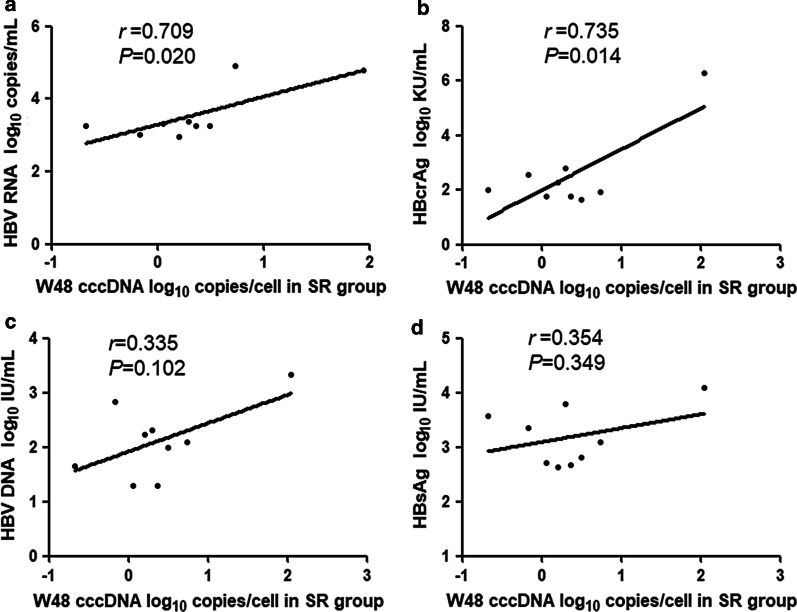
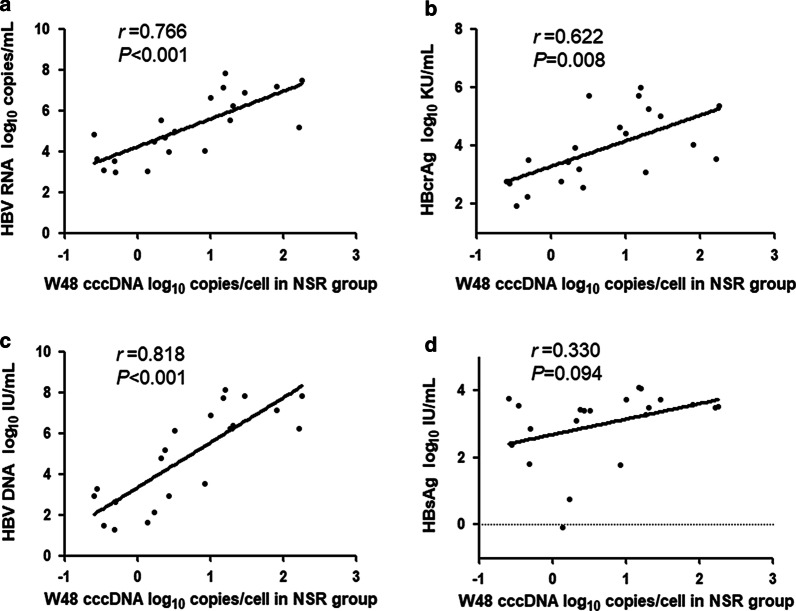
HBV RNA levels decreased more rapidly in patients with HBeAg seroconversion than those without HBeAg seroconversion. Among all patients, cccDNA correlated better with HBV RNA than with HBcrAg, HBV DNA, and HBsAg at baseline. After 48 weeks peg-IFN treatment, cccDNA still correlated more strongly with HBV RNA than other HBV markers. Further analysis indicated that in patients with HBeAg seroconversion cccDNA strongly correlated with HBV RNA and HBcrAg, whereas not correlate with HBV DNA and HBsAg. While in patients without HBeAg seroconversion, cccDNA highly correlated with HBV RNA and HBV DNA, moderately correlated with HBcrAg, and not correlated with HBsAg.
Compared to HBcrAg, HBV DNA, and HBsAg, serum HBV RNA correlated more strongly with intrahepatic cccDNA levels before and after 48-week peg-IFN treatment. The level of serum HBV RNA may be a superior surrogate marker in reflecting the intrahepatic cccDNA profile in HBeAg-positive patients during peg-IFN treatment. Trial registration ClinicalTrials, NCT03546530. Registered 1 January 2015. https://clinicaltrials.gov/ct2/results?cond=&term=NCT03546530 .
已有研究报道血清乙型肝炎病毒 RNA(HBV RNA)可作为核苷(酸)类似物治疗期间肝内共价闭合环状 DNA(cccDNA)的替代标志物。然而,在 HBeAg 阳性患者中接受聚乙二醇干扰素(peg-IFN)治疗时,HBV RNA 是否比其他 HBV 标志物更能反映 cccDNA 谱尚不清楚。
在 30 例 HBeAg 阳性患者接受 48 周 peg-IFN 治疗期间,对血清 HBV RNA、HBcrAg、HBV DNA 和 HBsAg 进行了纵向评估。此外,分别在基线和第 48 周检测了肝内 cccDNA。然后,对 HBV RNA、HBcrAg、HBV DNA、HBsAg 和 cccDNA 之间的个体相关性进行了统计学分析。
在发生 HBeAg 血清学转换的患者中,HBV RNA 水平下降速度快于未发生 HBeAg 血清学转换的患者。在所有患者中,基线时 cccDNA 与 HBV RNA 的相关性优于 HBcrAg、HBV DNA 和 HBsAg。经过 48 周 peg-IFN 治疗后,cccDNA 与 HBV RNA 的相关性仍然强于其他 HBV 标志物。进一步分析表明,在 HBeAg 血清学转换的患者中,cccDNA 与 HBV RNA 和 HBcrAg 密切相关,而与 HBV DNA 和 HBsAg 不相关。而在未发生 HBeAg 血清学转换的患者中,cccDNA 与 HBV RNA 和 HBV DNA 高度相关,与 HBcrAg 中度相关,与 HBsAg 不相关。
与 HBcrAg、HBV DNA 和 HBsAg 相比,血清 HBV RNA 在 peg-IFN 治疗前和治疗后与肝内 cccDNA 水平的相关性更强。血清 HBV RNA 水平可能是反映 HBeAg 阳性患者 peg-IFN 治疗期间肝内 cccDNA 谱的更好替代标志物。
ClinicalTrials.gov,NCT03546530。注册于 2015 年 1 月 1 日。https://clinicaltrials.gov/ct2/results?cond=&term=NCT03546530。