Glacier Technical Solutions, El Paso, TX, USA.
Extracorporeal Life Support Capability Area, United States Army Institute of Surgical Research, JBSA Ft. Sam Houston, San Antonio, TX, 78234, USA.
Scand J Trauma Resusc Emerg Med. 2021 Jan 6;29(1):8. doi: 10.1186/s13049-020-00807-9.
In this review, we assess the state of Resuscitative Endovascular Occlusion of the Aorta (REBOA) today with respect to out-of-hospital (OOH) vs. inhospital (H) use in blunt and penetrating trauma, as well as discuss areas of promising research that may be key in further advancement of REBOA applications.
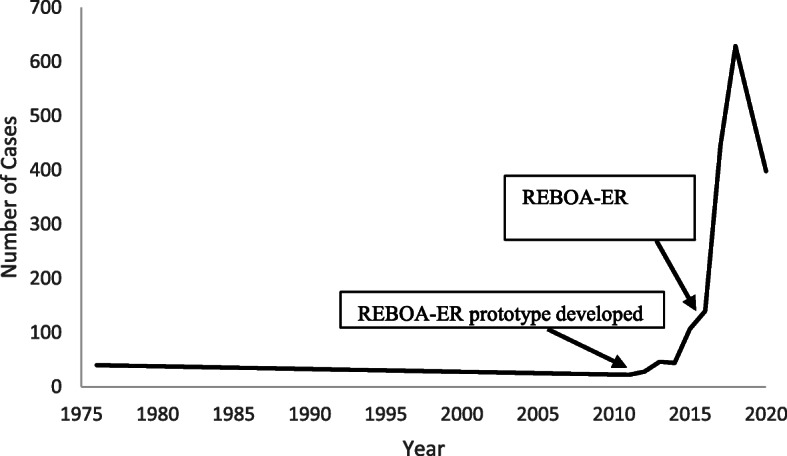
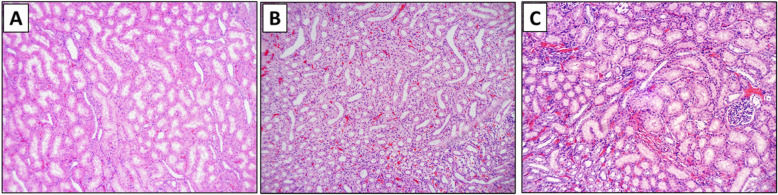
To analyze the trends in REBOA use, we conducted a review of the literature and identified articles with human or animal data that fit the respective inclusion and exclusion criteria. In separate tables, we compiled data extracted from selected articles in categories including injury type, zone and duration of REBOA, setting in which REBOA was performed, sample size, age, sex and outcome. Based on these tables as well as more detailed review of some key cases of REBOA usage, we assessed the current state of REBOA as well as coagulation and histological disturbances associated with its usage. All statistical tests were 2-sided using an alpha=0.05 for significance. Analysis was done using SAS 9.5 (Cary, NC). Tests for significance was done with a t-test for continuous data and a Chi Square Test for categorical data.
In a total of 44 cases performed outside of a hospital in both military and civilian settings, the overall survival was found to be 88.6%, significantly higher than the 50.4% survival calculated from 1,807 cases of REBOA performed within a hospital (p<.0001). We observe from human data a propensity to use Zone I in penetrating trauma and Zone III in blunt injuries. We observe lower final metabolic markers in animal studies with shorter REBOA time and longer follow-up times.
Further research related to human use of REBOA must be focused on earlier initiation of REBOA after injury which may depend on development of rapid vascular access devices and techniques more so than on any new improvements in REBOA. Future animal studies should provide detailed multisystem organ assessment to accurately define organ injury and metabolic burden associated with REBOA application. Overall, animal studies must involve realistic models of injury with severe clinical scenarios approximating human trauma and exsanguination, especially with long-term follow-up after injury.
在这篇综述中,我们评估了复苏性血管内主动脉阻断术(REBOA)在院外(OOH)和院内(H)使用的现状,分别针对钝性和穿透性创伤,同时还讨论了一些有前景的研究领域,这些领域可能是进一步推进 REBOA 应用的关键。
为了分析 REBOA 使用的趋势,我们对文献进行了回顾,并确定了符合相应纳入和排除标准的包含人类或动物数据的文章。在单独的表格中,我们按照损伤类型、REBOA 区域和持续时间、进行 REBOA 的设置、样本量、年龄、性别和结果等类别,对从选定文章中提取的数据进行了汇编。基于这些表格以及对一些关键 REBOA 使用案例的更详细回顾,我们评估了 REBOA 的现状以及与使用相关的凝血和组织学紊乱。所有统计检验均为双侧检验,显著性水平为 0.05。使用 SAS 9.5(Cary,NC)进行分析。对于连续数据,使用 t 检验进行显著性检验,对于分类数据,使用卡方检验进行显著性检验。
在总共 44 例在军事和民用环境中进行的院外手术中,总体存活率为 88.6%,明显高于在医院内进行的 1807 例 REBOA 手术计算出的 50.4%存活率(p<.0001)。我们从人类数据中观察到穿透性创伤中倾向于使用 I 区,而钝性损伤中倾向于使用 III 区。我们在动物研究中观察到较短的 REBOA 时间和更长的随访时间,最终代谢标志物较低。
必须将与人类使用 REBOA 相关的进一步研究重点放在受伤后尽早开始 REBOA,这可能取决于快速血管接入设备和技术的发展,而不是对 REBOA 的任何新改进。未来的动物研究应提供详细的多系统器官评估,以准确定义与 REBOA 应用相关的器官损伤和代谢负担。总体而言,动物研究必须涉及具有严重临床场景的现实损伤模型,这些场景近似于人类创伤和出血,特别是在受伤后进行长期随访。