Zhang Leisheng, Wei Yimeng, Chi Ying, Liu Dengke, Yang Sijun, Han Zhongchao, Li Zongjin
The Postdoctoral Research Station, School of Medicine, Nankai University, 94 Weijin Road, Tianjin, 300071, China.
The Enterprise Postdoctoral Working Station, Tianjin Chase Sun Pharmaceutical Co., Ltd, Tianjin, 301700, China.
Cell Biosci. 2021 Jan 6;11(1):6. doi: 10.1186/s13578-020-00516-x.
Current studies have enlightened the rosy prospects of human pluripotent stem cell (hPSC)-derived mesenchymal stem/stromal cells (MSCs) in regenerative medicine. However, systematic investigation of their signatures and applications with alternative biomaterials in osteoarthritis (OA) remains indistinct.
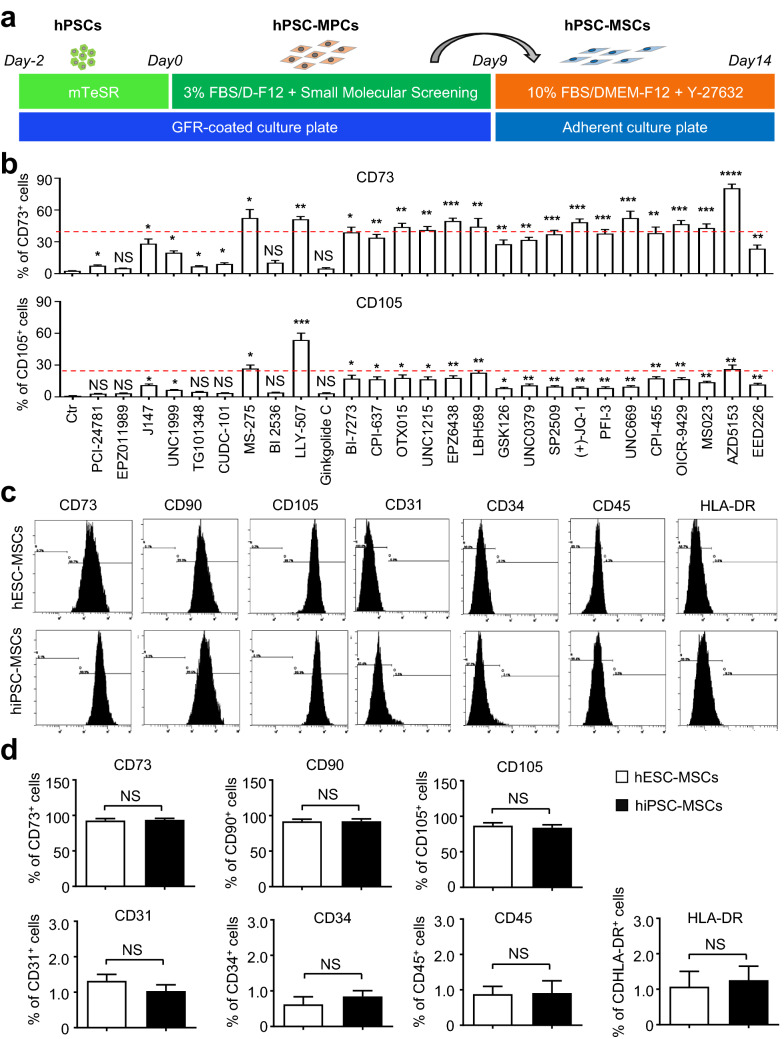
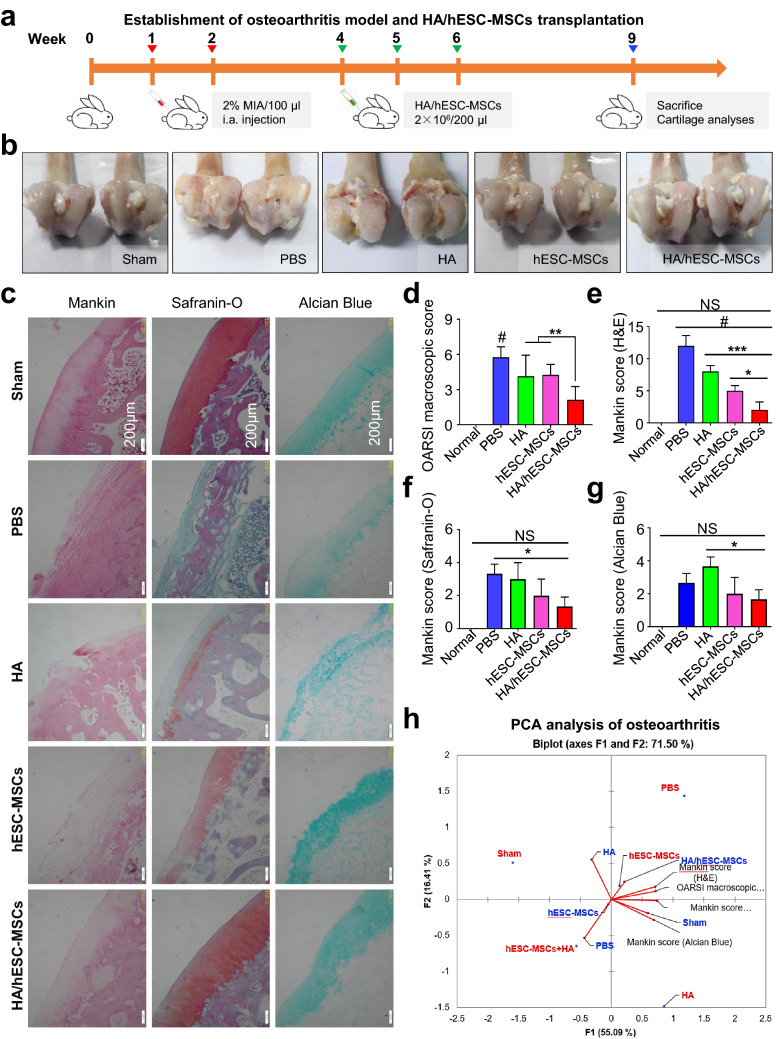
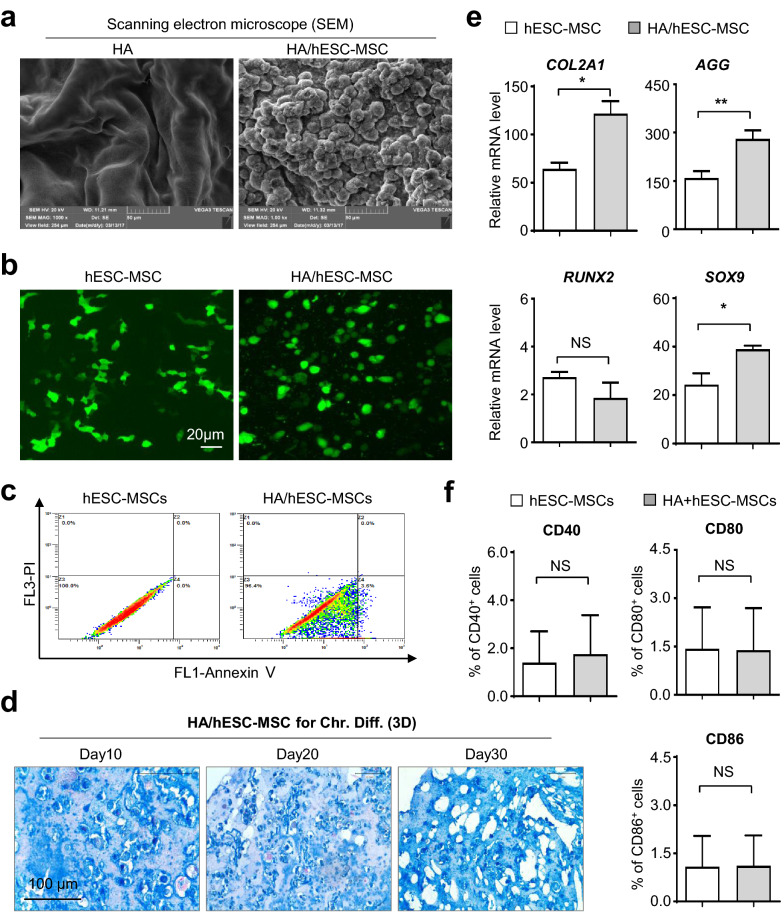
Herein, we initially took advantage of a small molecule library-mediated programming strategy for hPSC-MSC induction. Then, with the aid of multifaceted analyses such as flow cytometry (FCM), chromosome karyocyte and cell vitality, wound healing and microtubule formation assay and coculturing with T lymphocytes, we systematically evaluated the characterizations of signatures in vitro and the in vivo efficacy of hPSC-MSCs and HA hydrogel composite on rabbit osteoarthritis model.
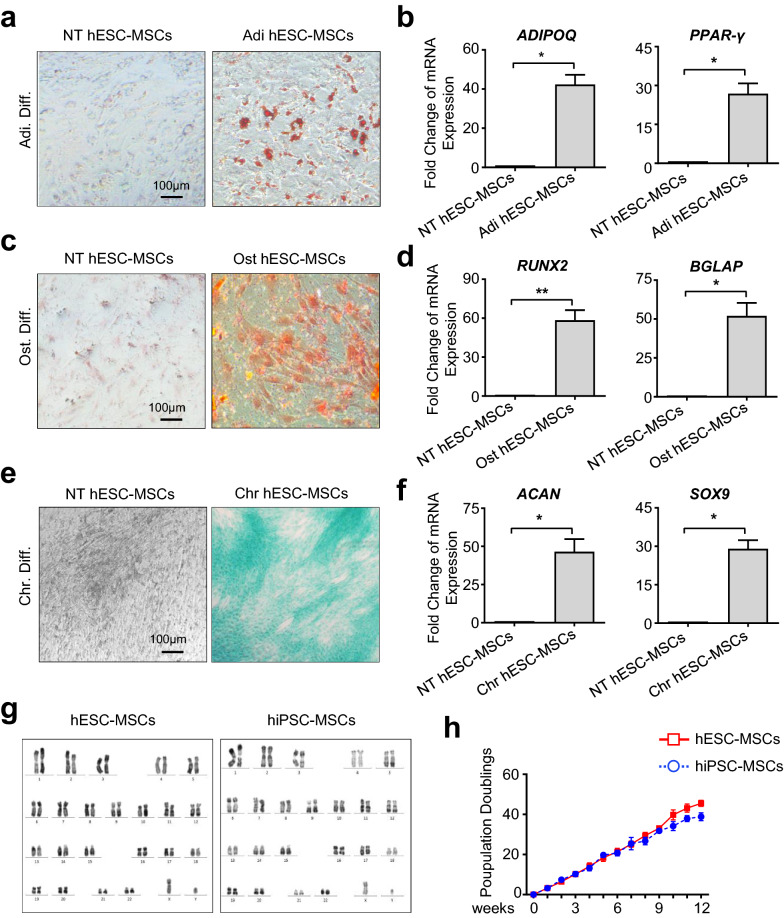
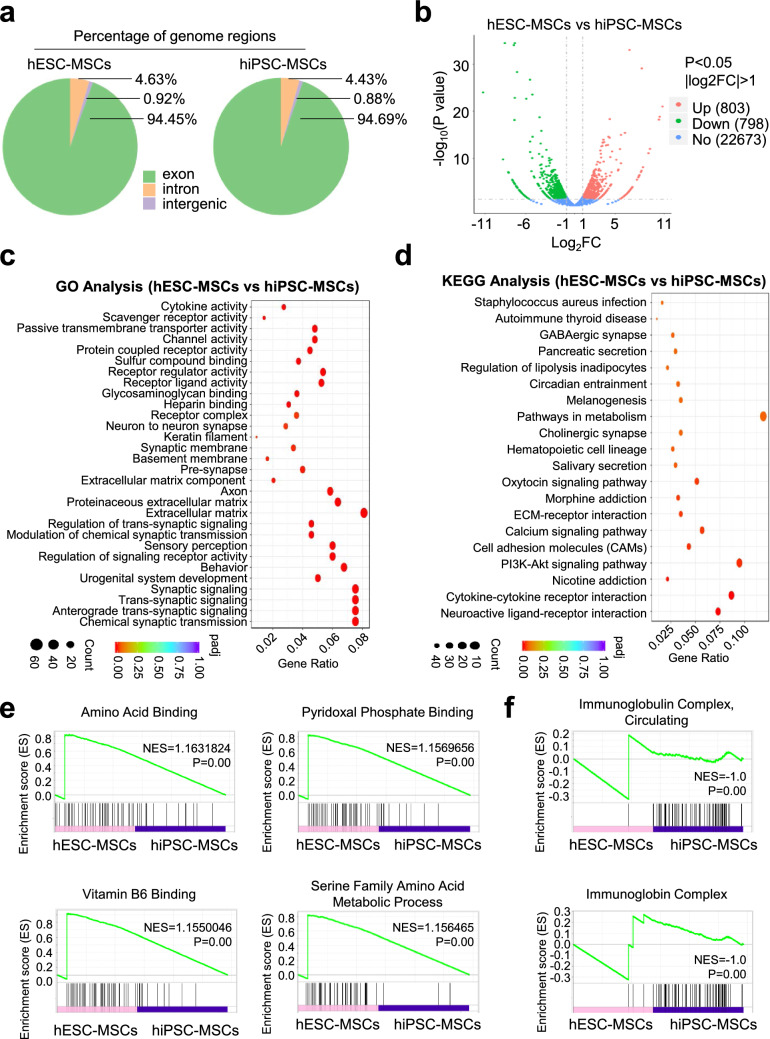
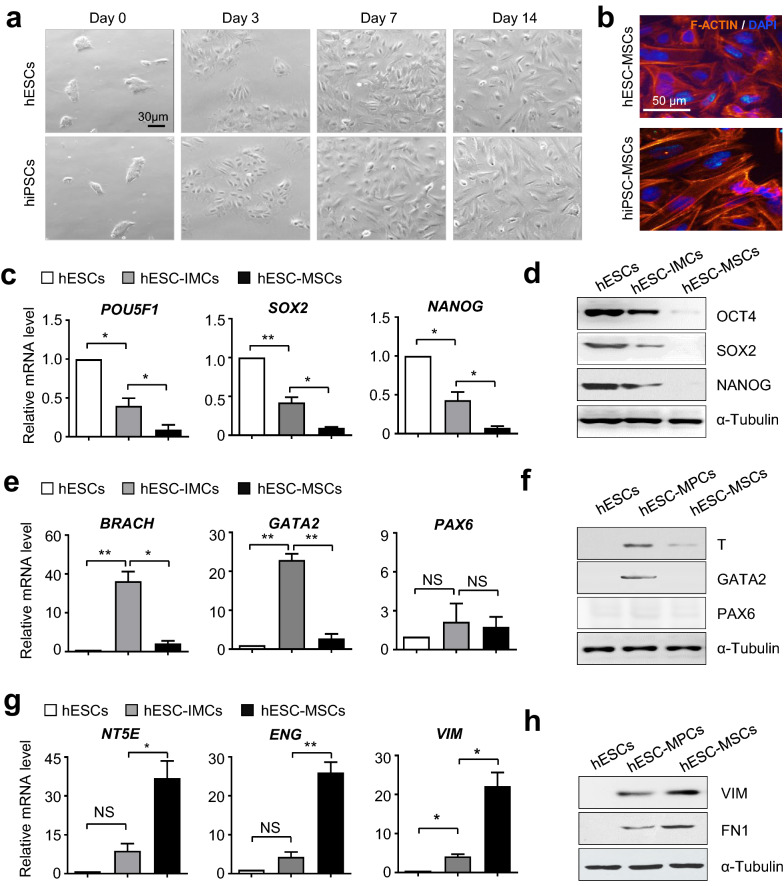
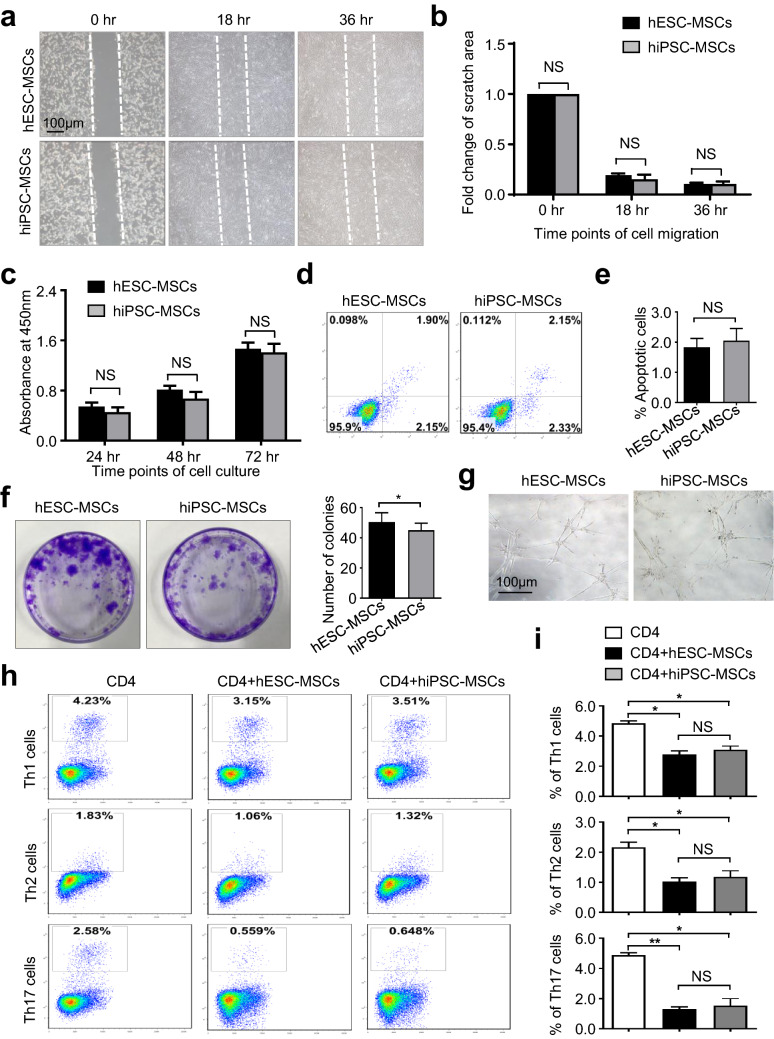
We found the combination of LLY-507 and AZD5153 was sufficient for high-efficiency CD73CD90CD105CD31CD34CD45HLA-DR MSC induction from both hESCs and hiPSCs with stemness (POU5F1/SOX2/NANOG). The programmed hPSC-MSCs revealed conservative transcriptome variations and went through a heterogeneous intermediate-stage with mesenchymal-associated gene expression (NT5E, ENG, VIM and FN1) as well as displayed typical cytomorphology, immunophenotypes and normal karyotyping, multilineage differentiation potential, favorable cell vitality, proangiogenic and immunoregulatory properties in vitro. Meanwhile, the cell population exhibited preferable restorative and ameliorative function on OA rabbits with HA hydrogel in vivo.
Collectively, we established a rapid and convenient procedure for hPSC-MSC generation without redundant manipulations. The fundamental and clinical studies upon osteoarthritis (OA) treatment would benefit tremendously from the combination of the inexhaustible hPSC-MSCs and advantageous biomaterials.
目前的研究揭示了人类多能干细胞(hPSC)来源的间充质干/基质细胞(MSC)在再生医学中的美好前景。然而,对其特征以及在骨关节炎(OA)中与替代生物材料的应用进行系统研究仍不明确。
在此,我们首先利用小分子文库介导的编程策略诱导hPSC向MSC分化。然后,借助流式细胞术(FCM)、染色体核型分析和细胞活力检测、伤口愈合和微管形成试验以及与T淋巴细胞共培养等多方面分析,我们系统地评估了体外特征以及hPSC-MSCs和HA水凝胶复合材料对兔骨关节炎模型的体内疗效。
我们发现LLY-507和AZD5153的组合足以从hESCs和hiPSCs高效诱导出具有干性(POU5F1/SOX2/NANOG)的CD73CD90CD105CD31CD34CD45HLA-DR MSC。编程后的hPSC-MSCs显示出保守的转录组变化,并经历了一个具有间充质相关基因表达(NT5E、ENG、VIM和FN1)的异质中间阶段,同时在体外表现出典型的细胞形态、免疫表型和正常核型、多向分化潜能、良好的细胞活力、促血管生成和免疫调节特性。同时,该细胞群体在体内对使用HA水凝胶的OA兔表现出较好的修复和改善功能。
总体而言,我们建立了一种快速简便的hPSC-MSC生成方法,无需繁琐操作。骨关节炎(OA)治疗的基础和临床研究将从取之不尽的hPSC-MSCs与优势生物材料的组合中受益匪浅。