Chen Mingrui, Chen Qiulin, Tao Tao
Department of Neurosurgery, Chongqing Red Cross Hospital (People's Hospital of Jiangbei District), Jiangbei, Chongqing 400020, People's Republic of China.
Department of Rehabilitation Medicine, Guizhou Provincial People's Hospital, Guiyang, Guizhou 550002, People's Republic of China.
Neuropsychiatr Dis Treat. 2020 Dec 31;16:3239-3250. doi: 10.2147/NDT.S265478. eCollection 2020.
Traumatic brain injury (TBI) is a major cause of morbidity and mortality worldwide. Increasing evidence indicates that activated microglia play an important role in the inflammatory response in TBI. Inhibiting M1 and stimulating M2 activated microglia have protective effects in several animal models of central nervous system (CNS) disorders. In the present study, we investigated whether tanshinone IIA (TNA) protects neurons by shifting microglia polarization in a mouse TBI model and further investigated the mechanism in vitro.
Forty C57BL/6 mice were used to investigate the effect of TNA on microglia polarization in TBI. BV-2 cells were used to examine the mechanism of TNA in regulating microglia polarization.
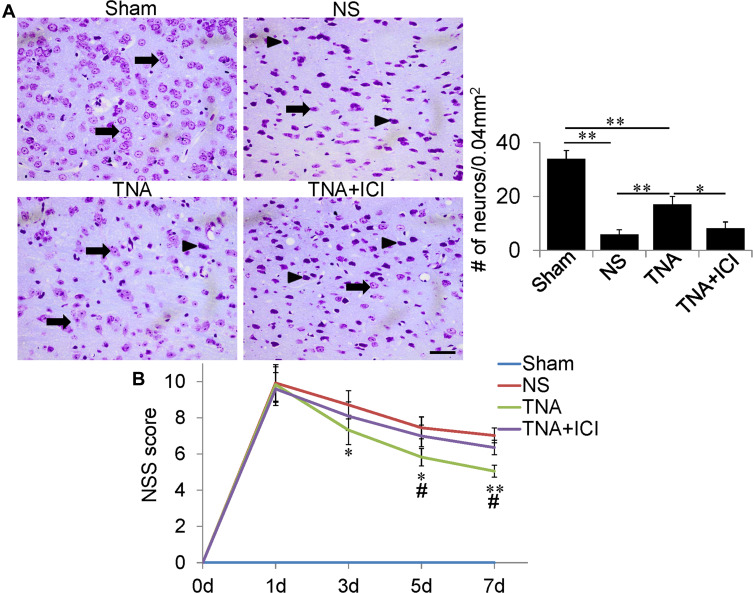
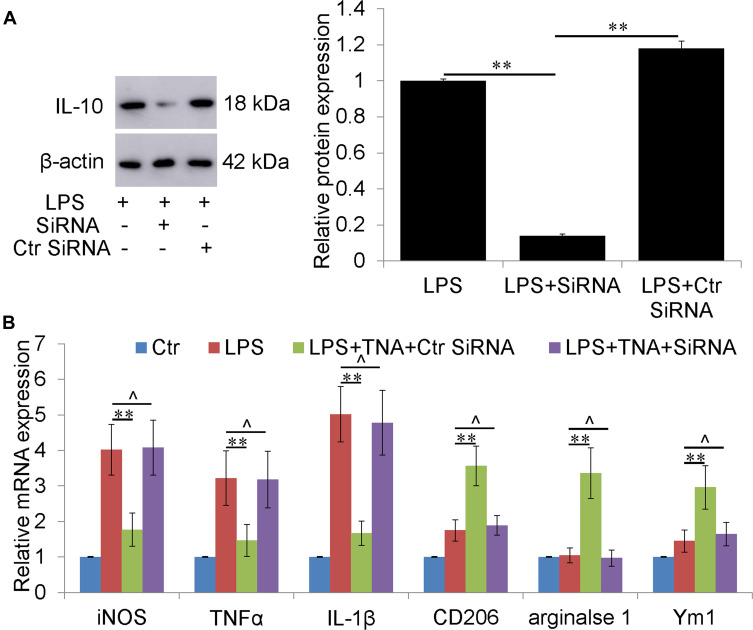
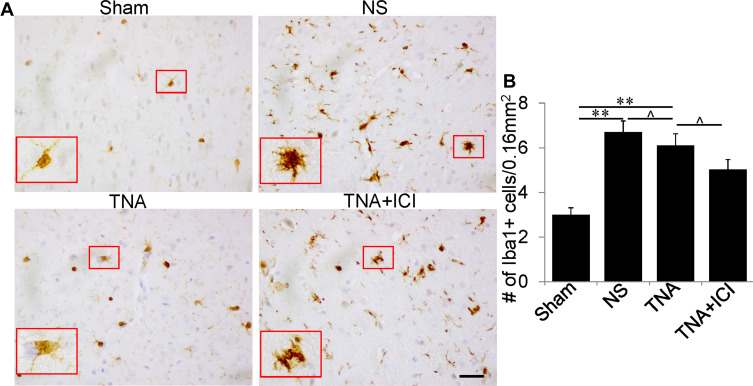
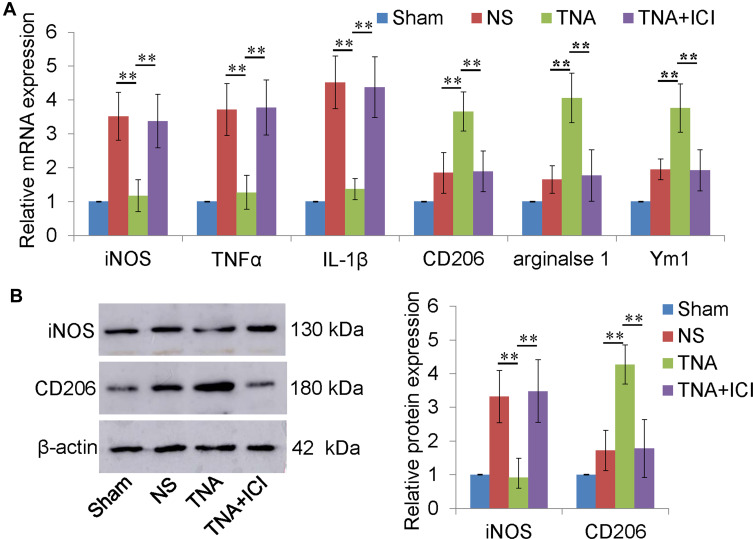
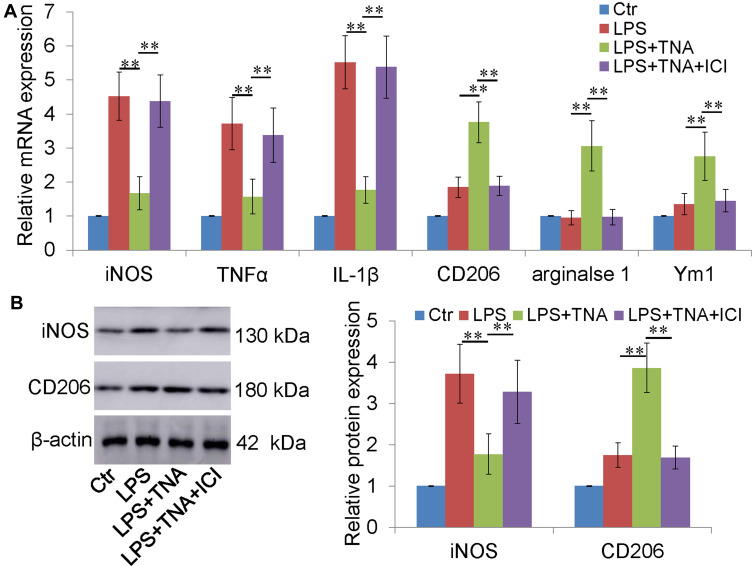
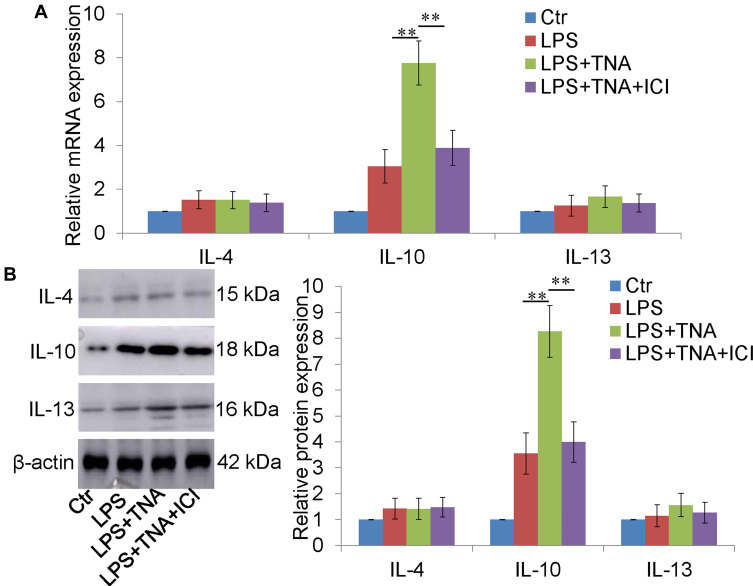
Normal saline (NS), TNA and the combination of TNA with ICI 182,780 (ICI, an estrogen receptor antagonist) were used to treat the TBI mice. After TBI, mice from each group demonstrated functional improvement. The improvement rate in mice treated with TNA was faster than other groups. ICI partially reversed the benefits from TNA treatment. TNA treatment significantly reduced TBI-induced neuronal loss. The number of microglia after TBI was not significantly changed by TNA treatment. However, TNA treatment significantly decreased M1 macrophage markers (iNOS, TNFα and IL-1β) and increased M2 macrophage markers (CD206, arginase 1 and Ym1). This effect was partially abolished by ICI. TNA treatment downregulated M1 macrophage markers and upregulated M2 macrophage markers in BV-2 cells under LPS stimulation. IL-10 was significantly increased by TNA treatment without a significantly change of IL-4 and IL-13 expression. IL-10 knockdown completely abolished the effect of TNA on microglial M2 polarization.
Taken together, our data demonstrated that TNA attenuates neuronal loss in mouse TBI model and promotes M2 microglia by ERβ/IL-10 pathway. Thus, TNA could be a potential drug for TBI and/or the disorders that caused by microglial over-activation in CNS.
创伤性脑损伤(TBI)是全球发病和死亡的主要原因。越来越多的证据表明,活化的小胶质细胞在TBI的炎症反应中起重要作用。在几种中枢神经系统(CNS)疾病的动物模型中,抑制M1型并刺激M2型活化小胶质细胞具有保护作用。在本研究中,我们调查了丹参酮IIA(TNA)是否通过在小鼠TBI模型中改变小胶质细胞极化来保护神经元,并进一步在体外研究其机制。
使用40只C57BL/6小鼠来研究TNA对TBI中小胶质细胞极化的影响。使用BV-2细胞来检查TNA调节小胶质细胞极化的机制。
用生理盐水(NS)、TNA以及TNA与ICI 182,780(ICI,一种雌激素受体拮抗剂)的组合来治疗TBI小鼠。TBI后,每组小鼠均表现出功能改善。TNA治疗组小鼠的改善率比其他组更快。ICI部分逆转了TNA治疗的益处。TNA治疗显著减少了TBI诱导的神经元损失。TNA治疗并未显著改变TBI后小胶质细胞的数量。然而,TNA治疗显著降低了M1巨噬细胞标志物(诱导型一氧化氮合酶、肿瘤坏死因子α和白细胞介素-1β),并增加了M2巨噬细胞标志物(CD206、精氨酸酶1和Ym1)。ICI部分消除了这种作用。在脂多糖刺激下,TNA治疗下调了BV-2细胞中的M1巨噬细胞标志物并上调了M2巨噬细胞标志物。TNA治疗使白细胞介素-10显著增加,而白细胞介素-4和白细胞介素-13的表达没有显著变化。白细胞介素-10基因敲低完全消除了TNA对小胶质细胞M2极化的作用。
综上所述,我们的数据表明,TNA可减轻小鼠TBI模型中的神经元损失,并通过雌激素受体β/白细胞介素-10途径促进M2小胶质细胞极化。因此,TNA可能是治疗TBI和/或中枢神经系统中小胶质细胞过度活化所致疾病的潜在药物。