• 文献检索
  • 文档翻译
  • 深度研究
  • 学术资讯
  • Suppr Zotero 插件Zotero 插件
  • 邀请有礼
  • 套餐&价格
  • 历史记录
应用&插件
Suppr Zotero 插件Zotero 插件浏览器插件Mac 客户端Windows 客户端微信小程序
定价
高级版会员购买积分包购买API积分包
服务
文献检索文档翻译深度研究API 文档MCP 服务
关于我们
关于 Suppr公司介绍联系我们用户协议隐私条款
关注我们

Suppr 超能文献

核心技术专利:CN118964589B侵权必究
粤ICP备2023148730 号-1Suppr @ 2026

文献检索

告别复杂PubMed语法,用中文像聊天一样搜索,搜遍4000万医学文献。AI智能推荐,让科研检索更轻松。

立即免费搜索

文件翻译

保留排版,准确专业,支持PDF/Word/PPT等文件格式,支持 12+语言互译。

免费翻译文档

深度研究

AI帮你快速写综述,25分钟生成高质量综述,智能提取关键信息,辅助科研写作。

立即免费体验

脑脊液中与Toll样受体相关的细胞因子谱可区分神经感染与无菌性炎症。

Toll-like receptor linked cytokine profiles in cerebrospinal fluid discriminate neurological infection from sterile inflammation.

作者信息

Cuff Simone M, Merola Joseph P, Twohig Jason P, Eberl Matthias, Gray William P

机构信息

Division of Infection and Immunity, School of Medicine, Cardiff University, Cardiff, UK.

Division of Psychological Medicine and Clinical Neurosciences, School of Medicine, Cardiff University, Cardiff, UK.

出版信息

Brain Commun. 2020 Dec 17;2(2):fcaa218. doi: 10.1093/braincomms/fcaa218. eCollection 2020.

DOI:10.1093/braincomms/fcaa218
PMID:33409494
原文链接:https://pmc.ncbi.nlm.nih.gov/articles/PMC7772097/
Abstract

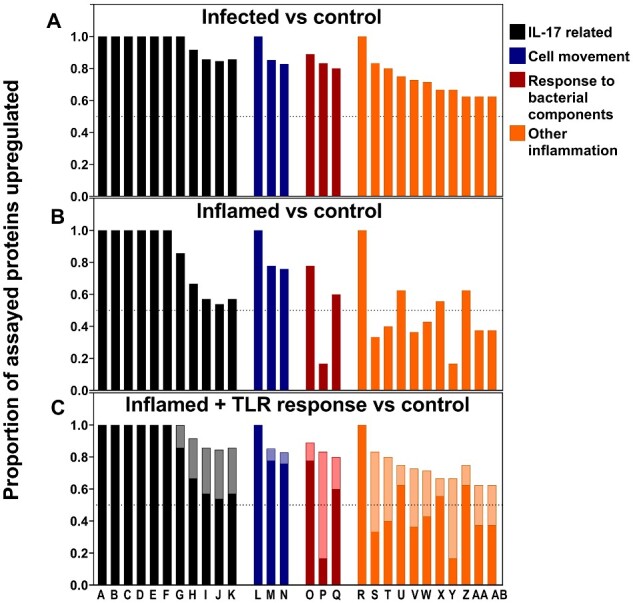
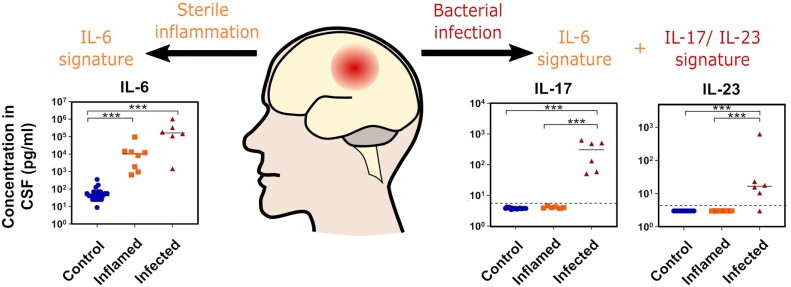
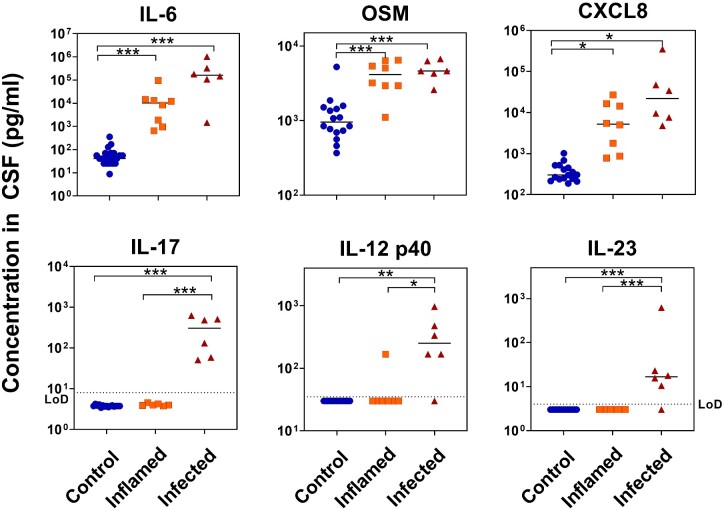
Rapid determination of an infective aetiology causing neurological inflammation in the cerebrospinal fluid can be challenging in clinical practice. Post-surgical nosocomial infection is difficult to diagnose accurately, as it occurs on a background of altered cerebrospinal fluid composition due to the underlying pathologies and surgical procedures involved. There is additional diagnostic difficulty after external ventricular drain or ventriculoperitoneal shunt surgery, as infection is often caused by pathogens growing as biofilms, which may fail to elicit a significant inflammatory response and are challenging to identify by microbiological culture. Despite much research effort, a single sensitive and specific cerebrospinal fluid biomarker has yet to be defined which reliably distinguishes infective from non-infective inflammation. As a result, many patients with suspected infection are treated empirically with broad-spectrum antibiotics in the absence of definitive diagnostic criteria. To begin to address these issues, we examined cerebrospinal fluid taken at the point of clinical equipoise to diagnose cerebrospinal fluid infection in 14 consecutive neurosurgical patients showing signs of inflammatory complications. Using the guidelines of the Infectious Diseases Society of America, six cases were subsequently characterized as infected and eight as sterile inflammation. Twenty-four contemporaneous patients with idiopathic intracranial hypertension or normal pressure hydrocephalus were included as non-inflamed controls. We measured 182 immune and neurological biomarkers in each sample and used pathway analysis to elucidate the biological underpinnings of any biomarker changes. Increased levels of the inflammatory cytokine interleukin-6 and interleukin-6-related mediators such as oncostatin M were excellent indicators of inflammation. However, interleukin-6 levels alone could not distinguish between bacterially infected and uninfected patients. Within the patient cohort with neurological inflammation, a pattern of raised interleukin-17, interleukin-12p40/p70 and interleukin-23 levels delineated nosocomial bacteriological infection from background neuroinflammation. Pathway analysis showed that the observed immune signatures could be explained through a common generic inflammatory response marked by interleukin-6 in both nosocomial and non-infectious inflammation, overlaid with a toll-like receptor-associated and bacterial peptidoglycan-triggered interleukin-17 pathway response that occurred exclusively during infection. This is the first demonstration of a pathway dependent cerebrospinal fluid biomarker differentiation distinguishing nosocomial infection from background neuroinflammation. It is especially relevant to the commonly encountered pathologies in clinical practice, such as subarachnoid haemorrhage and post-cranial neurosurgery. While requiring confirmation in a larger cohort, the current data indicate the potential utility of cerebrospinal fluid biomarker strategies to identify differential initiation of a common downstream interleukin-6 pathway to diagnose nosocomial infection in this challenging clinical cohort.
https://cdn.ncbi.nlm.nih.gov/pmc/blobs/c1ed/7772097/5a8c4dbdefcc/fcaa218f6.jpg
https://cdn.ncbi.nlm.nih.gov/pmc/blobs/c1ed/7772097/f04b8ac397f1/fcaa218f7.jpg
https://cdn.ncbi.nlm.nih.gov/pmc/blobs/c1ed/7772097/bd53e0580a4a/fcaa218f1.jpg
https://cdn.ncbi.nlm.nih.gov/pmc/blobs/c1ed/7772097/c8207c2305fb/fcaa218f2.jpg
https://cdn.ncbi.nlm.nih.gov/pmc/blobs/c1ed/7772097/383cbd71618d/fcaa218f3.jpg
https://cdn.ncbi.nlm.nih.gov/pmc/blobs/c1ed/7772097/45d07b86576f/fcaa218f4.jpg
https://cdn.ncbi.nlm.nih.gov/pmc/blobs/c1ed/7772097/6923c6c6e211/fcaa218f5.jpg
https://cdn.ncbi.nlm.nih.gov/pmc/blobs/c1ed/7772097/5a8c4dbdefcc/fcaa218f6.jpg
https://cdn.ncbi.nlm.nih.gov/pmc/blobs/c1ed/7772097/f04b8ac397f1/fcaa218f7.jpg
https://cdn.ncbi.nlm.nih.gov/pmc/blobs/c1ed/7772097/bd53e0580a4a/fcaa218f1.jpg
https://cdn.ncbi.nlm.nih.gov/pmc/blobs/c1ed/7772097/c8207c2305fb/fcaa218f2.jpg
https://cdn.ncbi.nlm.nih.gov/pmc/blobs/c1ed/7772097/383cbd71618d/fcaa218f3.jpg
https://cdn.ncbi.nlm.nih.gov/pmc/blobs/c1ed/7772097/45d07b86576f/fcaa218f4.jpg
https://cdn.ncbi.nlm.nih.gov/pmc/blobs/c1ed/7772097/6923c6c6e211/fcaa218f5.jpg
https://cdn.ncbi.nlm.nih.gov/pmc/blobs/c1ed/7772097/5a8c4dbdefcc/fcaa218f6.jpg
摘要

在临床实践中,快速确定导致脑脊液神经炎症的感染病因可能具有挑战性。手术后医院感染难以准确诊断,因为它发生在由于潜在病理和手术操作导致脑脊液成分改变的背景下。在进行体外脑室引流或脑室腹腔分流手术后,诊断难度更大,因为感染通常由形成生物膜生长的病原体引起,这些病原体可能无法引发显著的炎症反应,并且通过微生物培养难以识别。尽管进行了大量研究,但尚未确定一种敏感且特异的脑脊液生物标志物,能够可靠地区分感染性炎症和非感染性炎症。因此,许多疑似感染的患者在缺乏明确诊断标准的情况下接受了经验性广谱抗生素治疗。为了开始解决这些问题,我们检查了14例连续出现炎症并发症迹象的神经外科患者在临床平衡时采集的脑脊液,以诊断脑脊液感染。根据美国传染病学会的指南,随后将6例患者归类为感染,8例归类为无菌性炎症。将24例特发性颅内高压或正常压力脑积水患者作为非炎症对照纳入研究。我们测量了每个样本中的18

相似文献

1
Toll-like receptor linked cytokine profiles in cerebrospinal fluid discriminate neurological infection from sterile inflammation.脑脊液中与Toll样受体相关的细胞因子谱可区分神经感染与无菌性炎症。
Brain Commun. 2020 Dec 17;2(2):fcaa218. doi: 10.1093/braincomms/fcaa218. eCollection 2020.
2
Identification of Potential Cerebrospinal Fluid Biomarkers To Discriminate between Infection and Sterile Inflammation in a Rat Model of Staphylococcus epidermidis Catheter Infection.鉴定潜在的脑脊液生物标志物,以区分表皮葡萄球菌导管感染大鼠模型中的感染和无菌性炎症。
Infect Immun. 2019 Aug 21;87(9). doi: 10.1128/IAI.00311-19. Print 2019 Sep.
3
Raised Proinflammatory Cytokine Production Within Cerebrospinal Fluid Precedes Fever Onset in Patients With Neurosurgery-Associated Bacterial Meningitis.脑脊液压升高的促炎细胞因子产生先于神经外科相关细菌性脑膜炎患者发热发作。
Crit Care Med. 2015 Nov;43(11):2416-28. doi: 10.1097/CCM.0000000000001188.
4
PTI-125 Reduces Biomarkers of Alzheimer's Disease in Patients.PTI-125 降低阿尔茨海默病患者的生物标志物。
J Prev Alzheimers Dis. 2020;7(4):256-264. doi: 10.14283/jpad.2020.6.
5
Silver-impregnated, antibiotic-impregnated or non-impregnated ventriculoperitoneal shunts to prevent shunt infection: the BASICS three-arm RCT.载银、载抗生素或未载药的脑室-腹腔分流管预防分流感染的随机对照试验(BASICS 研究)
Health Technol Assess. 2020 Mar;24(17):1-114. doi: 10.3310/hta24170.
6
Role of Cerebrospinal Fluid Markers for Predicting Shunt-Dependent Hydrocephalus in Patients with Subarachnoid Hemorrhage and External Ventricular Drain Placement.脑脊液标志物在预测蛛网膜下腔出血和外置脑室引流患者分流依赖型脑积水方面的作用
World Neurosurg. 2019 Jan;121:e535-e542. doi: 10.1016/j.wneu.2018.09.159. Epub 2018 Sep 27.
7
Tumor necrosis factor-alpha, interleukin-1 beta, and interleukin-6 concentrations in cerebrospinal fluid predict ventriculoperitoneal shunt infection.脑脊液中肿瘤坏死因子-α、白细胞介素-1β和白细胞介素-6的浓度可预测脑室腹腔分流感染。
Crit Care Med. 1997 Oct;25(10):1713-6. doi: 10.1097/00003246-199710000-00022.
8
Vesicoureteral Reflux膀胱输尿管反流
9
Recapitulation of physiologic and pathophysiologic pulsatile CSF flow in purpose-built high-throughput hydrocephalus bioreactors.在专门构建的高通量脑积水生物反应器中对生理性和病理生理性搏动性脑脊液流动的重现。
Fluids Barriers CNS. 2024 Dec 19;21(1):103. doi: 10.1186/s12987-024-00600-1.
10
Central Nervous System Catheter Infection Induces Long-Term Changes in the Cerebrospinal Fluid Proteome.中枢神经系统导管感染诱导脑脊液蛋白质组的长期变化。
Infect Immun. 2021 Mar 17;89(4). doi: 10.1128/IAI.00531-20.

引用本文的文献

1
Inflammatory biomarker signatures in post-surgical drain fluid may detect anastomotic leaks within 48 hours of colorectal resection.术后引流液中的炎症生物标志物特征可能在结直肠切除术后 48 小时内检测到吻合口漏。
Tech Coloproctol. 2023 Dec;27(12):1297-1305. doi: 10.1007/s10151-023-02841-y. Epub 2023 Jul 24.
2
Protracted course of chemical meningitis following posterior fossa epidermoid cyst excision - A case report.后颅窝表皮样囊肿切除术后化学性脑膜炎的迁延病程——病例报告
Surg Neurol Int. 2022 Nov 18;13:544. doi: 10.25259/SNI_852_2022. eCollection 2022.
3
Current Perspectives on the Diagnosis and Management of Healthcare-Associated Ventriculitis and Meningitis.

本文引用的文献

1
Measurement of innate immune response biomarkers in peritoneal dialysis effluent using a rapid diagnostic point-of-care device as a diagnostic indicator of peritonitis.使用快速诊断即时检测设备测量腹膜透析流出液中的先天性免疫反应生物标志物,作为腹膜炎的诊断指标。
Kidney Int. 2020 Jun;97(6):1253-1259. doi: 10.1016/j.kint.2020.01.044. Epub 2020 Mar 6.
2
Cytokine and immune cell profiling in the cerebrospinal fluid of patients with neuro-inflammatory diseases.神经炎症性疾病患者脑脊液中的细胞因子和免疫细胞分析。
J Neuroinflammation. 2019 Nov 14;16(1):219. doi: 10.1186/s12974-019-1601-6.
3
Significance of cerebrospinal fluid inflammatory markers for diagnosing external ventricular drain-associated ventriculitis in patients with severe traumatic brain injury.
医疗保健相关脑室炎和脑膜炎诊断与管理的当前观点
Infect Drug Resist. 2022 Feb 28;15:697-721. doi: 10.2147/IDR.S326456. eCollection 2022.
4
Elevated CSF inflammatory markers in patients with idiopathic normal pressure hydrocephalus do not promote NKCC1 hyperactivity in rat choroid plexus.特发性正常压力脑积水患者脑脊液中炎症标志物升高不会促进大鼠脉络丛 NKCC1 过度活跃。
Fluids Barriers CNS. 2021 Dec 4;18(1):54. doi: 10.1186/s12987-021-00289-6.
5
Interleukin-6: Important Mediator of Vasospasm Following Subarachnoid Hemorrhage.白细胞介素-6:蛛网膜下腔出血后血管痉挛的重要介质。
Curr Neurovasc Res. 2021;18(3):364-369. doi: 10.2174/1567202618666211104122408.
6
Toll-Like Receptor Signaling Pathways: Novel Therapeutic Targets for Cerebrovascular Disorders. Toll 样受体信号通路:脑血管疾病的新治疗靶点。
Int J Mol Sci. 2021 Jun 7;22(11):6153. doi: 10.3390/ijms22116153.
脑脊液炎症标志物对诊断严重颅脑损伤患者外引流相关脑室炎的意义。
Neurosurg Focus. 2019 Nov 1;47(5):E15. doi: 10.3171/2019.8.FOCUS19407.
4
Factors and measures predicting external CSF drain-associated ventriculitis: A review and meta-analysis.预测外部脑脊髓液引流相关脑室炎的因素和措施:综述和荟萃分析。
Neurology. 2019 Nov 26;93(22):964-972. doi: 10.1212/WNL.0000000000008552. Epub 2019 Oct 28.
5
Meningeal γδ T cell-derived IL-17 controls synaptic plasticity and short-term memory.脑膜 γδ T 细胞衍生的白细胞介素-17 控制着突触可塑性和短期记忆。
Sci Immunol. 2019 Oct 11;4(40). doi: 10.1126/sciimmunol.aay5199.
6
Development and verification of a discriminate algorithm for diagnosing post-neurosurgical bacterial meningitis-A multicenter observational study.开发和验证一种用于诊断神经外科术后细菌性脑膜炎的鉴别算法:一项多中心观察性研究。
J Clin Lab Anal. 2020 Feb;34(2):e23069. doi: 10.1002/jcla.23069. Epub 2019 Oct 10.
7
Antibiotic or silver versus standard ventriculoperitoneal shunts (BASICS): a multicentre, single-blinded, randomised trial and economic evaluation.抗生素或银制与标准脑室腹腔分流术(BASICS)的比较:一项多中心、单盲、随机试验和经济评估。
Lancet. 2019 Oct 26;394(10208):1530-1539. doi: 10.1016/S0140-6736(19)31603-4. Epub 2019 Sep 12.
8
Utility of chemokines CCL2, CXCL8, 10 and 13 and interleukin 6 in the pediatric cohort for the recognition of neuroinflammation and in the context of traditional cerebrospinal fluid neuroinflammatory biomarkers.趋化因子 CCL2、CXCL8、10 和 13 以及白细胞介素 6 在儿科队列中用于识别神经炎症以及在传统的脑脊液神经炎症生物标志物背景下的效用。
PLoS One. 2019 Jul 29;14(7):e0219987. doi: 10.1371/journal.pone.0219987. eCollection 2019.
9
Identification of Potential Cerebrospinal Fluid Biomarkers To Discriminate between Infection and Sterile Inflammation in a Rat Model of Staphylococcus epidermidis Catheter Infection.鉴定潜在的脑脊液生物标志物,以区分表皮葡萄球菌导管感染大鼠模型中的感染和无菌性炎症。
Infect Immun. 2019 Aug 21;87(9). doi: 10.1128/IAI.00311-19. Print 2019 Sep.
10
Diagnosis of Ventricular Shunt Infection in Children: A Systematic Review.儿童脑室分流感染的诊断:系统评价。
World Neurosurg. 2019 Sep;129:34-44. doi: 10.1016/j.wneu.2019.05.057. Epub 2019 May 14.