Department of Gastroenterological Surgery, Harbin Medical University Cancer Hospital, Harbin Medical University, Harbin, China.
Cancer Med. 2021 Feb;10(3):1103-1119. doi: 10.1002/cam4.3706. Epub 2021 Jan 6.
Inflammatory indexes are considered to be potential prognostic biomarkers for patients with gastric cancer (GC). However, little evidence has defined the prognostic significance of inflammatory indexes for GC with different Lauren classification.
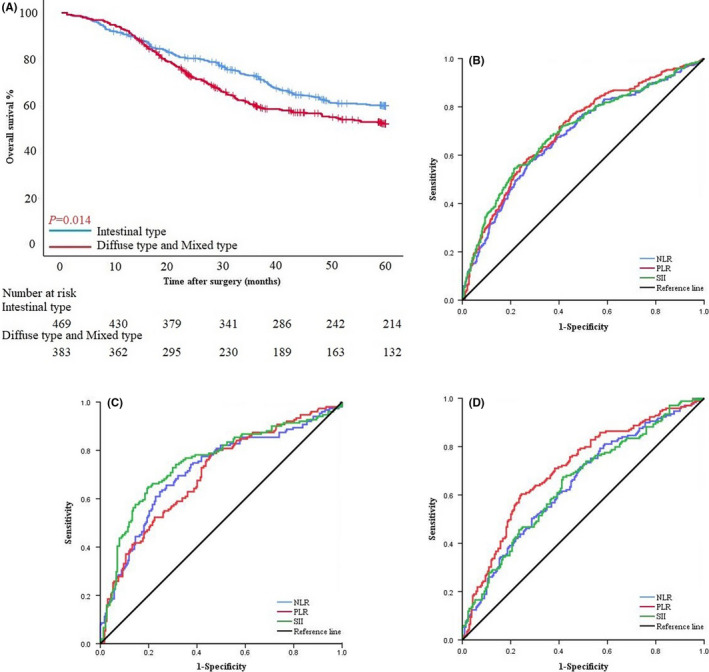
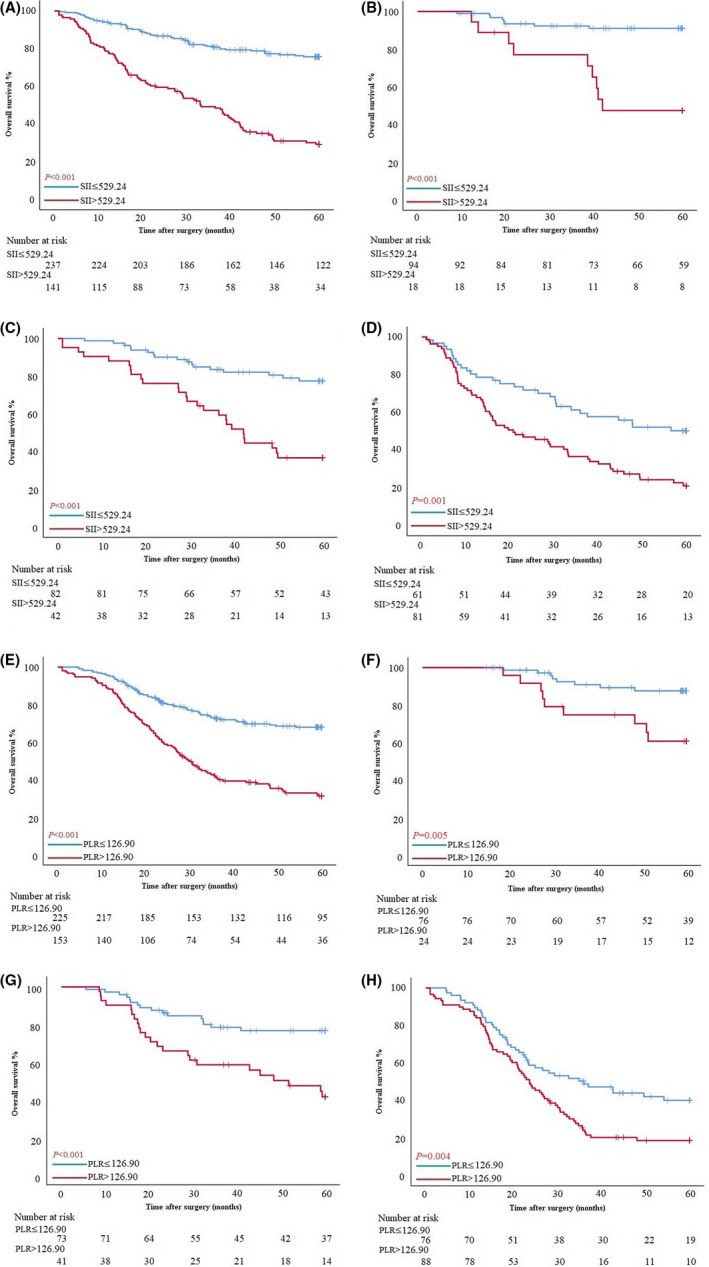
A total of 852 patients with GC were randomly selected consecutively into intestinal type and diffuse/mixed type groups. Group bias was reduced by propensity score matching. The cutoff values of inflammatory indexes were analyzed by receiver operating characteristic curve. The Kaplan-Meier method and log-rank test were used to analyze the overall survival (OS). The chi-square test was used to analyze the association between inflammatory indexes and clinical characteristics. The independent risk factor for prognosis in each group was analyzed by univariate and multivariate analyses based on logistic regression. The nomogram models were constructed by R studio.
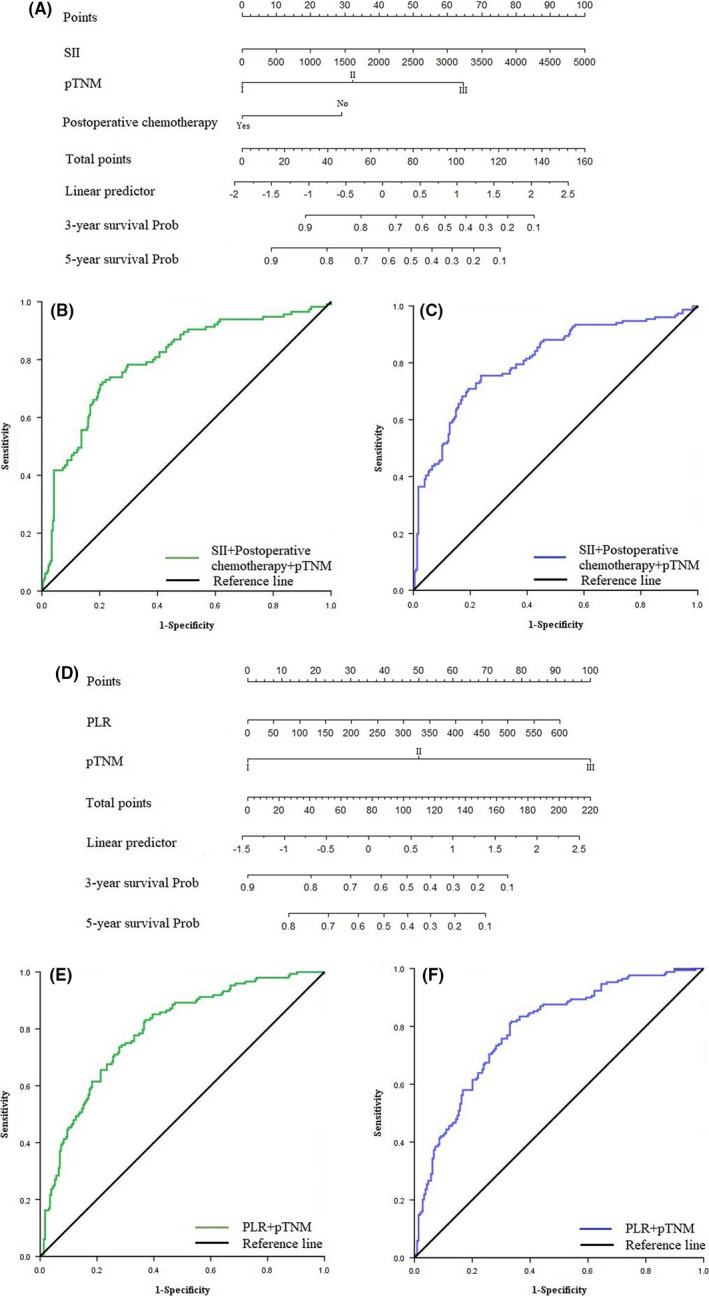
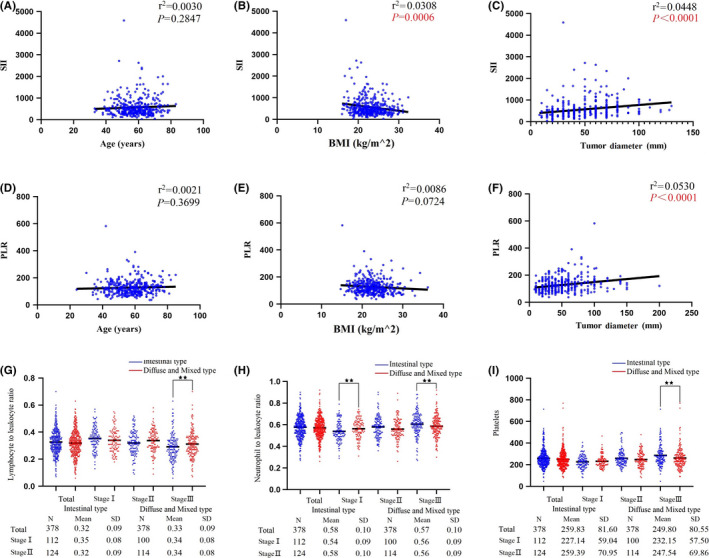
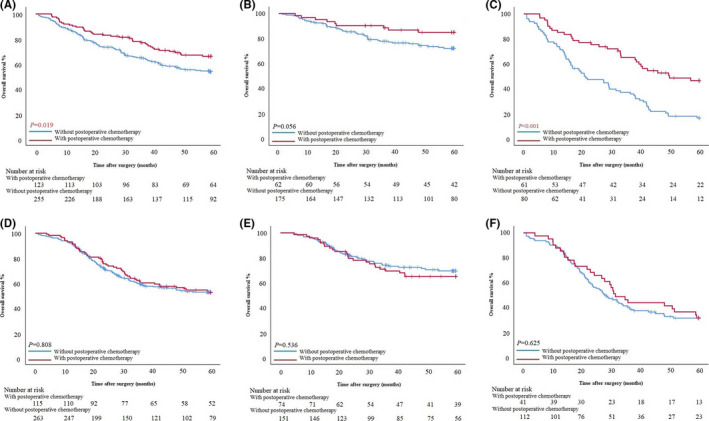
Intestinal type GC patients (p < 0.05) had a lower percentage of neutrophils in stage I, higher percentage of neutrophils and higher platelet count in stage Ⅲ (p < 0.05). Systemic immune-inflammation index (SII) (p < 0.001), pTNM stage (p < 0.001), and postoperative chemotherapy (p = 0.002) were independent risk factors for prognosis in the intestinal type group. Platelet-lymphocyte ratio (PLR) (p < 0.001) and pTNM stage (p = 0.001) were independent risk factors for prognosis in the diffuse/mixed type group. The area under the curve of the nomogram model in predicting 5-year prognosis in the intestinal type group and diffuse/mixed type group were 0.807 and 0.788, respectively.
SII combined with postoperative chemotherapy and pTNM stage were used to construct a nomogram model to predict the prognosis of intestinal type GC. PLR combined with pTNM stage can be used to construct a nomogram model for diffuse/mixed type GC patients.
炎症指标被认为是胃癌(GC)患者的潜在预后生物标志物。然而,很少有证据定义了不同 Lauren 分类的 GC 患者炎症指标的预后意义。
总共连续选择了 852 名 GC 患者分为肠型和弥漫/混合型两组。通过倾向评分匹配减少组间偏倚。通过接收者操作特征曲线分析炎症指标的截断值。Kaplan-Meier 法和对数秩检验用于分析总生存期(OS)。卡方检验用于分析炎症指标与临床特征之间的关系。基于 logistic 回归,通过单因素和多因素分析确定每组预后的独立危险因素。通过 R 工作室构建列线图模型。
肠型 GC 患者(p<0.05)在 I 期中性粒细胞比例较低,III 期中性粒细胞比例较高,血小板计数较高(p<0.05)。全身性免疫炎症指数(SII)(p<0.001)、pTNM 分期(p<0.001)和术后化疗(p=0.002)是肠型组预后的独立危险因素。血小板淋巴细胞比(PLR)(p<0.001)和 pTNM 分期(p=0.001)是弥漫/混合型组预后的独立危险因素。肠型组和弥漫/混合型组预测 5 年预后的列线图模型曲线下面积分别为 0.807 和 0.788。
SII 联合术后化疗和 pTNM 分期用于构建肠型 GC 预后的列线图模型。PLR 联合 pTNM 分期可用于构建弥漫/混合型 GC 患者的列线图模型。