Zhang Jian, Xiao Linhai, Pu Shengyu, Liu Yang, He Jianjun, Wang Ke
Department of Breast Surgery, The First Affiliated Hospital of Xi'an Jiaotong University, No. 277 Yanta West Road, Xi'an, 710061, China.
School of Public Health, Fudan University, No. 130 Dong'an Road, Shanghai, 200032, China.
Ann Surg Oncol. 2021 May;28(5):2632-2645. doi: 10.1245/s10434-020-09214-x. Epub 2020 Oct 23.
Pathological responses of neoadjuvant chemotherapy (NCT) are associated with survival outcomes in patients with breast cancer. Previous studies constructed models using out-of-date variables to predict pathological outcomes, and lacked external validation, making them unsuitable to guide current clinical practice.
The aim of this study was to develop and validate a nomogram to predict the objective remission rate (ORR) of NCT based on pretreatment clinicopathological variables.
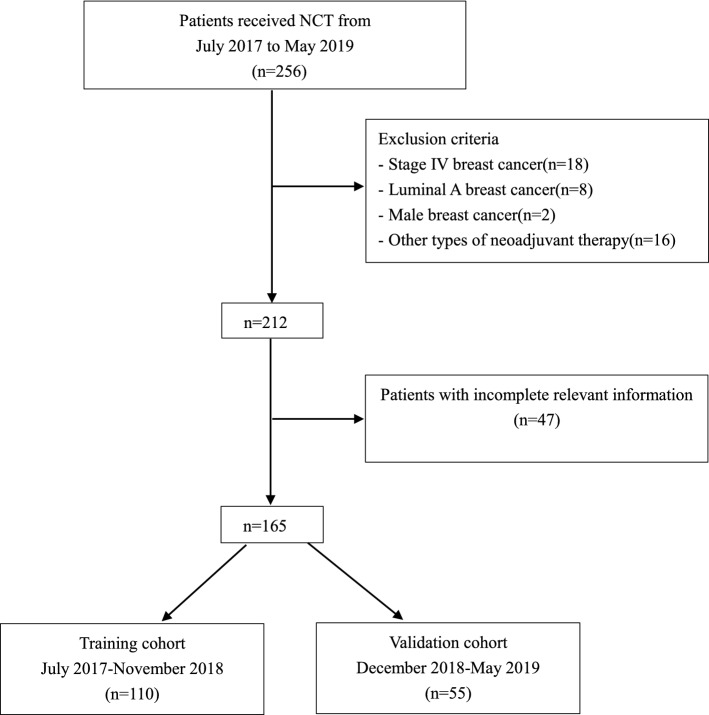
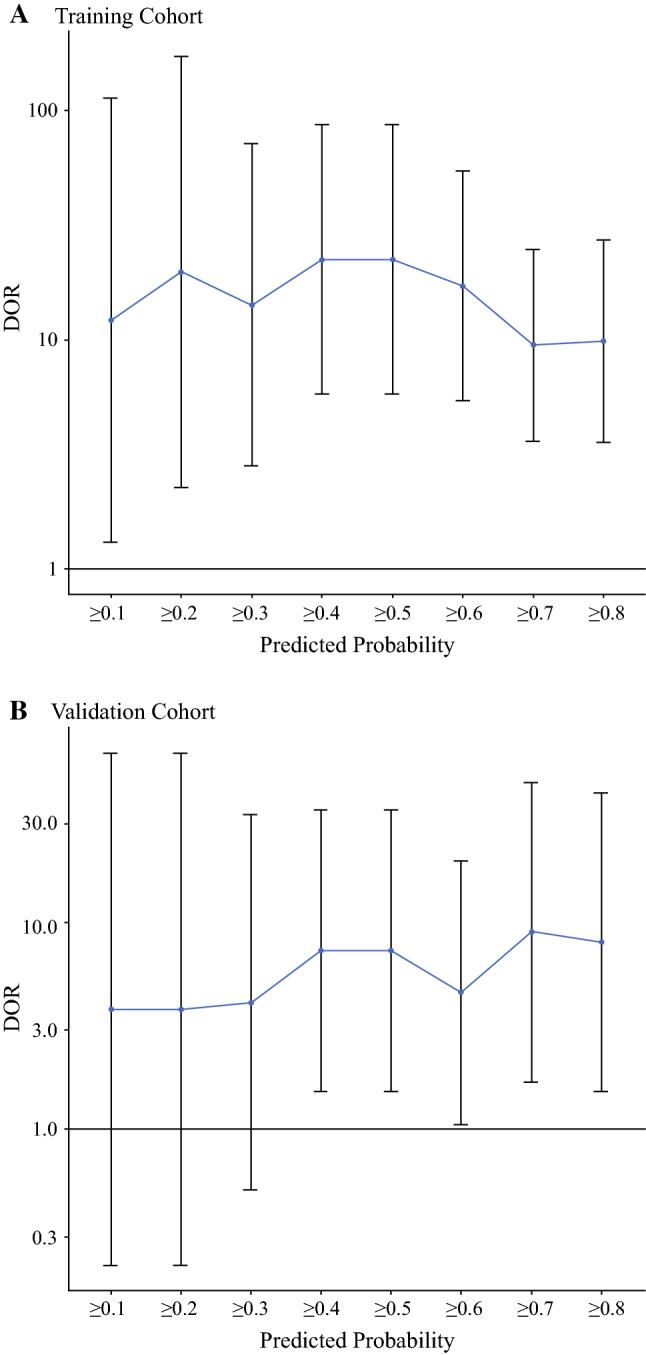
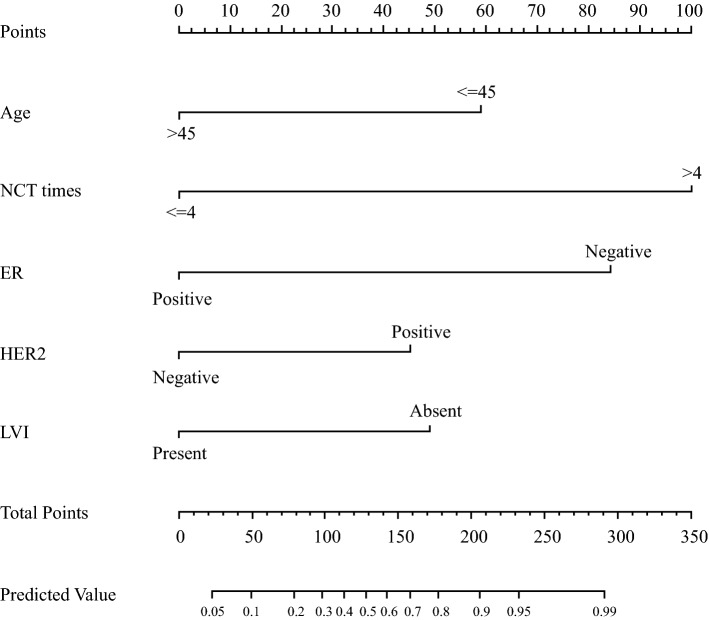
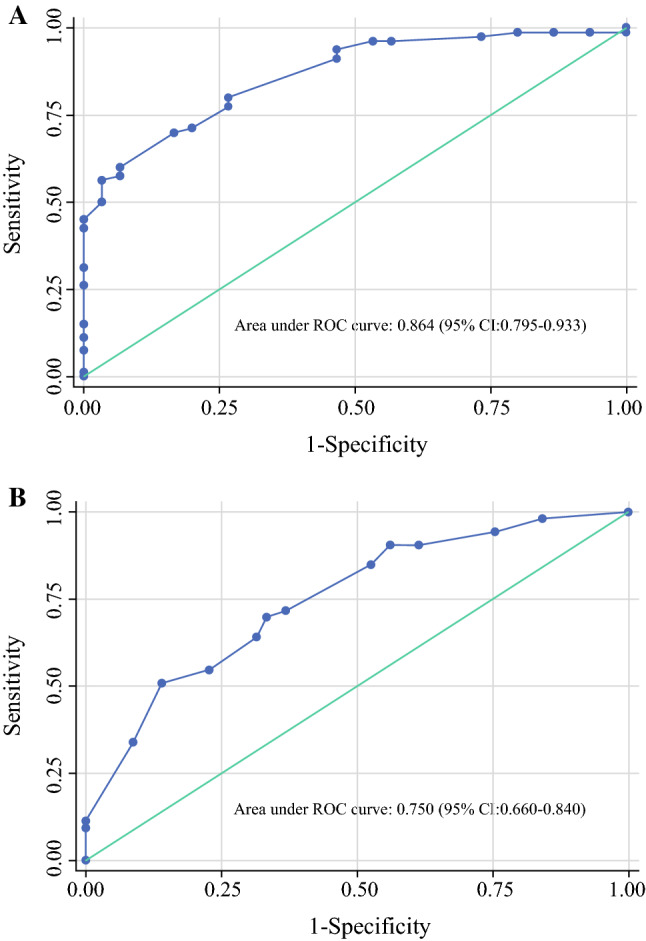
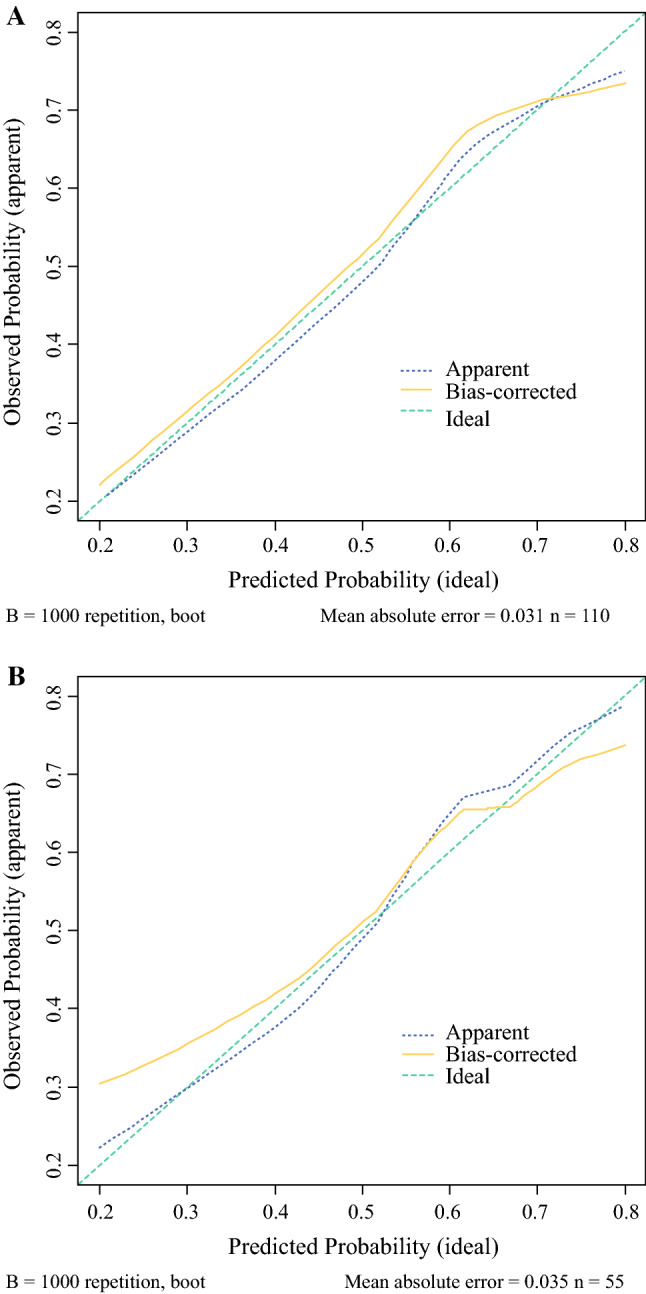
Data from 110 patients with breast cancer who received NCT were used to establish and calibrate a nomogram for pathological outcomes based on multivariate logistic regression. The predictive performance of this model was further validated using a second cohort of 55 patients with breast cancer. Discrimination of the prediction model was assessed using an area under the receiver operating characteristic curve (AUC), and calibration was assessed using calibration plots. The diagnostic odds ratio (DOR) was calculated to further evaluate the performance of the nomogram and determine the optimal cut-off value.
The final multivariate regression model included age, NCT cycles, estrogen receptor, human epidermal growth factor receptor 2 (HER2), and lymphovascular invasion. A nomogram was developed as a graphical representation of the model and showed good calibration and discrimination in both sets (an AUC of 0.864 and 0.750 for the training and validation cohorts, respectively). Finally, according to the Youden index and DORs, we assigned an optimal ORR cut-off value of 0.646.
We developed a nomogram to predict the ORR of NCT in patients with breast cancer. Using the nomogram, for patients who are operable and whose ORR is < 0.646, we believe that the benefits of NCT are limited and these patients can be treated directly using surgery.
新辅助化疗(NCT)的病理反应与乳腺癌患者的生存结果相关。以往的研究使用过时的变量构建模型来预测病理结果,且缺乏外部验证,使其不适用于指导当前的临床实践。
本研究旨在开发并验证一种列线图,以基于治疗前的临床病理变量预测NCT的客观缓解率(ORR)。
使用110例接受NCT的乳腺癌患者的数据,基于多因素逻辑回归建立并校准用于病理结果的列线图。使用另一组55例乳腺癌患者进一步验证该模型的预测性能。使用受试者操作特征曲线(AUC)下的面积评估预测模型的区分度,并使用校准图评估校准情况。计算诊断比值比(DOR)以进一步评估列线图的性能并确定最佳截断值。
最终的多因素回归模型包括年龄、NCT周期、雌激素受体、人表皮生长因子受体2(HER2)和淋巴管浸润。开发了一种列线图作为该模型的图形表示,并且在两组中均显示出良好的校准和区分度(训练队列和验证队列的AUC分别为0.864和0.750)。最后,根据约登指数和DOR,我们设定了0.646的最佳ORR截断值。
我们开发了一种列线图来预测乳腺癌患者NCT的ORR。使用该列线图,对于可手术且ORR < 0.646的患者,我们认为NCT的益处有限,这些患者可直接采用手术治疗。