Laboratory of Psychoneuroimmunology, Psychosomatic Research Center and Oral Oncology Center, São Paulo State University (UNESP), School of Dentistry, Araçatuba, São Paulo, Brazil.
Department of Diagnosis and Surgery, School of Dentistry, São Paulo State University (UNESP), Araçatuba, São Paulo, Brazil.
PLoS One. 2021 Jan 7;16(1):e0245190. doi: 10.1371/journal.pone.0245190. eCollection 2021.
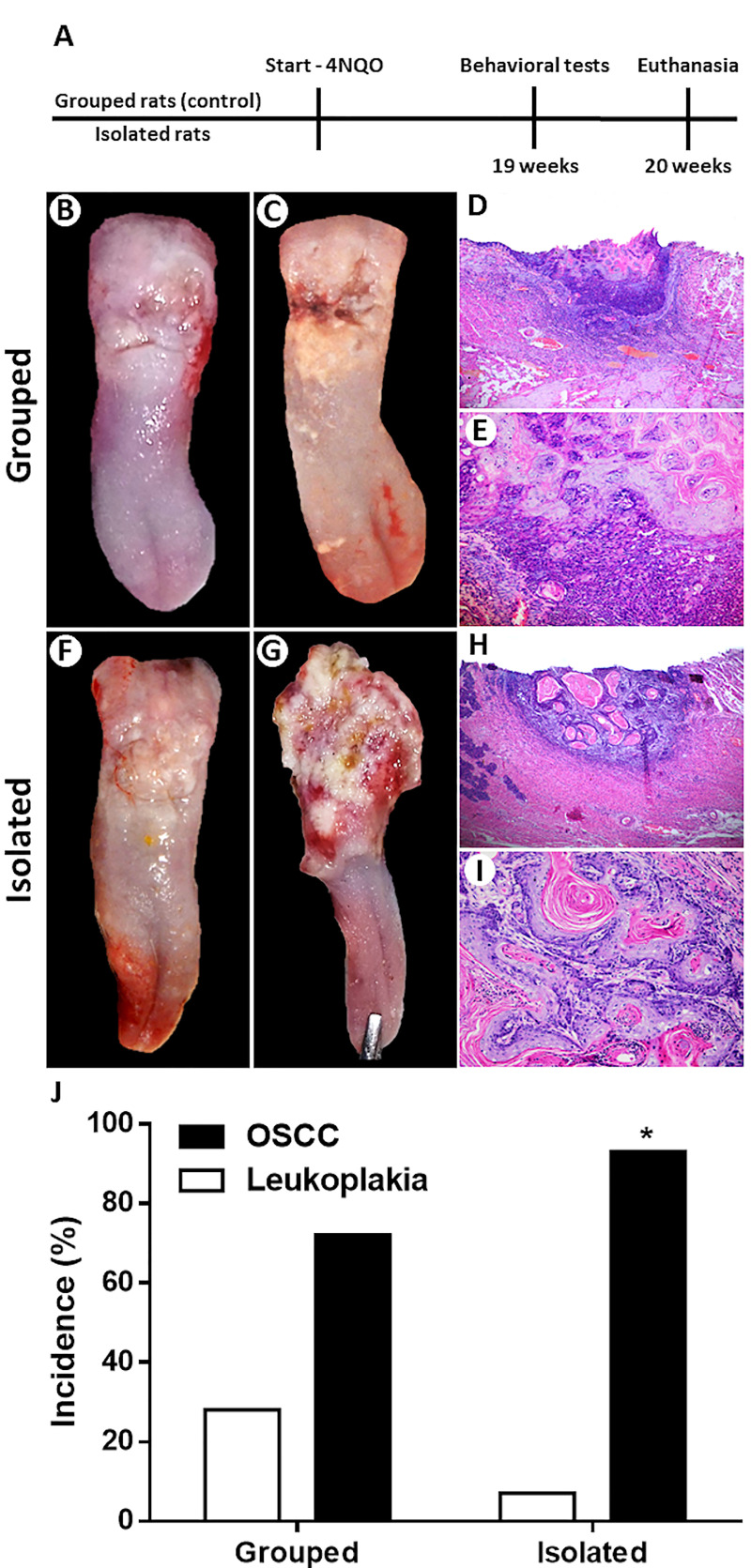
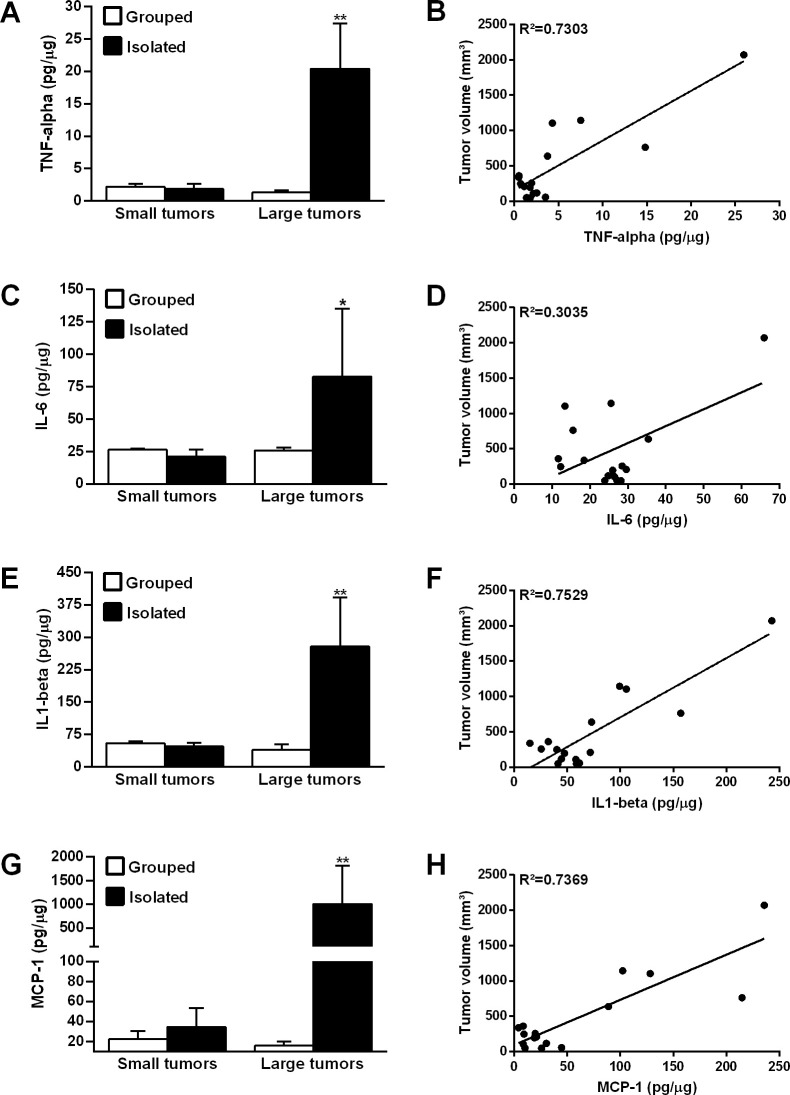
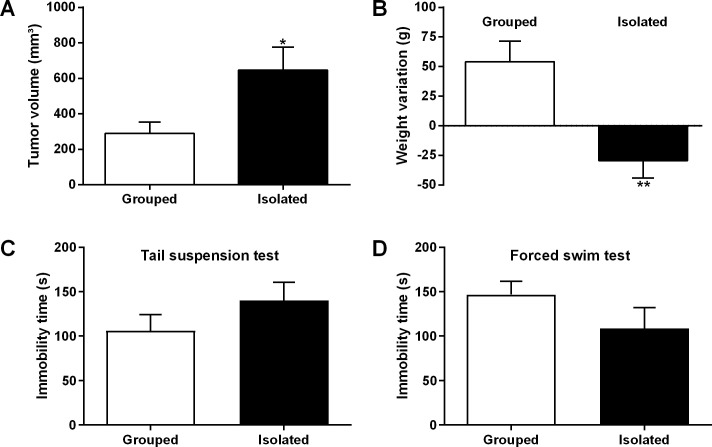
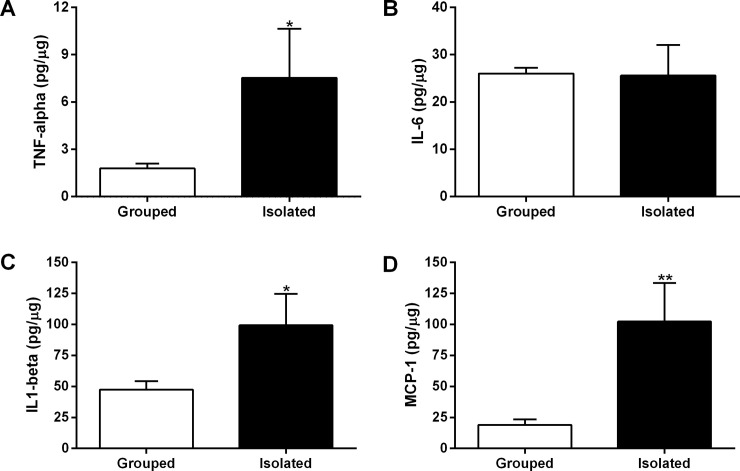
Social isolation has affected a large number of people and may lead to impairment of physical and mental health. Although stress resulting from social isolation may increase cancer progression, its interference on tumorigenesis is poorly known. In this study, we used a preclinical model to evaluate the effects of social isolation stress on chemically induced oral carcinogenesis. Sixty-two 21-day-old male Wistar rats were divided into isolated and grouped groups. After 90 days of age, the rats from both groups underwent oral carcinogenesis with 4-nitroquinoline 1-oxide (4NQO) for 20 weeks. All rats were assessed for depressive-like behavior and euthanized for oral squamous cell carcinoma (OSCC) diagnosis and measurement of inflammatory mediators in the tumor microenvironment. Social isolation stress increased the OSCC occurrence by 20.4% when compared to control. Isolated rats also showed higher tumor volume and cachexia than the grouped rats. Social isolation did not induce changes in the depressive-like behavior after carcinogenic induction. Tumors from stressed rats had increased levels of the inflammatory mediators, TNF-alpha, IL1-beta and MCP-1. The concentrations of TNF-alpha and MCP-1 were significantly increased in the large tumors from isolated animals. Higher tumor levels of TNF-alpha, IL-6, IL1-beta and MCP-1 were positively correlated with OSCC growth. This study provides the first evidence that social isolation stress may facilitate OSCC occurrence and tumor progression, an event accompanied by increased local levels of inflammatory mediators.
社会隔离影响了大量人群,可能导致身心健康受损。虽然社会隔离引起的压力可能会增加癌症的进展,但它对肿瘤发生的干扰知之甚少。在这项研究中,我们使用临床前模型来评估社会隔离应激对化学诱导口腔致癌作用的影响。将 62 只 21 天大的雄性 Wistar 大鼠分为隔离组和分组组。两组大鼠在 90 天大时用 4-硝基喹啉 1-氧化物(4NQO)进行口腔致癌作用,持续 20 周。所有大鼠均进行抑郁样行为评估,并进行安乐死以诊断口腔鳞状细胞癌(OSCC)并测量肿瘤微环境中的炎症介质。与对照组相比,社会隔离应激使 OSCC 的发生率增加了 20.4%。与分组组大鼠相比,隔离组大鼠的肿瘤体积和恶病质也更高。致癌诱导后,社会隔离未引起抑郁样行为的变化。应激大鼠的肿瘤中炎症介质 TNF-α、IL1-β和 MCP-1 的水平增加。与孤立动物大肿瘤中的 TNF-α和 MCP-1 浓度相比,这些炎症介质的浓度显著增加。较高的肿瘤 TNF-α、IL-6、IL1-β和 MCP-1 水平与 OSCC 生长呈正相关。这项研究首次提供了证据表明,社会隔离应激可能促进 OSCC 的发生和肿瘤进展,这一事件伴随着局部炎症介质水平的增加。