Tilburg University, The Netherlands.
Fivoor Science and Treatment Innovation (FARID), Rotterdam, The Netherlands.
Int J Offender Ther Comp Criminol. 2021 Jun;65(8):899-915. doi: 10.1177/0306624X20986537. Epub 2021 Jan 7.
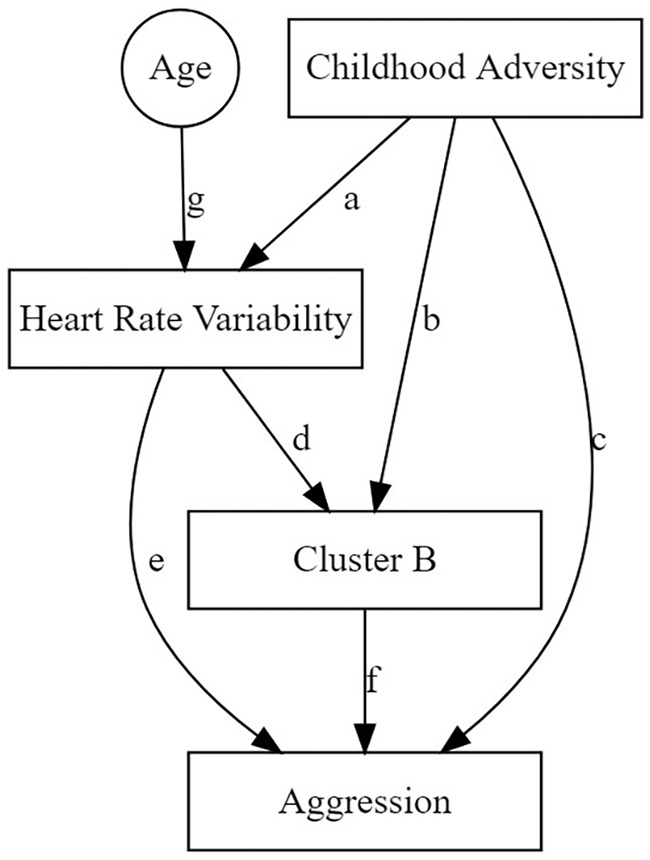
Early childhood adversity can cause an imbalance in the autonomic function, which may in turn lead to the development of trauma-spectrum disorders and aggressive behavior later in life. In the present study, we investigated the complex associations between early adversity, heart rate variability (HRV), cluster B personality disorders, and self-reported aggressive behavior in a group of 50 male forensic inpatients ( age = 41.16; = 10.72). Structural Equation Modeling analysis revealed that patients with cluster B personality disorders were more likely to have adverse early childhood experiences and reduced sympathetic dominance in response to a threat than patients without cluster B personality disorders. In addition, HRV and cluster B personality disorders did not significantly mediate the association between early childhood adversity and self-reported aggressive behavior. These findings are important for clinical practice to facilitate specific treatment programs for those affected.
早期逆境会导致自主功能失衡,进而可能导致创伤谱系障碍和日后的攻击行为。在本研究中,我们调查了一组 50 名男性法医住院患者(年龄=41.16;=10.72)中早期逆境、心率变异性(HRV)、B 群人格障碍与自我报告攻击行为之间的复杂关联。结构方程模型分析表明,与无 B 群人格障碍的患者相比,B 群人格障碍患者更有可能经历不良的童年经历和在面对威胁时交感神经优势降低。此外,HRV 和 B 群人格障碍并不能显著调节早期逆境与自我报告攻击行为之间的关联。这些发现对于临床实践很重要,可以为受影响的人提供特定的治疗方案。