Graduate School of Peking Union Medical College and Chinese Academy of Medical Sciences, Beijing, China.
Department of Orthopaedic Surgery, China-Japan Friendship Hospital, No. 2, Yinghuadong Road, Chaoyang District, Beijing, 100029, China.
J Orthop Surg Res. 2021 Jan 7;16(1):28. doi: 10.1186/s13018-020-02190-8.
Bearing dislocation is a common postoperative complication of mobile-bearing unicompartmental knee arthroplasty, and East Asian patients tend to be at higher risk. However, whether this high dislocation rate is common in all East Asian populations remains unclear. This meta-analysis was performed to explore this issue and describe various features of dislocation in East Asians, including the onset time, dislocation direction, and re-dislocation rate.
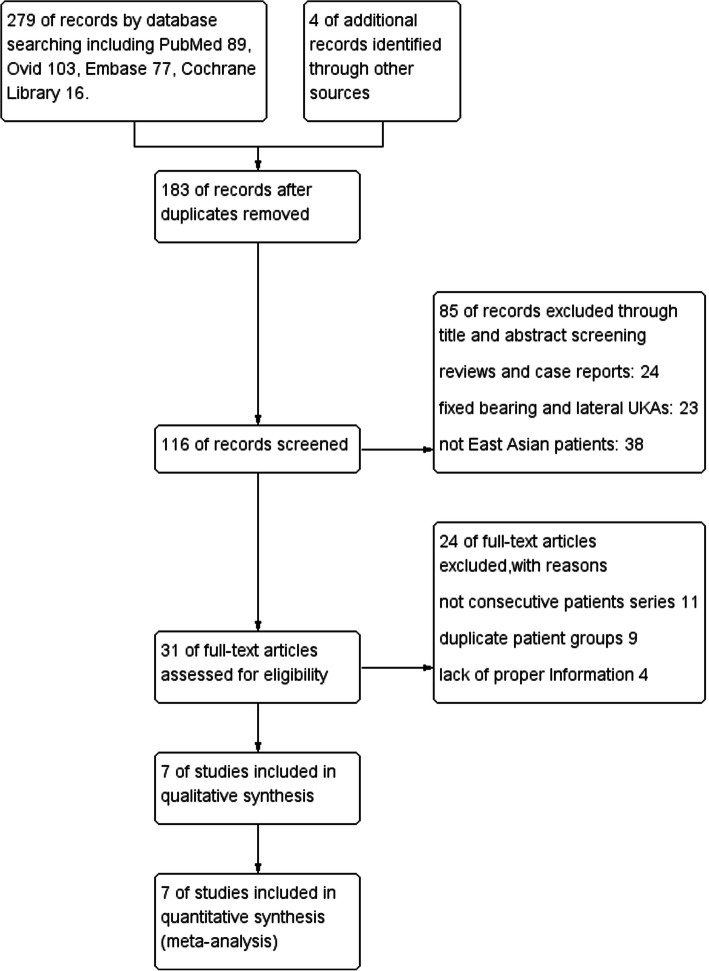
The literature was searched in PubMed, Embase, Ovid, and Cochrane Library up to May 2020. Studies were scrutinized by two independent authors, and the bearing dislocation rate, onset time, direction, and re-dislocation rate were specifically analyzed. RevMan 5.3 was used for the statistical analysis.
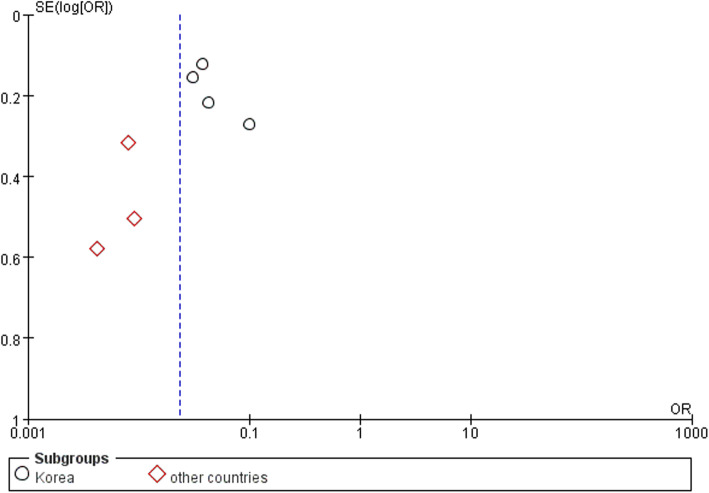
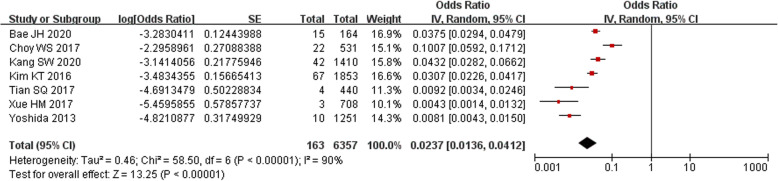
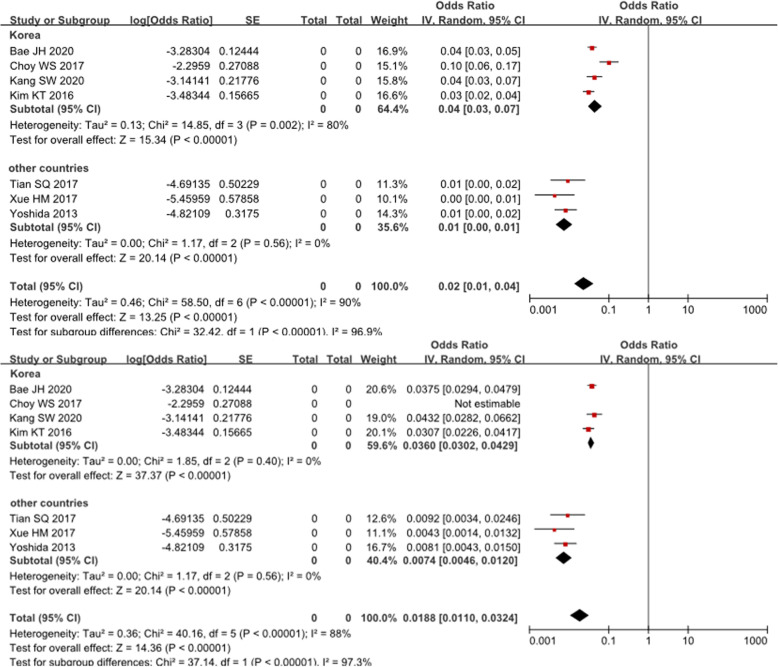
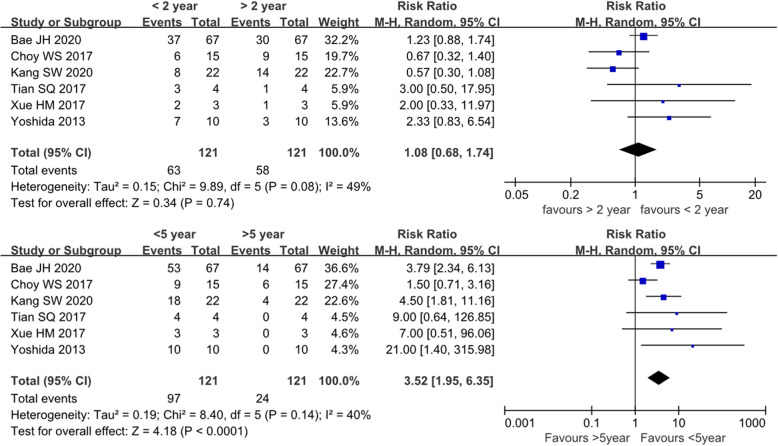
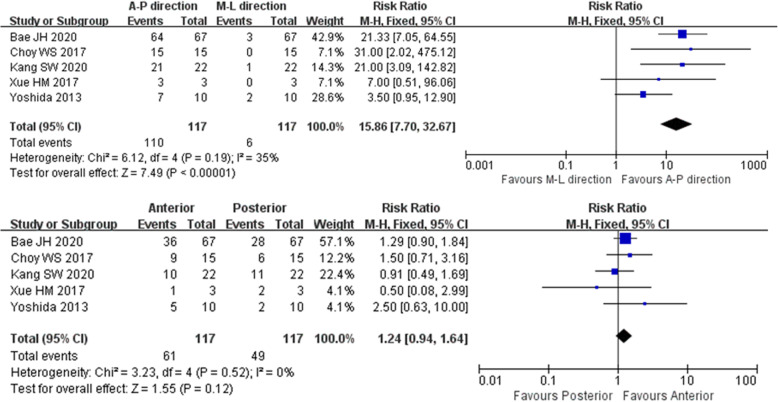
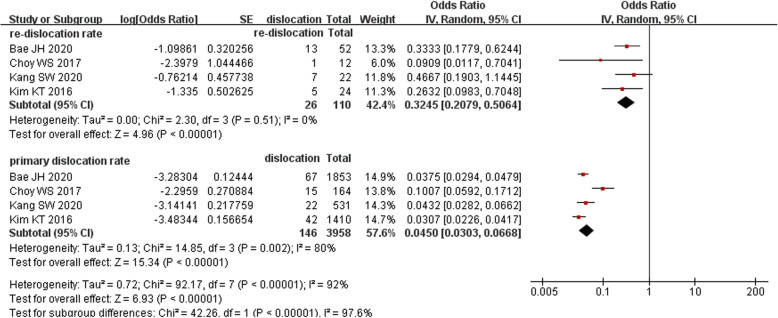
Seven case series from Korea, China, and Japan were included. The pooled analysis showed that the total dislocation rate was 2.37%, while the subgroup analysis showed that the dislocation rate in Korea and other countries was 4.50% and 0.74%, respectively (P < 0.01). Another subgroup analysis of the onset time showed a significant difference before and after the first 5 years postoperatively (P < 0.01). Anterior and posterior dislocations were more frequent than medial and lateral dislocations (P < 0.01). The average re-dislocation rate was 32.45%, which was approximately seven times higher than the primary dislocation rate (P < 0.01).
Our meta-analysis demonstrated that Korea had a higher bearing dislocation rate among East Asian countries, especially in the first 5 years after primary UKA. Anterior and posterior dislocations were common. The most important finding is that the re-dislocation rate can be much higher than the initial dislocation rate.
活动平台单髁膝关节置换术后的脱位是一种常见的并发症,东亚患者发生这种并发症的风险更高。然而,这种高脱位率是否在所有东亚人群中都很常见尚不清楚。本荟萃分析旨在探讨这个问题,并描述东亚人群脱位的各种特征,包括发病时间、脱位方向和再脱位率。
检索了 PubMed、Embase、Ovid 和 Cochrane Library 中的文献,检索时间截至 2020 年 5 月。两位作者独立筛选文献,专门分析了关节脱位率、发病时间、方向和再脱位率。采用 RevMan 5.3 进行统计分析。
纳入了来自韩国、中国和日本的 7 项病例系列研究。汇总分析显示,总脱位率为 2.37%,亚组分析显示韩国和其他国家的脱位率分别为 4.50%和 0.74%(P<0.01)。对发病时间的另一个亚组分析显示,术后前 5 年和 5 年以后有显著差异(P<0.01)。前侧和后侧脱位比内侧和外侧脱位更常见(P<0.01)。再脱位的平均发生率为 32.45%,约为初次脱位率的 7 倍(P<0.01)。
本荟萃分析表明,韩国在东亚国家中活动平台单髁膝关节置换术后的脱位率更高,尤其是在初次 UKA 后 5 年内。前侧和后侧脱位更为常见。最重要的发现是再脱位率可能远高于初次脱位率。