Department of Orthopaedic Surgery, Chang Gung Memorial Hospital Linkou Branch, Taoyuan, Taiwan (ROC); Bone and Joint Research Center, Chang Gung Memorial Hospital Linkou Branch, Taoyuan, Taiwan (ROC).
Bone and Joint Research Center, Chang Gung Memorial Hospital Linkou Branch, Taoyuan, Taiwan (ROC); Department of Orthopedic Surgery, Keelung Chang Gung Memorial Hospital, Keelung City, Taiwan.
Clinics (Sao Paulo). 2024 Sep 2;79:100478. doi: 10.1016/j.clinsp.2024.100478. eCollection 2024.
Lower limb coronal alignment was thought to be a predictive factor for Unicompartmental Knee Arthroplasty (UKA) result. The tibial bony resection and implant position lead to joint line change postoperatively. Analysis was done to find out the correlation between these factors.
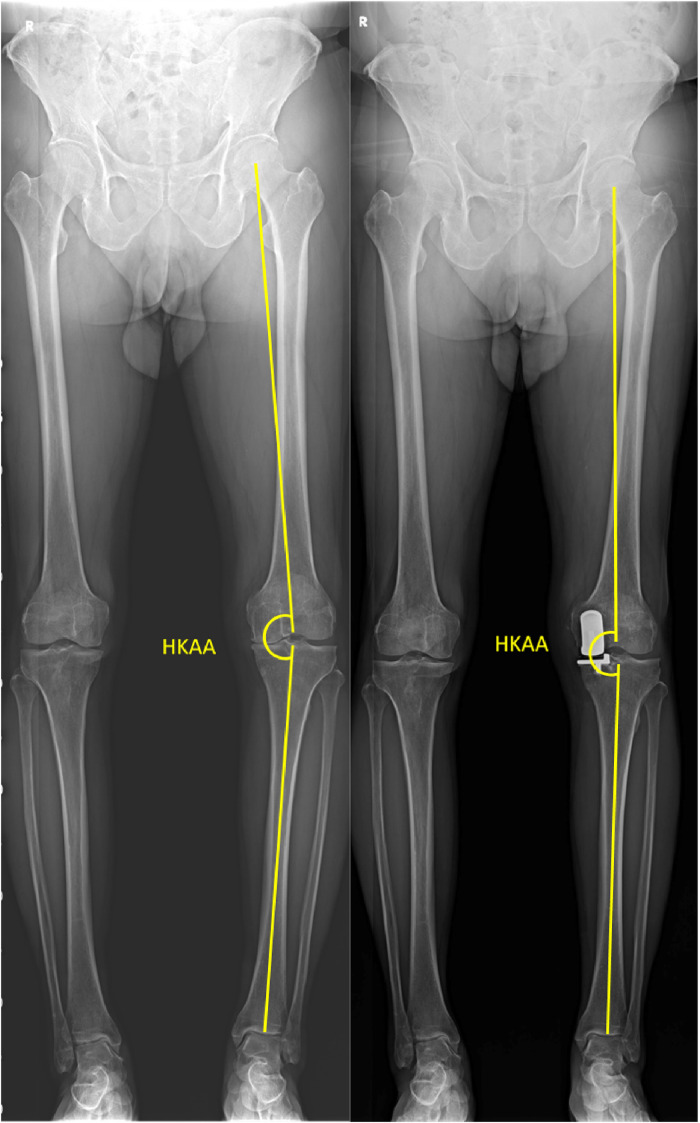
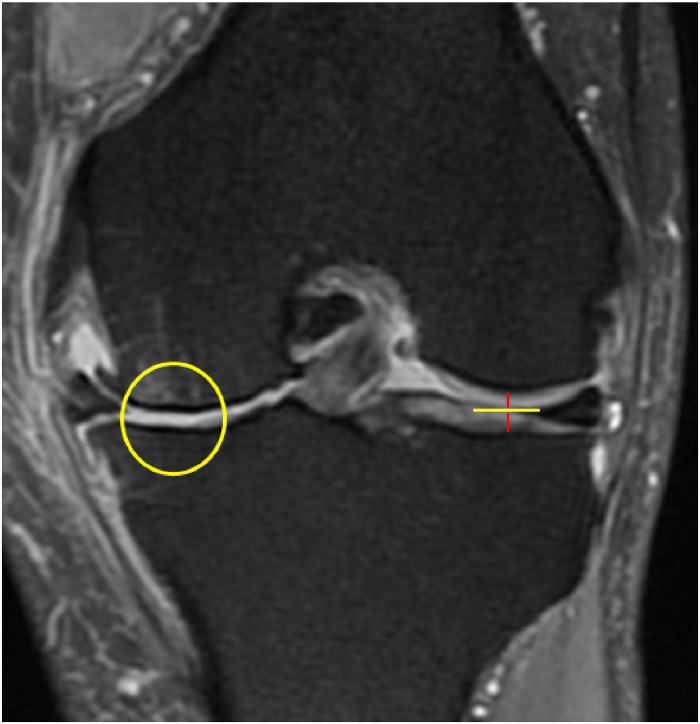
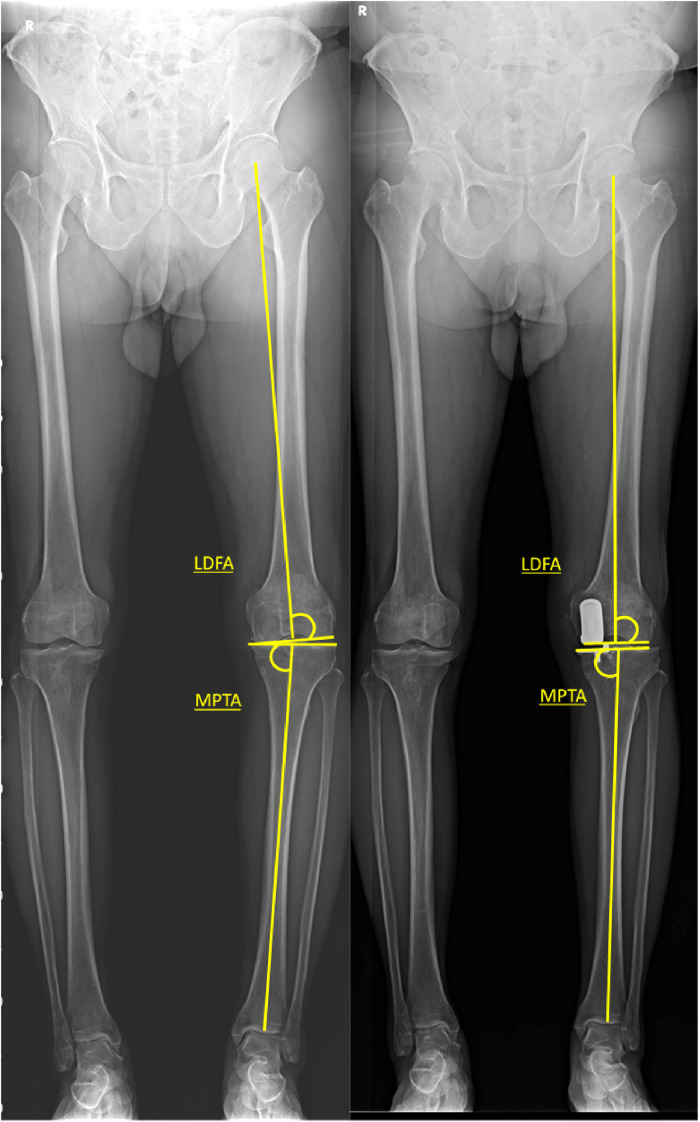
From 2019 to 2021, 90 medial Oxford UKA were implanted by a single surgeon. Hip Knee Ankle Angle (HKAA), Lateral Distal Femoral Angle (LDFA), Medial Proximal Tibial Angle (MPTA), and intraoperative bony resection thickness were measured. The medial joint line change was calculated. The correlation between joint line change and alignment change was evaluated.
The mean tibial resection thickness was 4.3 mm. The mean tibial joint line was elevated by 2.3 mm, while the mean femoral joint line proximalized by 0.8 mm. HKAA changed from 8.4° varus preoperatively to 3.6° varus postoperatively. LDFA changed from 89.0° to 86.7°. MPTA changed from 85.6° to 86.6°. Preoperative HKAA showed a strong correlation with postoperative HKAA (p < 0.001), and preoperative MPTA showed a positive correlation with postoperative HKAA (p < 0.001). While preoperative LDFA had a negative correlation with postoperative HKAA (p < 0.001). The femoral joint line change and LDFA change had a significant correlation with HKAA change (p < 0.05).
The change of joint line had no correlation with postoperative HKAA in Oxford UKA. Preoperative HKAA strongly correlated with postoperative HKAA; while preoperative smaller LDFA and larger MPTA had a moderate correlation with postoperative HKAA. The femoral joint line change and LDFA change had a weak to moderate correlation with HKAA change.
下肢冠状面对线被认为是单髁膝关节置换术(UKA)结果的预测因素。胫骨截骨和植入物位置会导致术后关节线改变。本研究旨在分析这些因素之间的相关性。
2019 年至 2021 年,由同一位外科医生植入 90 例内侧牛津 UKA。测量髋膝踝角(HKAA)、外侧远端股骨角(LDFA)、内侧近端胫骨角(MPTA)和术中骨切除厚度。计算内侧关节线变化。评估关节线变化与对线变化之间的相关性。
平均胫骨切除厚度为 4.3 毫米。胫骨关节线平均抬高 2.3 毫米,而股骨关节线近端化 0.8 毫米。术前 HKAA 从 8.4° 内翻变为术后 3.6° 内翻。LDFA 从 89.0°变为 86.7°。MPTA 从 85.6°变为 86.6°。术前 HKAA 与术后 HKAA 呈强相关性(p < 0.001),术前 MPTA 与术后 HKAA 呈正相关(p < 0.001)。而术前 LDFA 与术后 HKAA 呈负相关(p < 0.001)。股骨关节线变化和 LDFA 变化与 HKAA 变化呈显著相关性(p < 0.05)。
牛津 UKA 中关节线的变化与术后 HKAA 无相关性。术前 HKAA 与术后 HKAA 呈强相关;而术前较小的 LDFA 和较大的 MPTA 与术后 HKAA 呈中度相关。股骨关节线变化和 LDFA 变化与 HKAA 变化呈弱至中度相关。