Goyal Tarun, Paul Souvik, Banerjee Sushovan, Das Lakshmana
Department of Orthopaedics, All India Institute of Medical Sciences, Bathinda, Punjab, 151001, India.
Department of Orthopaedics, All India Institute of Medical Sciences, Rishikesh, India.
Knee Surg Relat Res. 2021 Jan 7;33(1):3. doi: 10.1186/s43019-020-00083-y.
This article aims to evaluate patterns of chronic multiligament injuries and outcomes of treatment with single-stage reconstruction using autografts.
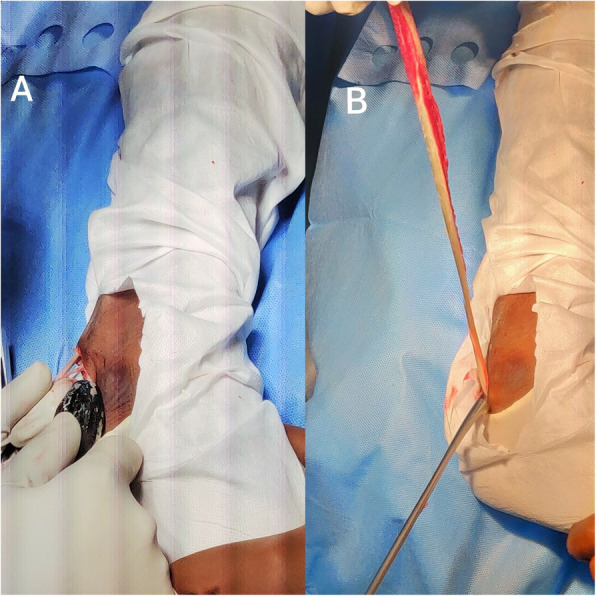
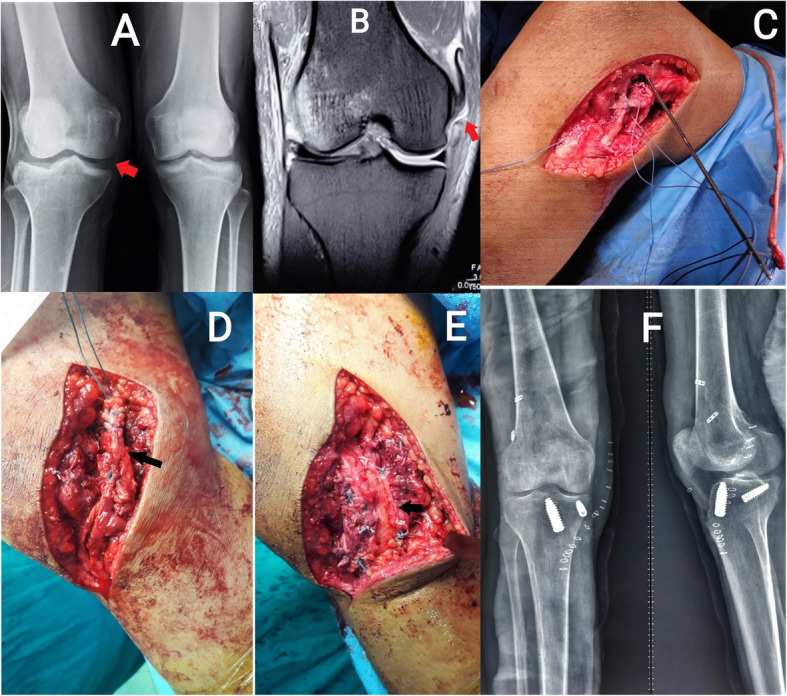
All patients with clinicoradiologically diagnosed multiligament knee injury (MKI) were included in this prospective observational study. As the time since injury was more than 6 weeks in all of the patients, they were categorized as having chronic MKI. Patients were assessed clinically for laxity, and the diagnosis was confirmed radiologically. Ipsilateral hamstring tendons were used for medial collateral ligament (MCL) or posterolateral corner reconstruction in a patient with Schenck knee dislocation (KD) type III. In these cases, the posterior cruciate ligament (PCL) and anterior cruciate ligament (ACL) were reconstructed by using the peroneus longus and contralateral hamstring tendons respectively. Ipsilateral hamstring tendons were used for ACL reconstruction and an ipsilateral peroneus longus tendon graft was used for reconstruction of the PCL in a KD type II injury. In two cases of KD type IV injury, the lateral laxity was only grade II and was managed conservatively; the rest of the ligaments were addressed like a KD type III injury. Outcome evaluation was done using a visual analogue scale (VAS) for pain, International Knee Documentation Committee (IKDC) score, Lysholm score, and Tegner activity level, preoperatively and postoperatively at 2 years' follow-up.
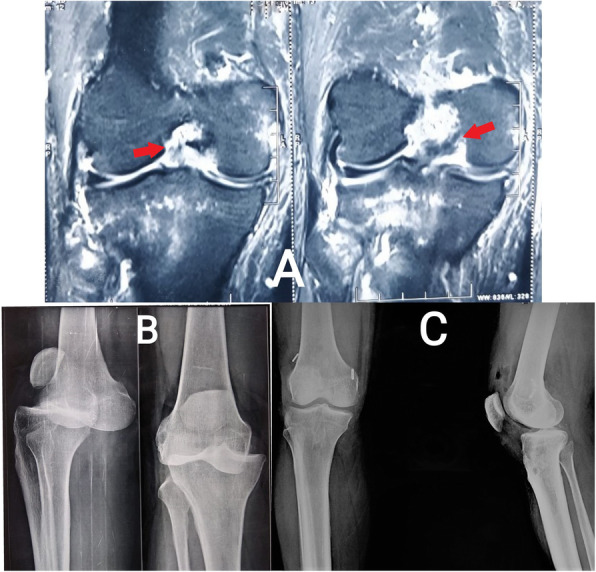
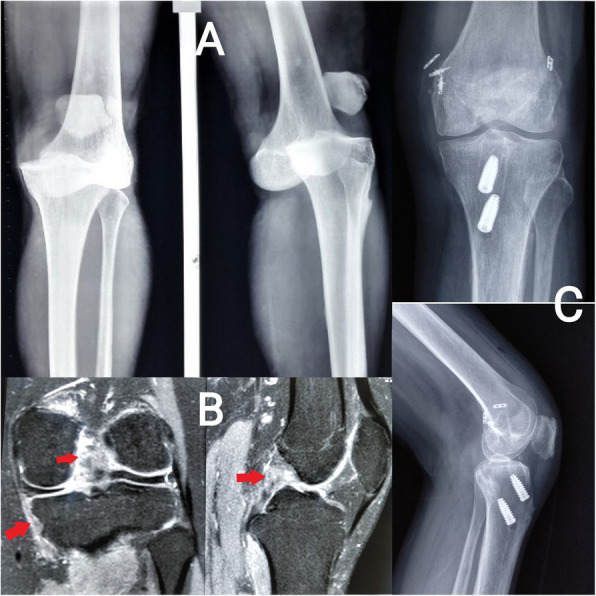
A total of 27 patients of mean age 33.48 ± 9.9 years with MKI were included in the study. The patients were classified as eight KD type II, 17 KD type III, and two KD type IV. The majority of the patients had associated meniscal (59.2%) or chondral (40.7%) injuries. At the 2 years' follow-up visit, there were significant improvements in VAS score (p = 0.0001) IKDC score (p = 0.0001), Lysholm score (p = 0.0001), and range of motion (p = 0.001). None of the patients had residual laxity on clinical examination of the knee joint at the 2 years' follow-up. All but two of the patients went back to their previous activity level. These two patients had progressive knee arthritis and needed knee arthroplasty.
Single-stage surgical reconstruction for chronic MKI has favourable functional outcomes.
Level IV, case series.
本文旨在评估慢性多韧带损伤的模式以及使用自体移植物进行单阶段重建的治疗效果。
所有经临床和影像学诊断为膝关节多韧带损伤(MKI)的患者均纳入本前瞻性观察研究。由于所有患者受伤时间均超过6周,因此他们被归类为慢性MKI。对患者进行临床松弛度评估,并通过影像学检查确诊。对于 Schenck III型膝关节脱位(KD)患者,使用同侧腘绳肌腱进行内侧副韧带(MCL)或后外侧角重建。在这些病例中,分别使用腓骨长肌和对侧腘绳肌腱重建后交叉韧带(PCL)和前交叉韧带(ACL)。对于II型KD损伤,使用同侧腘绳肌腱重建ACL,使用同侧腓骨长肌腱移植物重建PCL。在两例IV型KD损伤中,外侧松弛度仅为II级,采用保守治疗;其余韧带的处理方式与III型KD损伤相同。在术前和术后2年随访时,使用视觉模拟量表(VAS)评估疼痛程度、国际膝关节文献委员会(IKDC)评分、Lysholm评分和Tegner活动水平进行结果评估。
本研究共纳入27例平均年龄为33.48±9.9岁的MKI患者。患者分为8例II型KD、17例III型KD和2例IV型KD。大多数患者伴有半月板损伤(59.2%)或软骨损伤(40.7%)。在2年随访时,VAS评分(p = 0.0001)、IKDC评分(p = 0.0001)、Lysholm评分(p = 0.0001)和活动范围(p = 0.001)均有显著改善。在2年随访时,所有患者膝关节临床检查均无残留松弛。除两名患者外,所有患者均恢复到之前的活动水平。这两名患者患有进行性膝关节炎,需要进行膝关节置换术。
慢性MKI单阶段手术重建具有良好的功能结果。
IV级,病例系列。