Department of General and Trauma Surgery, BG University Hospital Bergmannsheil, Bürkle- de- la- Camp Platz 1, 44789, Bochum, Germany.
OPND Orthopädie Unfallchirurgie Praxis/Klinik Neuss, Plange Mühle 1, 40221, Düsseldorf, Germany.
Knee Surg Sports Traumatol Arthrosc. 2021 Dec;29(12):4188-4197. doi: 10.1007/s00167-021-06501-2. Epub 2021 Mar 10.
The aim of this study was to analyze the outcomes of anatomical repair and ligament bracing for Schenck III and IV knee dislocation (KD).
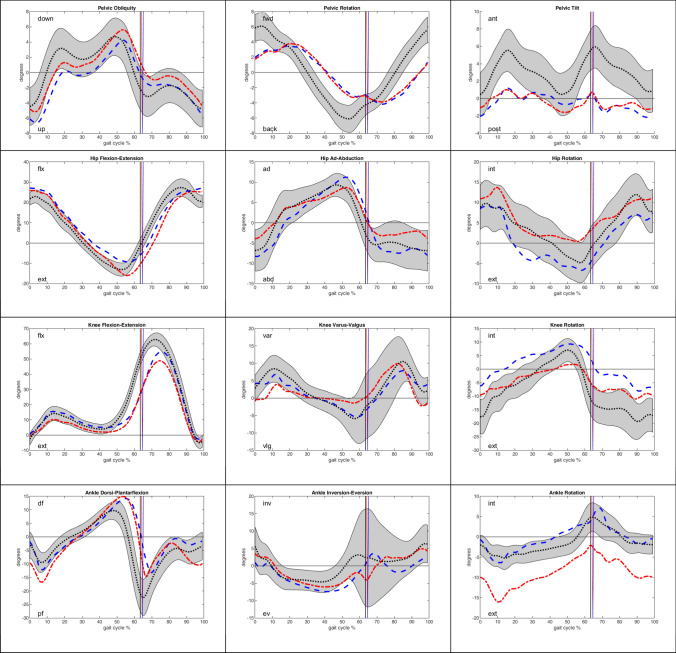
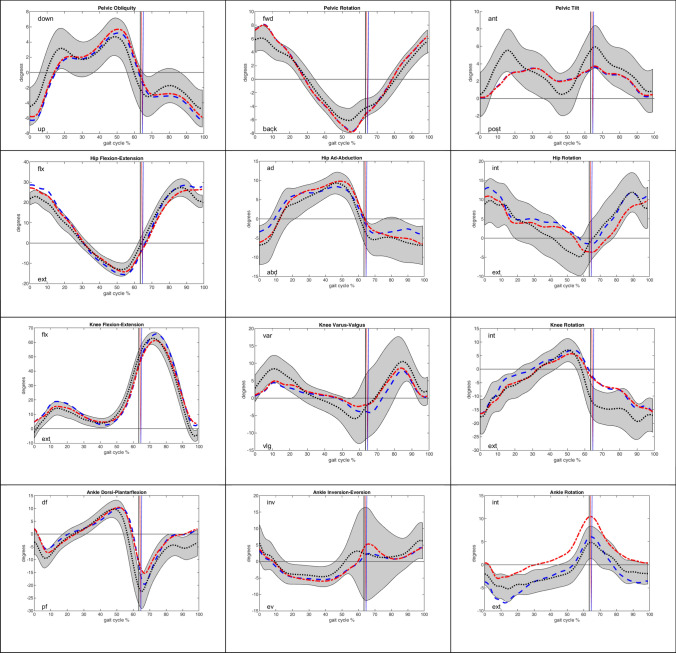
The results of 27 patients (15 and 12 cases of Schenck III and IV KD, respectively) after a mean follow-up of 18.1 ± 12.1 months (range 6-45 months) were retrospectively reviewed. Twenty-two patients suffered high-kinetic-energy accidents, whereas five patients suffered ultralow-velocity (ULV) trauma due to obesity. The outcome measures were the Lysholm score, Hospital for Special Surgery (HSS) knee score, Knee Society Score (KSS), Knee Injury and Osteoarthritis Outcome Score (KOOS) and Short Form 36 (SF-36) score. A kinematic 3D gait analysis with five walking trials was performed to compare the patients and healthy controls.
The mean KSS, HSS score, Lysholm score, and KOOS were 77.4 ± 14.4, 84.6 ± 11.2, 81.5 ± 10.4, and 67.3 ± 16.8, respectively. No intra- or postoperative complications occurred. The mean range of motion deficiency compared to the healthy side was 24.4 ± 18.5°. Ten patients had first-degree residual laxity of the anterior cruciate ligament; 12 and 2 patients had first- and second-degree residual laxity of the collateral ligament, respectively. Five patients underwent additional arthroscopic arthrolysis due to arthrofibrosis at an average of 6.2 ± 1.9 months (range 4-9 months) after the initial surgery. The 3D gait analysis showed no major differences in joint stability or movement between the patients and healthy controls. Only the ULV trauma patients had significantly lower outcome scores and showed larger kinematic deviations in joint movement during the gait analysis.
Anatomical repair with ligament bracing is a suitable surgical procedure in the treatment of KD and provides evidence in clinical practice with the benefit of early, definitive repair and preservation of the native ligaments. Patients reach acceptable subjective and objective functional outcomes, including mainly normalized gait patterns during short-term follow-up, with only minor changes in kinematics and spatial-temporal characteristics. Obese patients who suffered ULV trauma showed significantly inferior outcomes with larger deviations in joint kinematics.
Level III.
本研究旨在分析 Schenck III 和 IV 型膝关节脱位(KD)的解剖修复和韧带支撑的治疗结果。
回顾性分析了 27 例患者(Schenck III 型 15 例,Schenck IV 型 12 例)的随访结果,平均随访时间为 18.1±12.1 个月(6-45 个月)。22 例患者为高能量损伤,5 例患者为肥胖导致的超低能量损伤。测量指标包括 Lysholm 评分、美国特种外科医院(HSS)膝关节评分、膝关节协会评分(KSS)、膝关节损伤和骨关节炎结果评分(KOOS)和健康调查简表 36(SF-36)评分。对 5 次步行试验进行运动学 3D 步态分析,比较患者和健康对照组。
平均 KSS、HSS 评分、Lysholm 评分和 KOOS 分别为 77.4±14.4、84.6±11.2、81.5±10.4 和 67.3±16.8。无术中或术后并发症发生。与健侧相比,平均运动范围缺失 24.4±18.5°。10 例患者前交叉韧带存在 1 度残余松弛,12 例和 2 例患者侧副韧带分别存在 1 度和 2 度残余松弛。5 例患者因初次手术后平均 6.2±1.9 个月(4-9 个月)发生关节僵硬而再次行关节镜下松解术。3D 步态分析显示,患者与健康对照组在关节稳定性或运动方面无明显差异。仅超低能量损伤患者的治疗结果评分较低,且在步态分析中关节运动的运动学偏差较大。
解剖修复加韧带支撑是治疗 KD 的一种合适的手术方法,为临床实践提供了早期、确定性修复和保留固有韧带的益处。患者在短期随访中获得了可接受的主观和客观功能结果,包括主要是正常的步态模式,只有运动学和时空特征的微小变化。因超低能量损伤而肥胖的患者治疗结果明显较差,关节运动的运动学偏差较大。
III 级。