Key Laboratory of Functional Protein Research of Guangdong Higher Education Institutes and MOE Key Laboratory of Tumor Molecular Biology, Institute of Life and Health Engineering, Jinan University, Guangzhou, 510632, China.
Department of Bone and Joint Surgery, Institute of Orthopedic Diseases, The First Affiliated Hospital, Jinan University, Guangzhou, Guangdong, 510630, China.
Cell Death Dis. 2021 Jan 6;12(1):21. doi: 10.1038/s41419-020-03364-2.
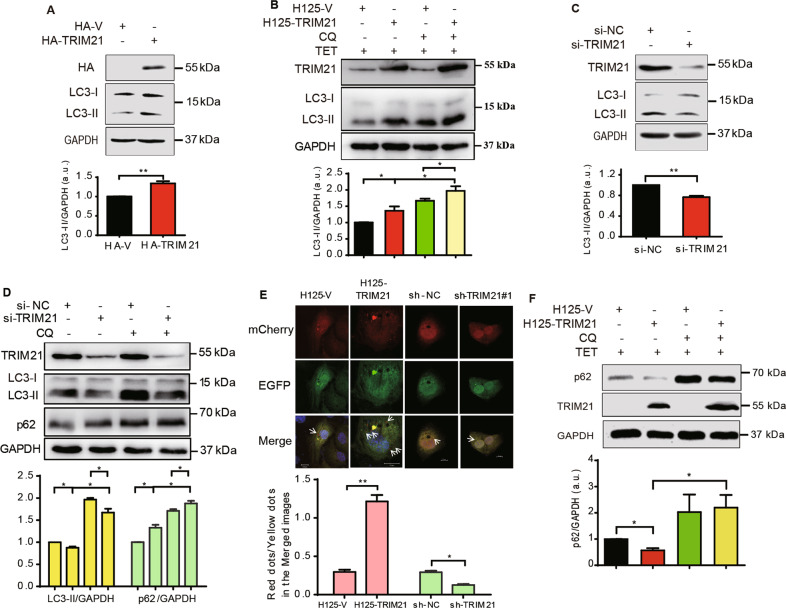
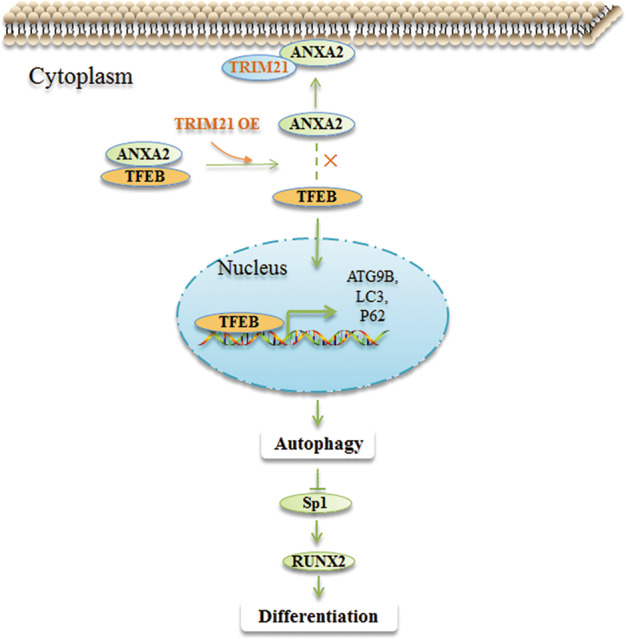
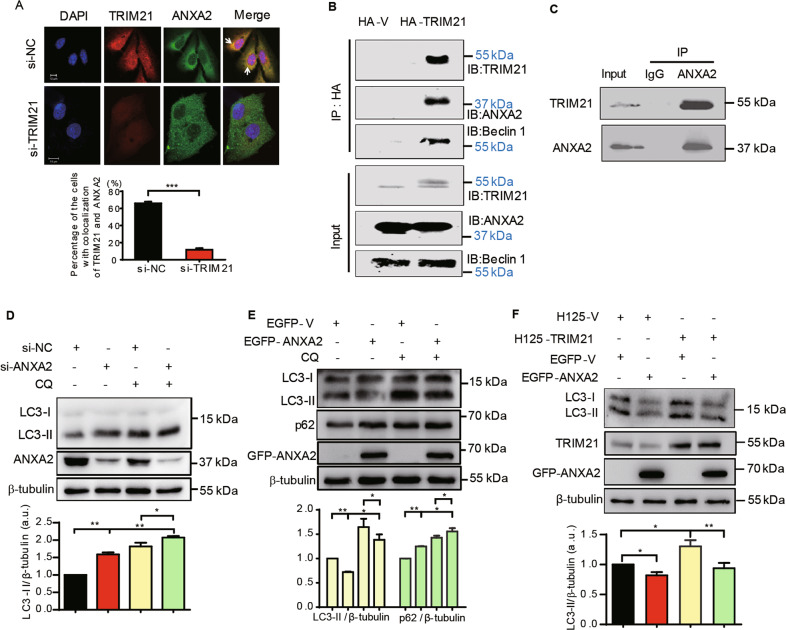
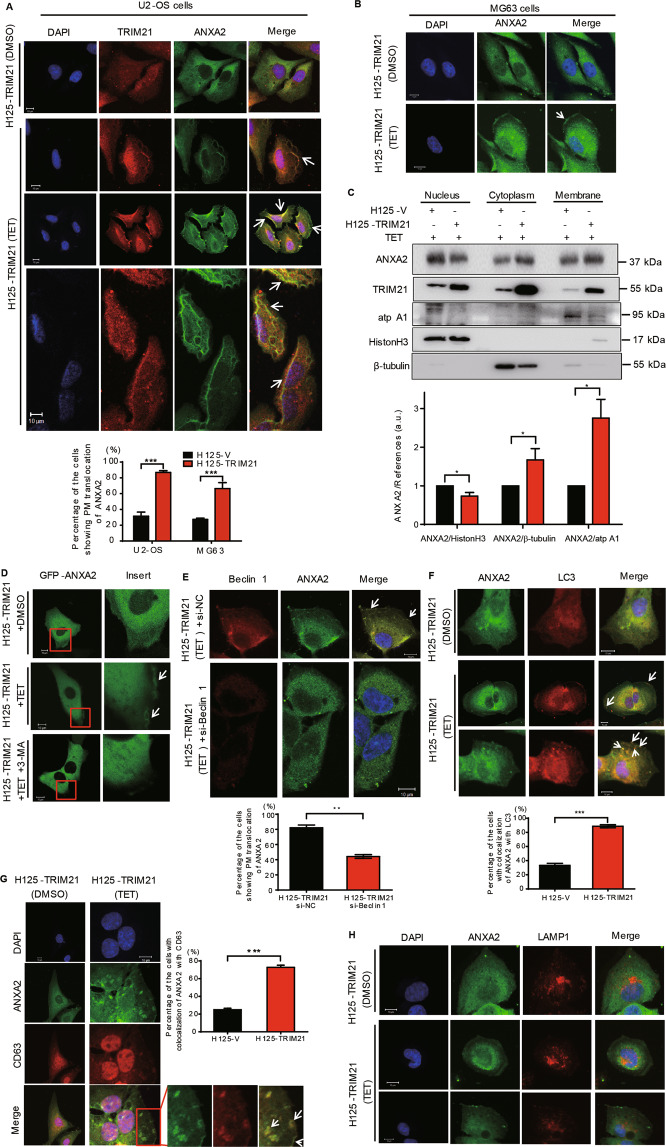
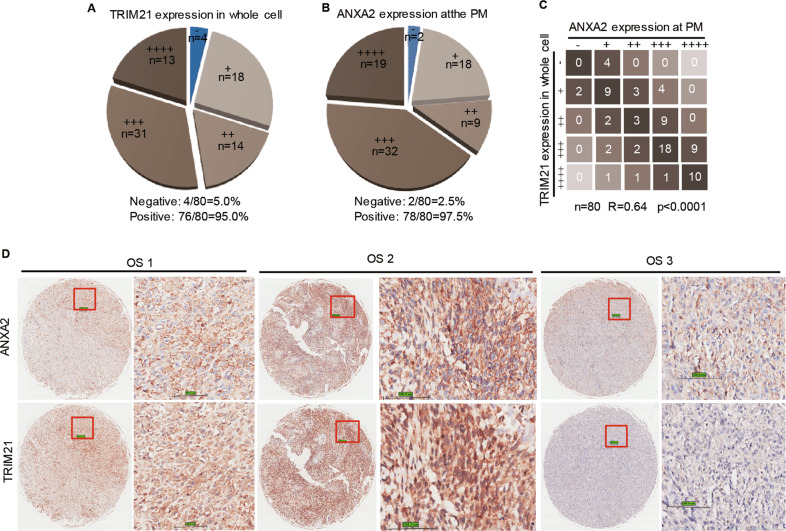
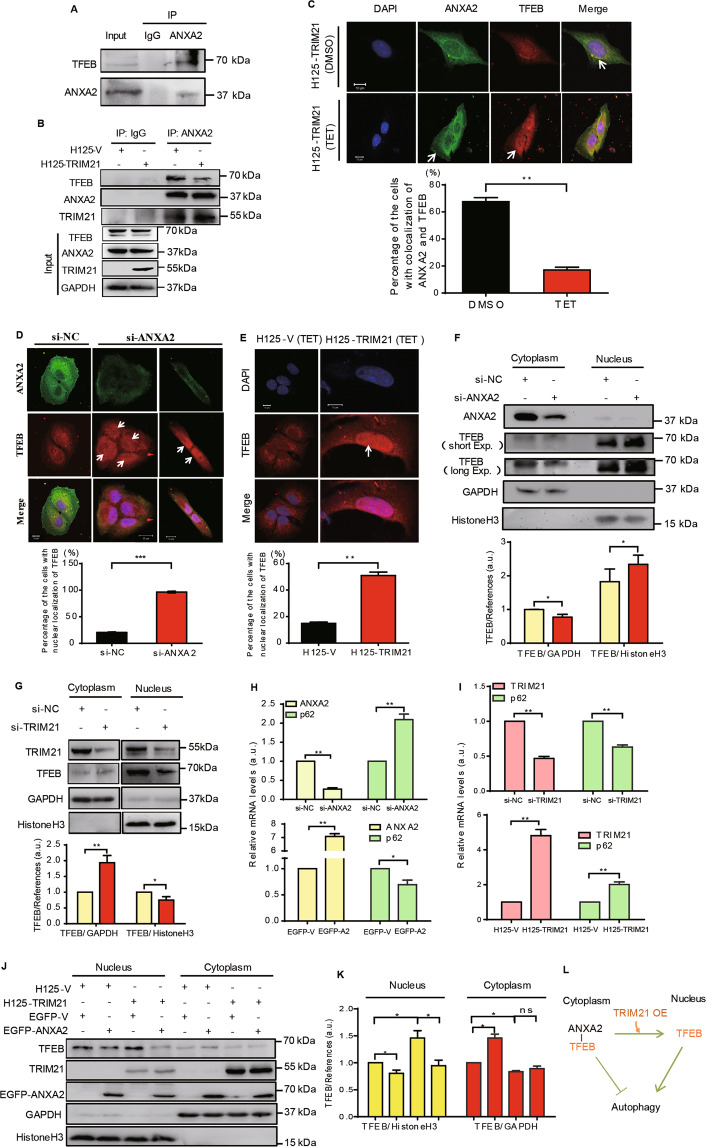
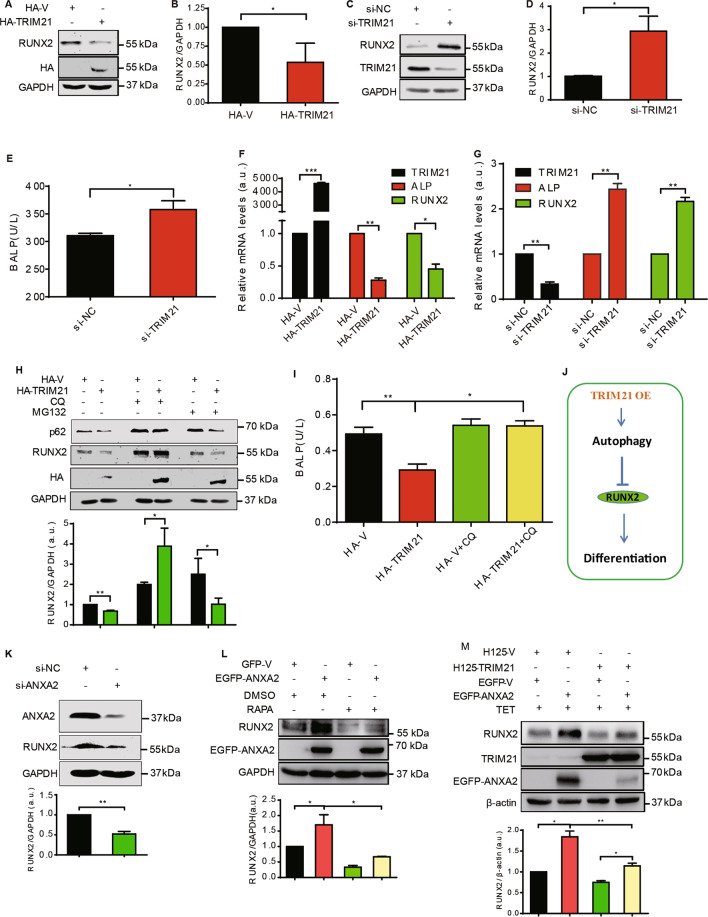
Osteosarcoma (OS) is the most common primary malignant bone tumor in children and adolescents, which is characterized by dysfunctional autophagy and poor differentiation. Our recent studies have suggested that the tripartite motif containing-21 (TRIM21) plays a crucial role in regulating OS cell senescence and proliferation via interactions with several proteins. Yet, its implication in autophagy and differentiation in OS is largely unknown. In the present study, we first showed that TRIM21 could promote OS cell autophagy, as determined by the accumulation of LC3-II, and the degradation of cargo receptor p62. Further, we were able to identify that Annexin A2 (ANXA2), as a novel interacting partner of TRIM21, was critical for TIRM21-induced OS cell autophagy. Although TRIM21 had a negligible effect on the mRNA and protein expressions of ANXA2, we did find that TRIM21 facilitated the translocation of ANXA2 toward plasma membrane (PM) in OS cells through a manner relying on TRIM21-mediated cell autophagy. This functional link has been confirmed by observing a nice co-expression of TRIM21 and ANXA2 (at the PM) in the OS tissues. Mechanistically, we demonstrated that TRIM21, via facilitating the ANXA2 trafficking at the PM, enabled to release the transcription factor EB (TFEB, a master regulator of autophagy) from the ANXA2-TFEB complex, which in turn entered into the nucleus for the regulation of OS cell autophagy. In accord with previous findings that autophagy plays a critical role in the control of differentiation, we also demonstrated that autophagy inhibited OS cell differentiation, and that the TRIM21/ANXA2/TFEB axis is implicated in OS cell differentiation through the coordination with autophagy. Taken together, our results suggest that the TRIM21/ANXA2/TFEB axis is involved in OS cell autophagy and subsequent differentiation, indicating that targeting this signaling axis might lead to a new clue for OS treatment.
骨肉瘤(OS)是儿童和青少年中最常见的原发性恶性骨肿瘤,其特征为自噬功能障碍和分化不良。我们最近的研究表明,三结构域蛋白 21(TRIM21)通过与几种蛋白质相互作用,在调节 OS 细胞衰老和增殖方面发挥着关键作用。然而,其在 OS 中的自噬和分化中的作用在很大程度上尚不清楚。在本研究中,我们首先表明,TRIM21 可以通过 LC3-II 的积累和货物受体 p62 的降解来促进 OS 细胞自噬。此外,我们能够鉴定出膜联蛋白 A2(ANXA2)作为 TRIM21 的一种新的相互作用伙伴,对于 TRIM21 诱导的 OS 细胞自噬至关重要。尽管 TRIM21 对 ANXA2 的 mRNA 和蛋白表达几乎没有影响,但我们确实发现 TRIM21 通过依赖于 TRIM21 介导的细胞自噬的方式促进 ANXA2 向 OS 细胞的质膜(PM)易位。这一功能联系在 OS 组织中观察到 TRIM21 和 ANXA2(在 PM 处)的良好共表达时得到了证实。从机制上讲,我们证明 TRIM21 通过促进 PM 处的 ANXA2 转运,使转录因子 EB(TFEB,自噬的主要调节因子)从 ANXA2-TFEB 复合物中释放出来,进而进入细胞核,调节 OS 细胞自噬。与先前发现的自噬在控制分化中起着关键作用相一致,我们还证明自噬抑制了 OS 细胞分化,并且 TRIM21/ANXA2/TFEB 轴通过与自噬的协调参与 OS 细胞分化。总之,我们的结果表明,TRIM21/ANXA2/TFEB 轴参与 OS 细胞自噬和随后的分化,表明靶向该信号轴可能为 OS 治疗提供新的线索。