Department of Pharmacology, Neuroprotective Drug Discovery Key Laboratory, Jiangsu Key Laboratory of Neurodegeneration, Center for Global Health, Nanjing Medical University, Nanjing, China.
Zhongda Hospital, Southeast University, Nanjing, China.
Cell Death Dis. 2021 Jan 6;12(1):23. doi: 10.1038/s41419-020-03310-2.
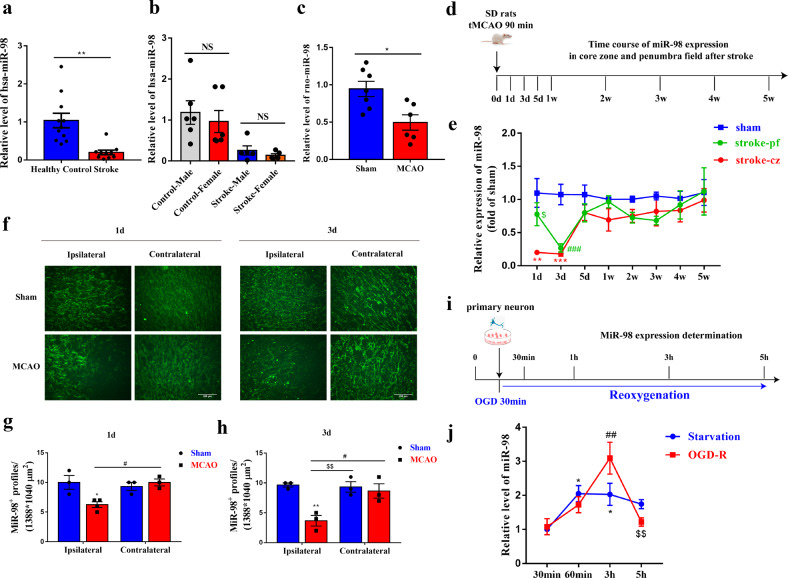
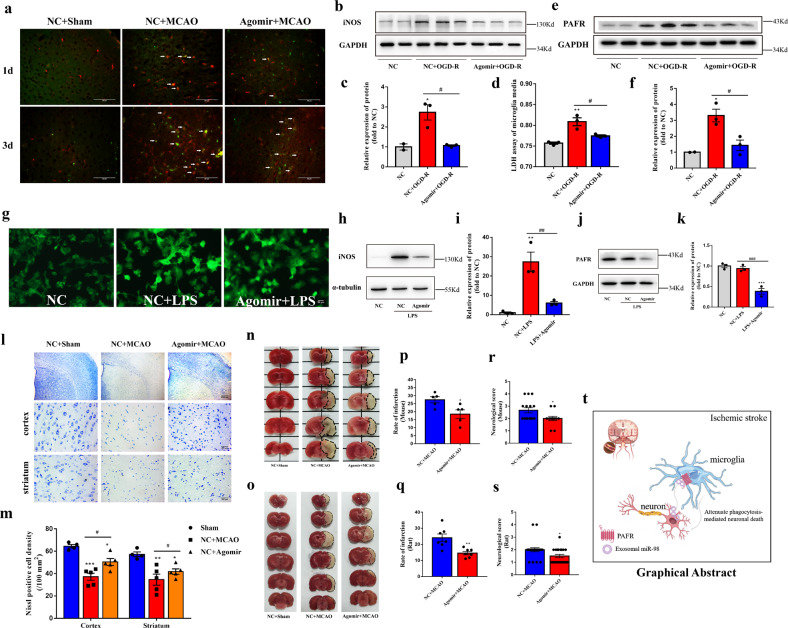
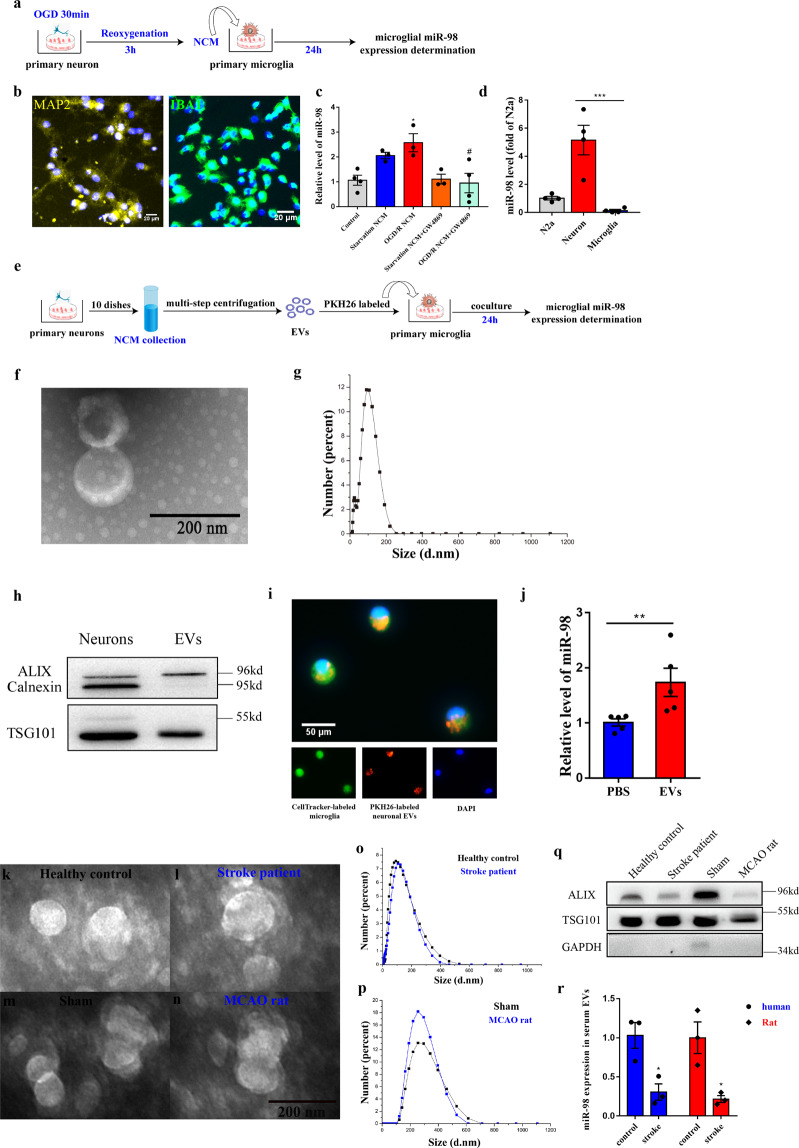
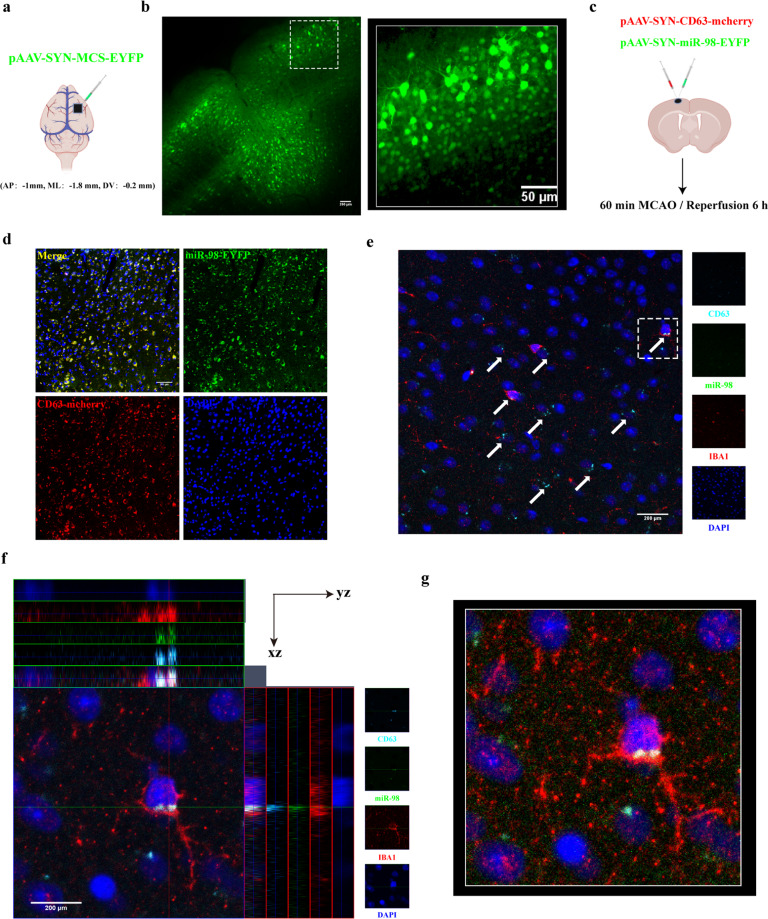
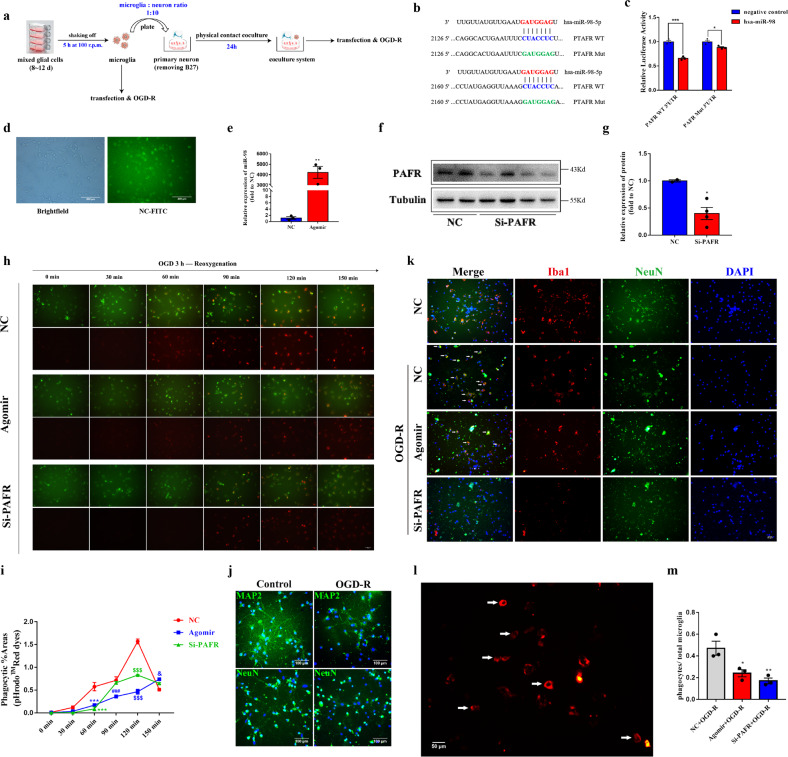
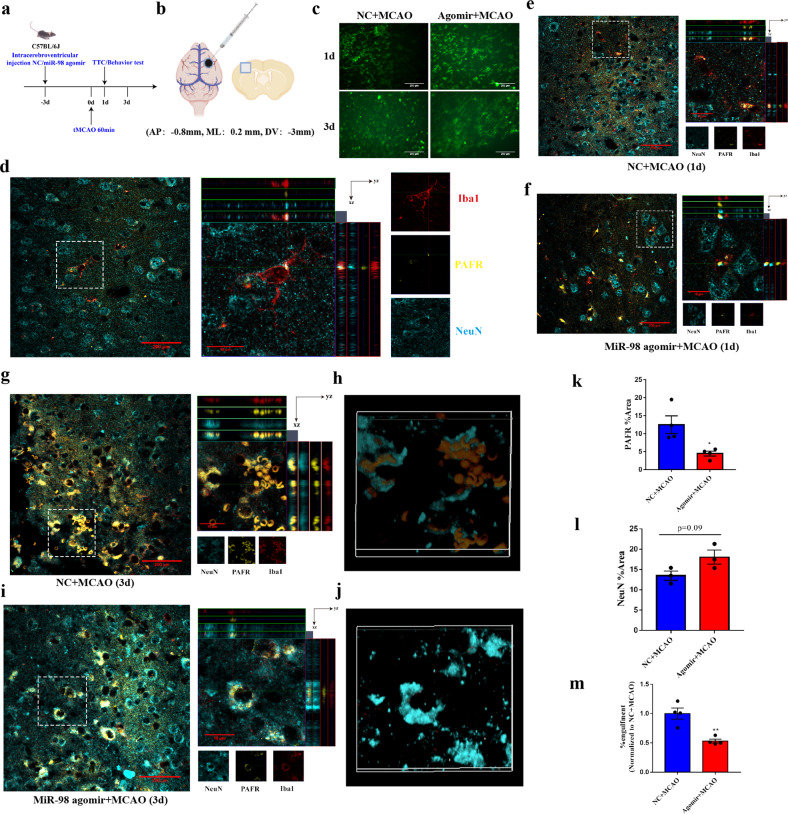
Extracellular vesicles (EVs), as a novel intercellular communication carrier transferring cargo microRNAs (miRNAs), could play important roles in the brain remodeling process after ischemic stroke. However, the detailed mechanisms involved in EVs derived miRNAs-mediated cellular interactions in the brain remain unclear. Several studies indicated that microRNA-98 (miR-98) might participate in the pathogenesis of ischemic stroke. Here, we showed that expression of miR-98 in penumbra field kept up on the first day but dropped sharply on the 3rd day after ischemic stroke in rats, indicating that miR-98 could function as an endogenous protective factor post-ischemia. Overexpression of miR-98 targeted inhibiting platelet activating factor receptor-mediated microglial phagocytosis to attenuate neuronal death. Furthermore, we showed that neurons transferred miR-98 to microglia via EVs secretion after ischemic stroke, to prevent the stress-but-viable neurons from microglial phagocytosis. Therefore, we reveal that EVs derived miR-98 act as an intercellular signal mediating neurons and microglia communication during the brain remodeling after ischemic stroke. The present work provides a novel insight into the roles of EVs in the stroke pathogenesis and a new EVs-miRNAs-based therapeutic strategy for stroke.
细胞外囊泡(EVs)作为一种新型的细胞间通讯载体,可传递货物 microRNAs(miRNAs),在缺血性卒中后大脑重塑过程中发挥重要作用。然而,EVs 衍生的 miRNAs 介导的细胞相互作用在大脑中的详细机制尚不清楚。几项研究表明,microRNA-98(miR-98)可能参与了缺血性卒中的发病机制。在这里,我们发现在大鼠缺血性卒中后第一天,缺血半影区 miR-98 的表达持续升高,但在第 3 天急剧下降,表明 miR-98 可以作为一种内源性的缺血后保护因子发挥作用。过表达 miR-98 靶向抑制血小板激活因子受体介导的小胶质细胞吞噬作用,从而减轻神经元死亡。此外,我们发现神经元通过 EVs 分泌将 miR-98 转移至小胶质细胞,从而防止应激存活神经元被小胶质细胞吞噬。因此,我们揭示了 EVs 衍生的 miR-98 在缺血性卒中后大脑重塑过程中作为一种细胞间信号,介导神经元和小胶质细胞之间的通讯。本研究为 EVs 在卒中发病机制中的作用提供了新的见解,并为卒中的 EVs-miRNAs 治疗策略提供了新的思路。