Institute of Anatomy and Experimental Morphology, University Medical Center Hamburg-Eppendorf, Martinistrasse 52, 20246, Hamburg, Germany.
Martini-Klinik, Prostate Cancer Center, University Medical Center Hamburg-Eppendorf, Hamburg, Germany.
Cancer Gene Ther. 2022 Jan;29(1):49-61. doi: 10.1038/s41417-020-00288-z. Epub 2021 Jan 7.
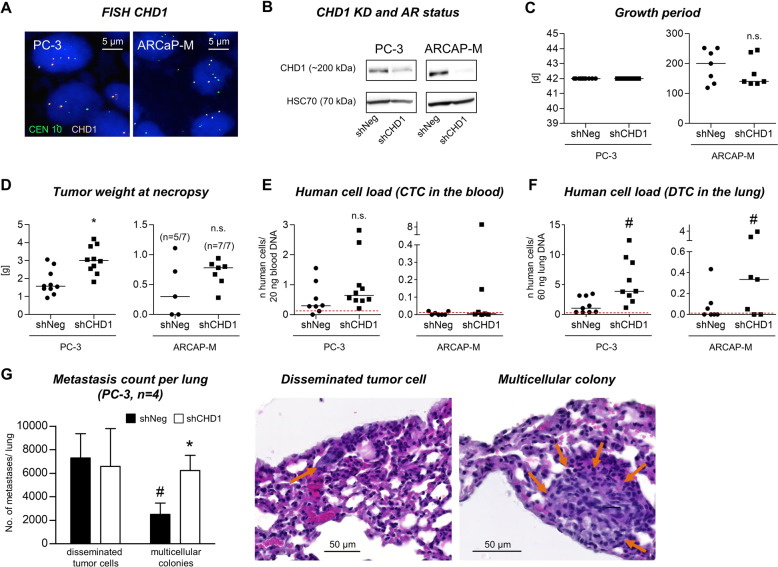
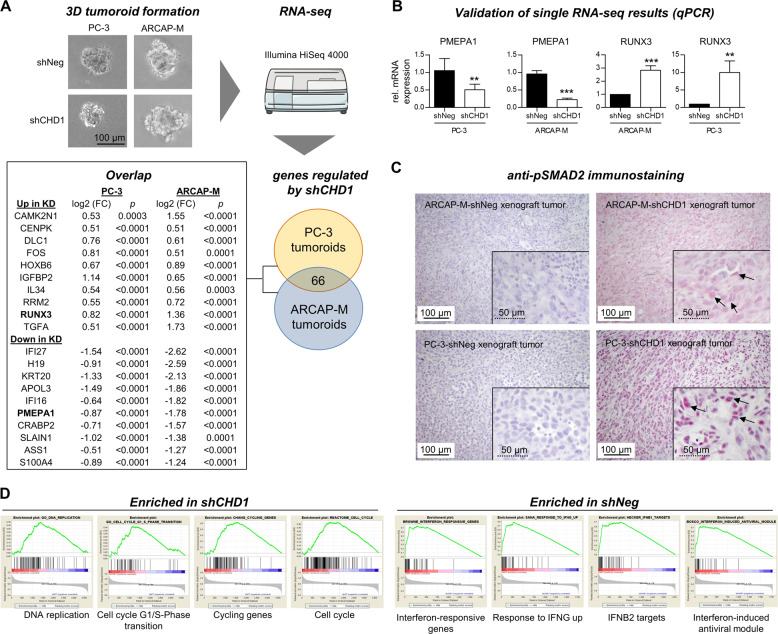
The outcome of prostate cancer (PCa) patients is highly variable and depends on whether or not distant metastases occur. Multiple chromosomal deletions have been linked to early tumor marker PSA recurrence (biochemical relapse, BCR) after radical prostatectomy (RP), but their potential role for distant metastasis formation is largely unknown. Here, we specifically analyzed whether deletion of the tumor suppressor CHD1 (5q21) influences the post-surgical risk of distant metastasis and whether CHD1 loss directly contributes to metastasis formation in vivo. By considering >6800 patients we found that the CHD1 deletion negatively influences metastasis-free survival in R0 patients (HR: 2.32; 95% CI: 1.61, 3.33; p < 0.001) independent of preoperative PSA, pT stage, pN status, Gleason Score, and BCR. Moreover, CHD1 deletion predicts shortened BCR-free survival in pT2 patients and cancer-specific survival in all patients. In vivo, CHD1 loss increases spontaneous pulmonary metastasis formation in two distinct PCa models coupled with a higher number of multicellular colonies as compared to single-cell metastases. Transcriptome analyses revealed down-regulation of the PCa-specific metastasis suppressor and TGFβ signaling regulator PMEPA1 after CHD1 depletion in both tested PCa models. CHD1 loss increases the risk of postoperative metastasis in R0-resected PCa patients and promotes spontaneous metastasis formation in vivo.
前列腺癌(PCa)患者的预后差异很大,取决于是否发生远处转移。多项染色体缺失与根治性前列腺切除术后(RP)早期肿瘤标志物 PSA 复发(生化复发,BCR)有关,但它们对远处转移形成的潜在作用在很大程度上尚不清楚。在这里,我们专门分析了肿瘤抑制因子 CHD1(5q21)缺失是否会影响手术后远处转移的风险,以及 CHD1 缺失是否会直接导致体内转移的形成。通过考虑 >6800 名患者,我们发现 CHD1 缺失独立于术前 PSA、pT 分期、pN 状态、Gleason 评分和 BCR,对 RO 患者的无转移生存(HR:2.32;95%CI:1.61,3.33;p<0.001)有负面影响。此外,CHD1 缺失预测 pT2 患者的 BCR 无复发生存和所有患者的癌症特异性生存缩短。在体内,与单细胞转移相比,CHD1 缺失会增加两种不同的 PCa 模型中自发性肺转移的形成,并且多细胞集落的数量也更高。转录组分析显示,在两种测试的 PCa 模型中,CHD1 耗竭后,PCa 特异性转移抑制因子和 TGFβ 信号调节因子 PMEPA1 的表达下调。CHD1 缺失会增加 RO 切除的 PCa 患者术后转移的风险,并促进体内自发性转移的形成。