Bai Qingquan, Liu Haoling, Guo Hongyu, Lin Han, Song Xuan, Jin Ye, Liu Yao, Guo Hongrui, Liang Shuhang, Song Ruipeng, Wang Jiabei, Qu Zhibo, Guo Huaxin, Jiang Hongchi, Liu Lianxin, Yang Haiyan
Department of Hepatic Surgery, The First Affiliated Hospital of Harbin Medical University, Harbin, China.
Department of Endocrinology, The First Affiliated Hospital of Harbin Medical University, Harbin, China.
Front Genet. 2020 Dec 22;11:615308. doi: 10.3389/fgene.2020.615308. eCollection 2020.
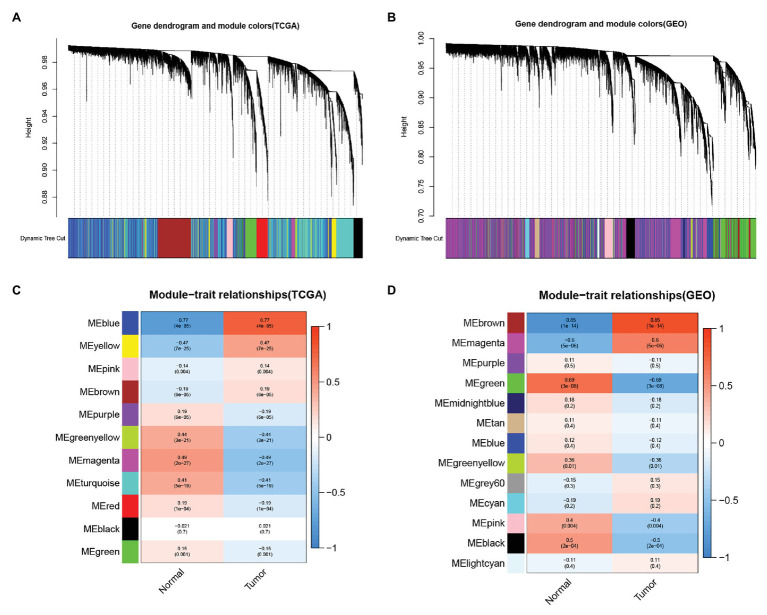
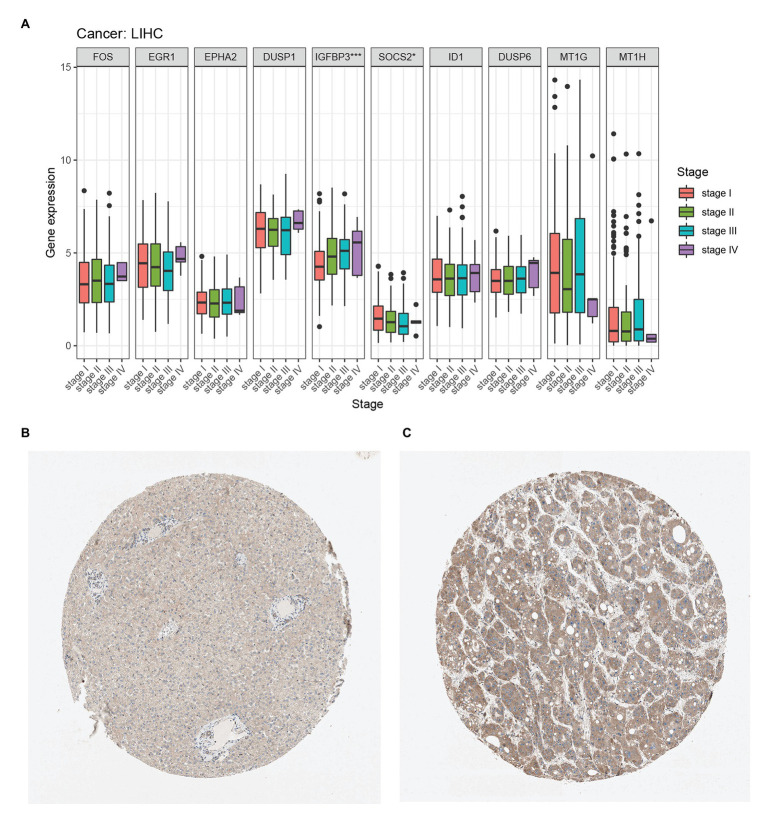
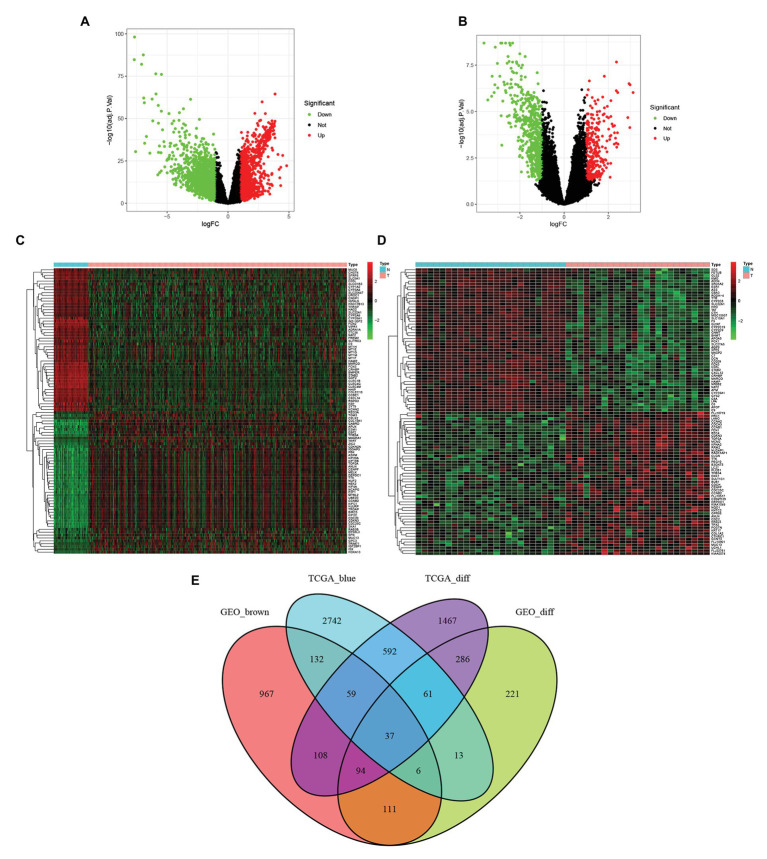
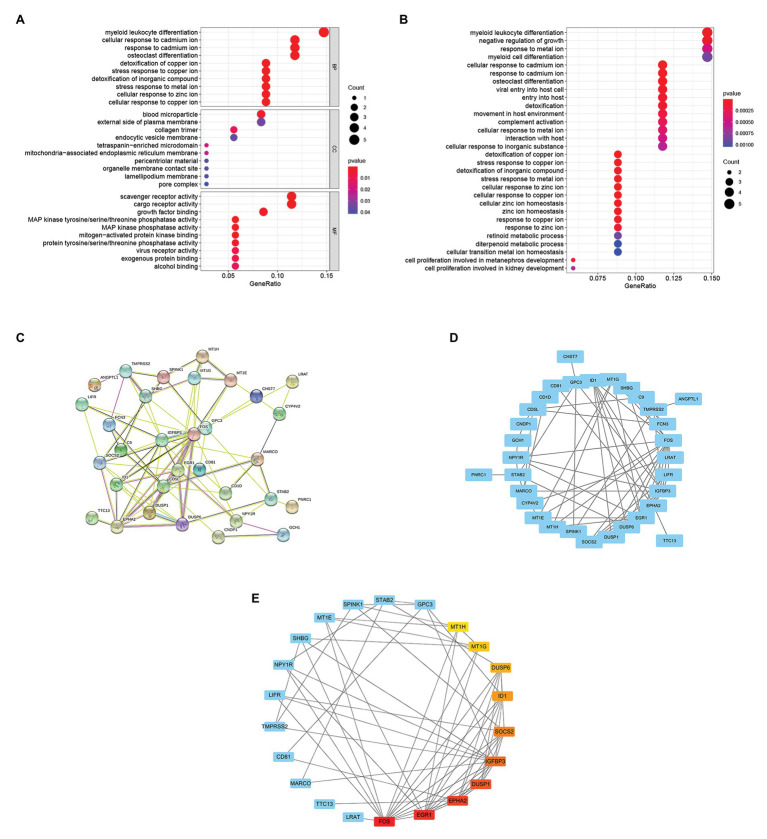
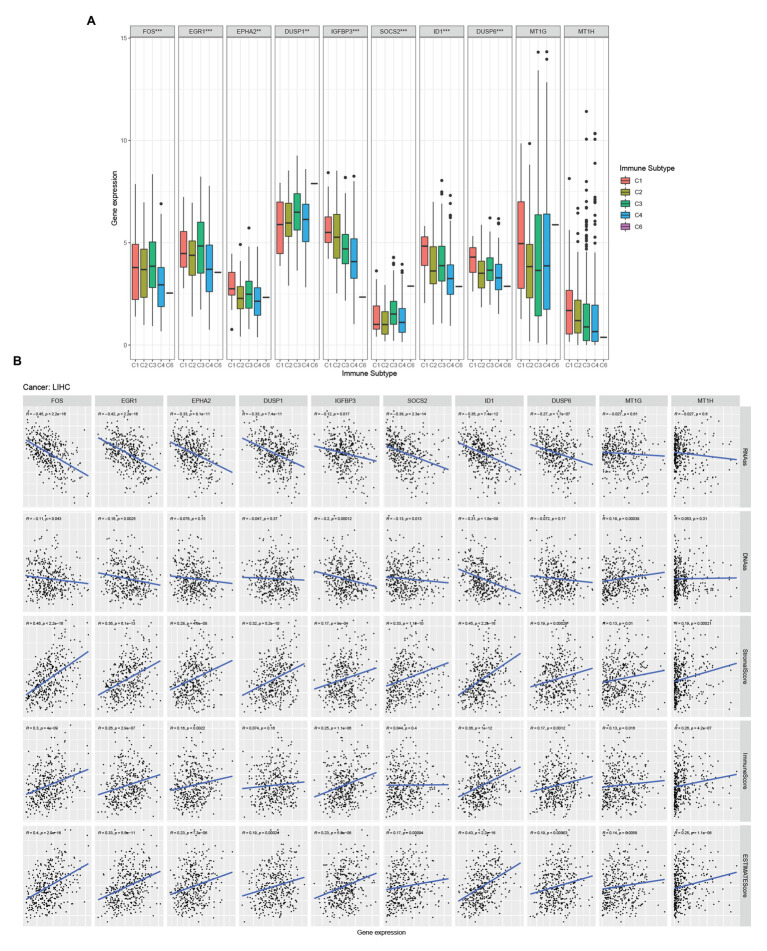
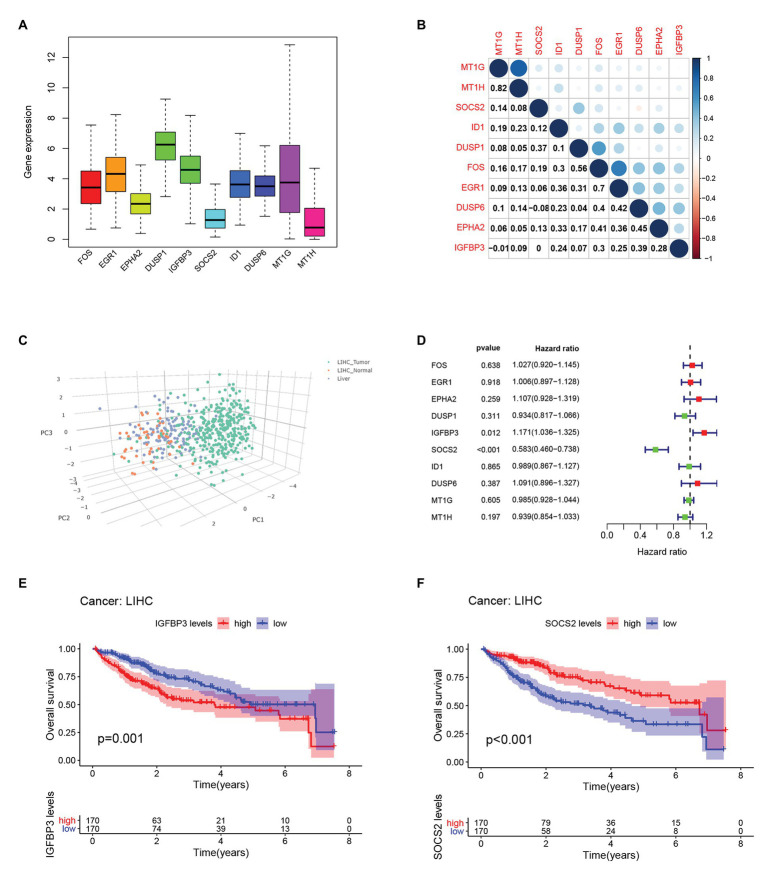
A further understanding of the molecular mechanism of hepatocellular carcinoma (HCC) is necessary to predict a patient's prognosis and develop new targeted gene drugs. This study aims to identify essential genes related to HCC. We used the Weighted Gene Co-expression Network Analysis (WGCNA) and differential gene expression analysis to analyze the gene expression profile of GSE45114 in the Gene Expression Omnibus (GEO) database and The Cancer Genome Atlas database (TCGA). A total of 37 overlapping genes were extracted from four groups of results. Kyoto Encyclopedia of Genes and Genomes (KEGG) pathway and Gene Ontology (GO) enrichment analyses were performed on the 37 overlapping genes. Then, we used the STRING database to map the protein interaction (PPI) network of 37 overlapping genes. Ten hub genes were screened according to the Maximal Clique Centrality (MCC) score using the Cytohubba plugin of Cytoscape (including FOS, EGR1, EPHA2, DUSP1, IGFBP3, SOCS2, ID1, DUSP6, MT1G, and MT1H). Most hub genes show a significant association with immune infiltration types and tumor stemness of microenvironment in HCC. According to Univariate Cox regression analysis and Kaplan-Meier survival estimation, SOCS2 was positively correlated with overall survival (OS), and IGFBP3 was negatively correlated with OS. Moreover, the expression of IGFBP3 increased with the increase of the clinical stage, while the expression of SOCS2 decreased with the increase of the clinical stage. In conclusion, our findings suggest that SOCS2 and IGFBP3 may play an essential role in the development of HCC and may serve as a potential biomarker for future diagnosis and treatment.
进一步了解肝细胞癌(HCC)的分子机制对于预测患者预后和开发新的靶向基因药物至关重要。本研究旨在鉴定与HCC相关的关键基因。我们使用加权基因共表达网络分析(WGCNA)和差异基因表达分析来分析基因表达综合数据库(GEO)和癌症基因组图谱数据库(TCGA)中GSE45114的基因表达谱。从四组结果中总共提取了37个重叠基因。对这37个重叠基因进行了京都基因与基因组百科全书(KEGG)通路和基因本体论(GO)富集分析。然后,我们使用STRING数据库绘制了37个重叠基因的蛋白质相互作用(PPI)网络。使用Cytoscape的Cytohubba插件根据最大团中心性(MCC)评分筛选出10个枢纽基因(包括FOS、EGR1、EPHA2、DUSP1、IGFBP3、SOCS2、ID1、DUSP6、MT1G和MT1H)。大多数枢纽基因与HCC微环境的免疫浸润类型和肿瘤干性显著相关。根据单变量Cox回归分析和Kaplan-Meier生存估计,SOCS2与总生存期(OS)呈正相关,而IGFBP3与OS呈负相关。此外,IGFBP3的表达随临床分期的增加而增加,而SOCS2的表达随临床分期的增加而降低。总之,我们的研究结果表明,SOCS2和IGFBP3可能在HCC的发生发展中起重要作用,并可能作为未来诊断和治疗的潜在生物标志物。