Psychoactive Substances, Muscat, Oman.
Directorate of Health Affairs, Muscat, Oman.
Sultan Qaboos Univ Med J. 2020 Nov;20(4):e296-e303. doi: 10.18295/squmj.2020.20.04.004. Epub 2020 Dec 21.
Substance use disorder is a global challenge. Therefore, this study aimed to provide an updated view of socio-demographic characteristics and patterns of substance use in Oman.
This retrospective descriptive study was conducted between 2004 and 2018. Data were retrieved from Oman's National Drug Addict Registry. The data collected included the socio-demographic characteristics of registered cases, the proportion of various psychoactive substances' consumption and their routes of administration, the associated sociodemographic determinants as well as comorbid conditions.
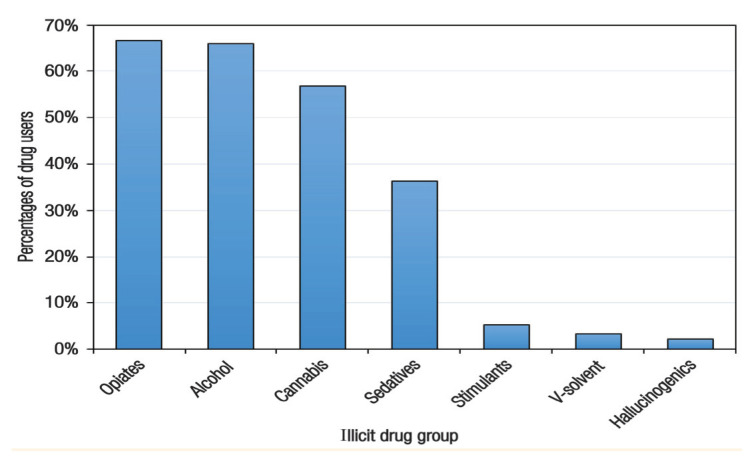
A total of 6,453 cases were registered during the study's timeframe. The majority of which were Omani (97.9%), male (98.7%), single (57.9%), unemployed (50.2%), had an education level below university (81.0%) and were adolescents and young adults (77.0%). Opiates were the most common substance used (66.6%) and more than half of the sample were polydrug users (51.0%). Injecting-drug users constituted 53.4% of the total registered cases. The proportion of people with hepatitis virus C, hepatits virus B and HIV among the registered cases were 46.9%, 5.1% and 3.7%, respectively.
The findings are in favour of rapidly escalating the introduction of a substance use preventive programme at all school levels as well as making opioid substitution therapy and other harm reduction programmes available in Oman.
物质使用障碍是一个全球性的挑战。因此,本研究旨在提供一个关于阿曼物质使用的社会人口学特征和模式的最新观点。
这是一项回顾性描述性研究,于 2004 年至 2018 年进行。数据取自阿曼国家药物成瘾者登记处。收集的数据包括登记病例的社会人口学特征、各种精神活性物质的消费比例及其使用途径、相关社会人口学决定因素以及合并症。
在研究期间共登记了 6453 例。其中大多数是阿曼人(97.9%)、男性(98.7%)、单身(57.9%)、失业(50.2%)、教育程度低于大学(81.0%)和青少年和年轻人(77.0%)。阿片类药物是最常用的物质(66.6%),超过一半的样本是多药使用者(51.0%)。注射毒品使用者占总登记病例的 53.4%。在登记的病例中,丙型肝炎病毒、乙型肝炎病毒和 HIV 的比例分别为 46.9%、5.1%和 3.7%。
这些发现支持在各级学校迅速推出预防物质使用的方案,并在阿曼提供阿片类药物替代疗法和其他减少伤害的方案。