Department of Obstetrics and Gynecology, Dr. Senckenberg Foundation, Buergerhospital, Nibelungenallee 37-41, 60318, Frankfurt am Main, Hessen, Germany.
Department of Obstetrics and Gynecology, University Hospital, Goethe University Frankfurt am Main, Theodor-Stern-Kai 7, Frankfurt am Main, 60590, Hessen, Germany.
Arch Gynecol Obstet. 2021 Mar;303(3):847-851. doi: 10.1007/s00404-020-05943-2. Epub 2021 Jan 7.
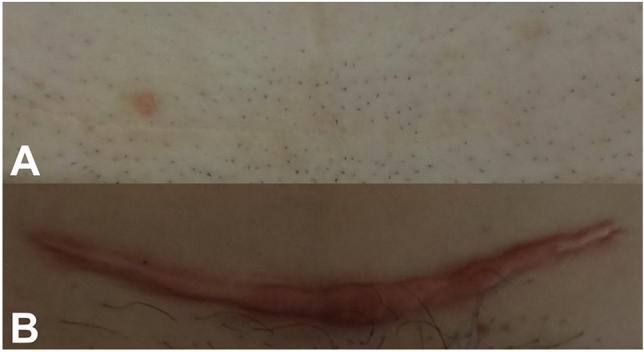
The aim of this study is to utilize the Manchester scar scale (MSS) and ultrasound in investigating the association between uterine wall defects and cutaneous scar characteristics after cesarean section (CS).
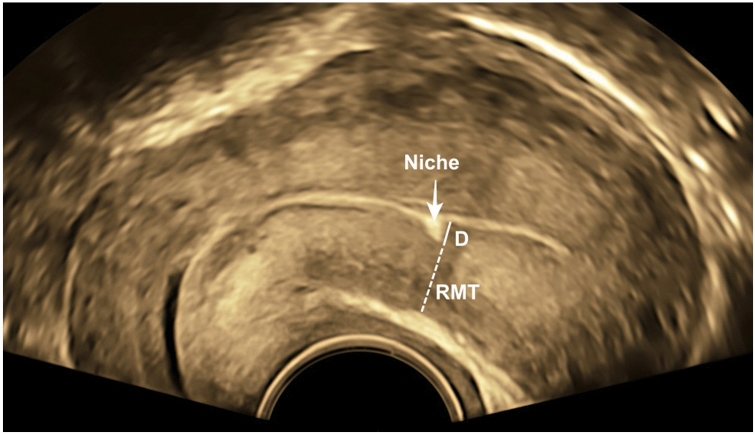
This is a prospective cohort study. The degree of myometrial loss was quantified by calculating a residual myometrial thickness (RMT) ratio as a percentage of RMT to the pre-cesarean anterior uterine wall thickness. Cutaneous scar assessment was performed according to the MSS. Spearman's correlation and the Kruskal-Wallis test with a cut-off value of p < 0.05 were used for statistical analysis.
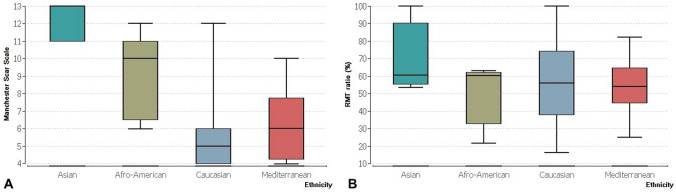
Two hundred forty seven women, of which 2.4% had an Asian, 3.6% an Afro-American, 82% a Caucasian and 12% a Mediterranean background, were recruited. The RMT ratio ranged between 11.9 and 100% with a median of 55.8% and an average of 56%. MSS scores ranged from 4 to 13 with a median of 5 and an average of 6. Spearman's correlation between MSS and RMT ratio show a rho of - 0.01 with a p value of 0.8. The correlation between MSS and RMT ratio within the four ethnical groups showed a p value between 0.3 and 0.8 and a rho between 0.8 and - 0.8. The Kruskal-Wallis test showed an eta of 0.13 and a p value of 0.0002 for the effect of ethnicity on MSS and an eta of 0.009 and a p value of 0.68 for the effect of ethnicity on the RMT ratio.
CS laparotomy scars heal differently between ethnical groups, but generally with satisfying results. Ethnicity does not affect myometrial healing and scar appearance does not reflect myometrial healing after CS. Thus, separate uterine sonographic assessment is recommended.
本研究旨在利用曼彻斯特疤痕量表(MSS)和超声检查,探讨剖宫产(CS)后子宫壁缺陷与皮肤疤痕特征之间的关系。
这是一项前瞻性队列研究。通过计算剩余子宫肌层厚度(RMT)与 CS 前子宫前壁厚度的比例,定量评估子宫肌层缺失程度。根据 MSS 评估皮肤疤痕。采用 Spearman 相关分析和 Kruskal-Wallis 检验,p 值<0.05 为差异有统计学意义。
共纳入 247 名女性,其中 2.4%为亚洲人,3.6%为非裔美国人,82%为白人,12%为地中海人。RMT 比值范围为 11.9%至 100%,中位数为 55.8%,平均为 56%。MSS 评分范围为 4 至 13,中位数为 5,平均为 6。MSS 与 RMT 比值之间的 Spearman 相关系数为-0.01,p 值为 0.8。四个种族组中 MSS 与 RMT 比值之间的相关性 p 值在 0.3 至 0.8 之间,rho 值在 0.8 至-0.8 之间。Kruskal-Wallis 检验显示,种族对 MSS 的影响 eta 值为 0.13,p 值为 0.0002,对 RMT 比值的影响 eta 值为 0.009,p 值为 0.68。
CS 剖腹产后,不同种族间的手术疤痕愈合方式不同,但总体结果令人满意。种族并不影响子宫肌层的愈合,疤痕外观也不能反映 CS 后的子宫肌层愈合情况。因此,建议单独进行子宫超声评估。