Italian Institute of Technology, Social Cognition in Human-Robot Interaction (S4HRI), Genova 16152, Italy.
IMT School for Advanced Studies, Lucca 55100, Italy.
Soc Cogn Affect Neurosci. 2021 Mar 24;16(4):383-392. doi: 10.1093/scan/nsab001.
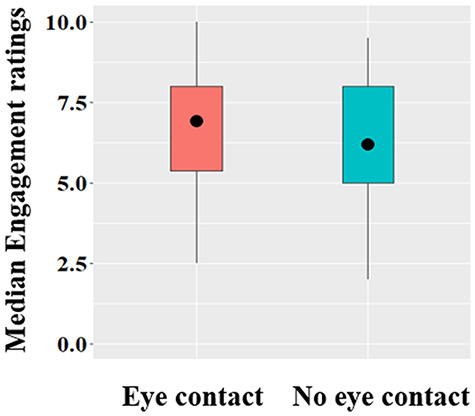
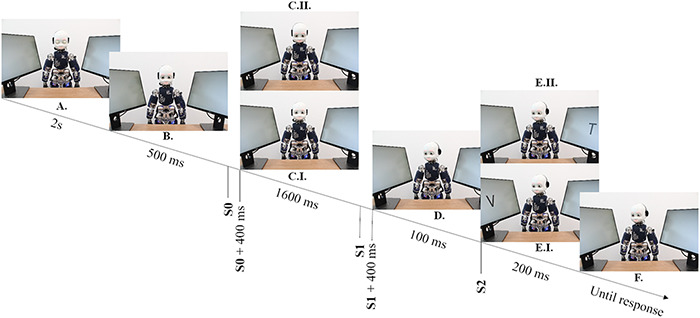
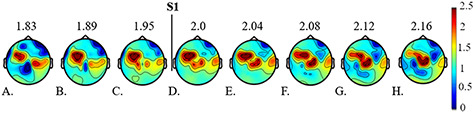
Eye contact established by a human partner has been shown to affect various cognitive processes of the receiver. However, little is known about humans' responses to eye contact established by a humanoid robot. Here, we aimed at examining humans' oscillatory brain response to eye contact with a humanoid robot. Eye contact (or lack thereof) was embedded in a gaze-cueing task and preceded the phase of gaze-related attentional orienting. In addition to examining the effect of eye contact on the recipient, we also tested its impact on gaze-cueing effects (GCEs). Results showed that participants rated eye contact as more engaging and responded with higher desynchronization of alpha-band activity in left fronto-central and central electrode clusters when the robot established eye contact with them, compared to no eye contact condition. However, eye contact did not modulate GCEs. The results are interpreted in terms of the functional roles involved in alpha central rhythms (potentially interpretable also as mu rhythm), including joint attention and engagement in social interaction.
人类伙伴的眼神交流已被证明会影响接收者的各种认知过程。然而,人们对人类对人形机器人建立的眼神交流的反应知之甚少。在这里,我们旨在研究人类对人形机器人眼神交流的脑振荡反应。眼神交流(或缺乏眼神交流)嵌入在注视引导任务中,并先于与注视相关的注意力定向阶段。除了检查眼神交流对接收者的影响外,我们还测试了它对视点引导效应(GCE)的影响。结果表明,与没有眼神交流的情况相比,当机器人与参与者建立眼神交流时,参与者认为眼神交流更具吸引力,并且在左额中和中央电极簇中表现出更高的α 波段活动去同步化。然而,眼神交流并没有调节 GCE。结果可以从涉及α 中央节律(也可以解释为 mu 节律)的功能角色来解释,包括共同注意力和参与社会互动。