Department of Pathology, Division of Microbiology and Immunology, University of Utah, Salt Lake City Utah, United States of America.
Department of Comparative Pathobiology, College of Veterinary Medicine, Purdue University, West Lafayette Indiana, United States of America.
PLoS Pathog. 2021 Jan 8;17(1):e1009198. doi: 10.1371/journal.ppat.1009198. eCollection 2021 Jan.
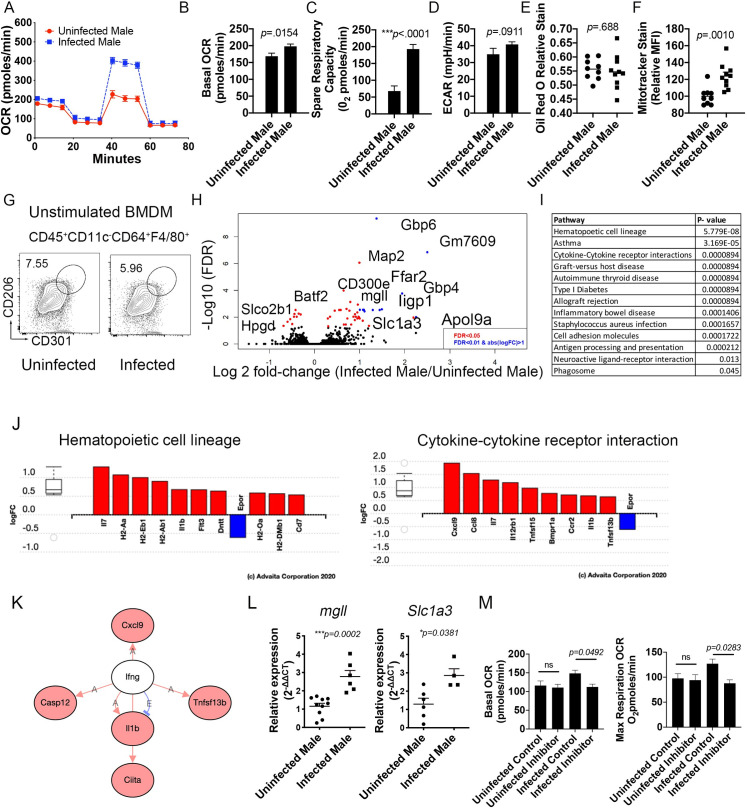
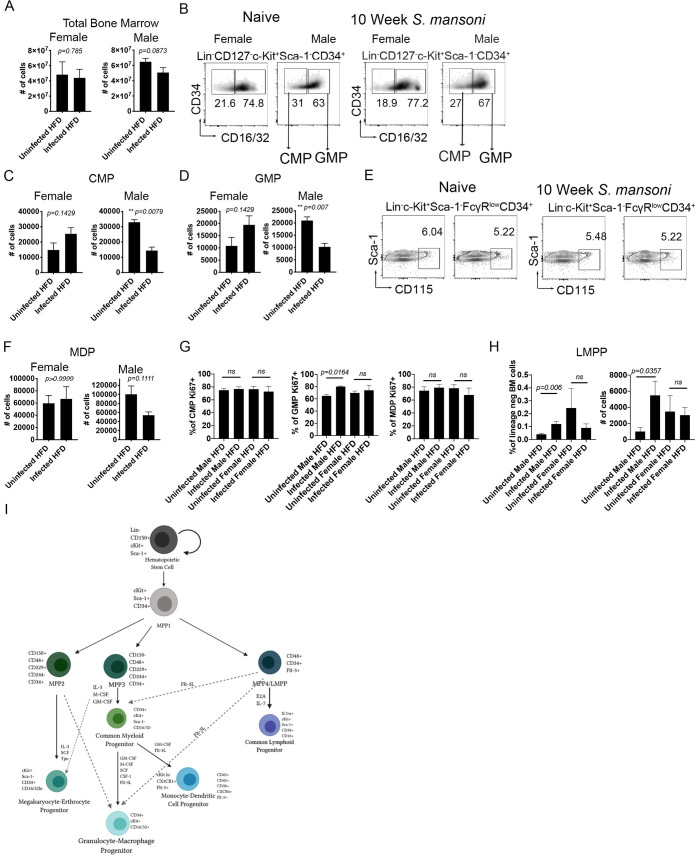
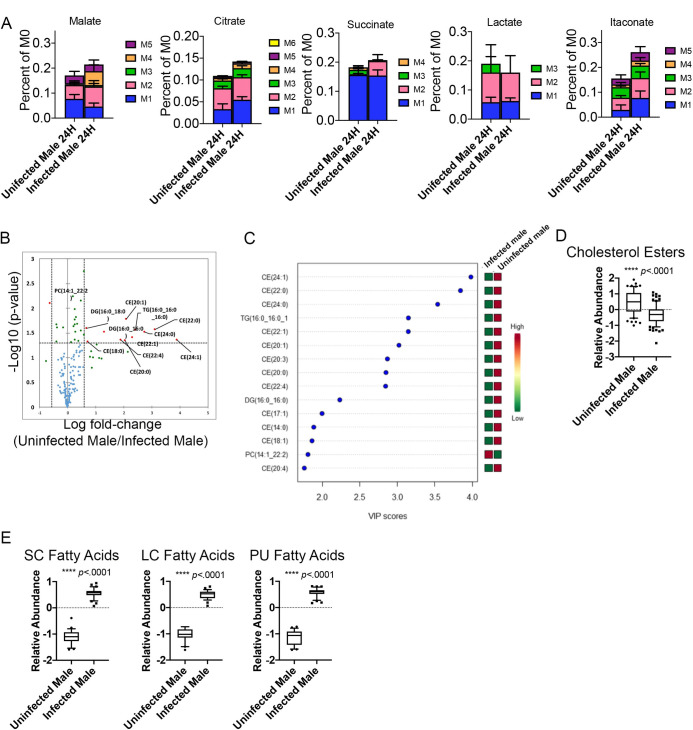
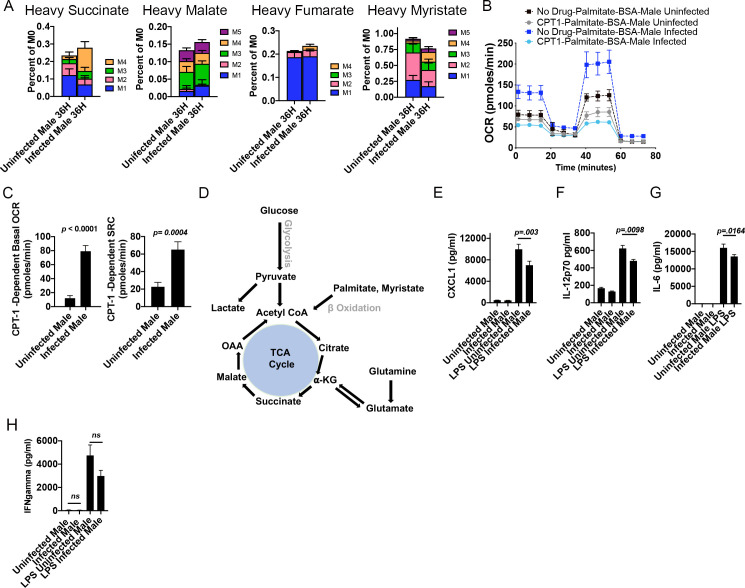
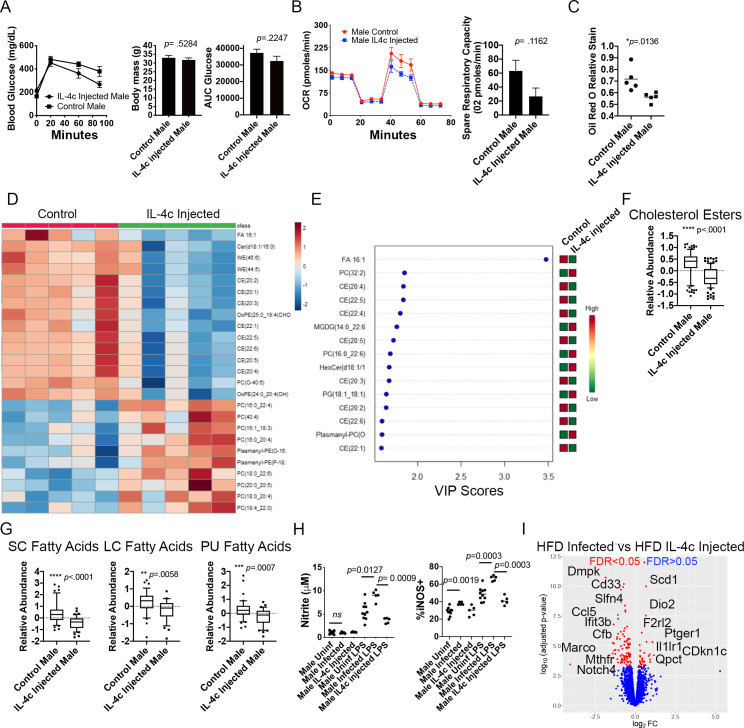
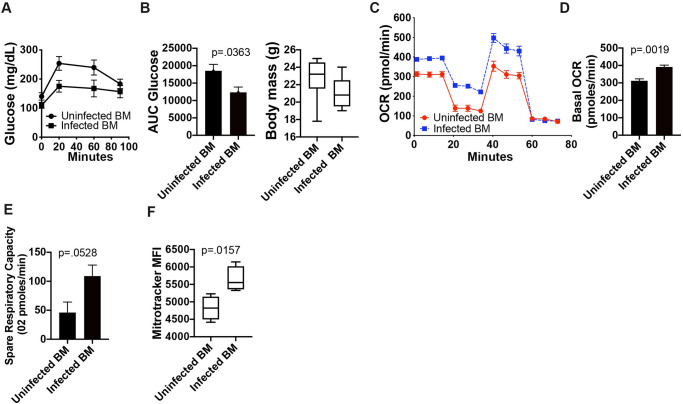
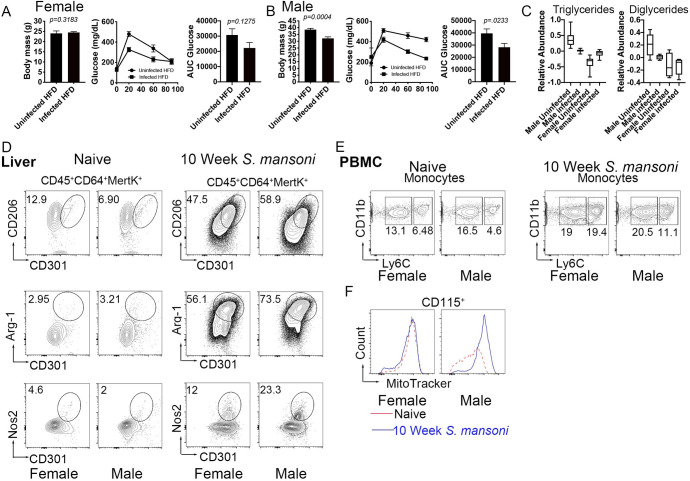
Macrophages have a defined role in the pathogenesis of metabolic disease and cholesterol metabolism where alternative activation of macrophages is thought to be beneficial to both glucose and cholesterol metabolism during high fat diet induced disease. It is well established that helminth infection protects from metabolic disease, but the mechanisms underlying protection are not well understood. Here, we investigated the effects of Schistosoma mansoni infection and cytokine activation in the metabolic signatures of bone marrow derived macrophages using an approach that integrated transcriptomics, metabolomics, and lipidomics in a metabolic disease prone mouse model. We demonstrate that bone marrow derived macrophages (BMDM) from S. mansoni infected male ApoE-/- mice have dramatically increased mitochondrial respiration compared to those from uninfected mice. This change is associated with increased glucose and palmitate shuttling into TCA cycle intermediates, increased accumulation of free fatty acids, and decreased accumulation of cellular cholesterol esters, tri and diglycerides, and is dependent on mgll activity. Systemic injection of IL-4 complexes is unable to recapitulate either reductions in systemic glucose AUC or the re-programing of BMDM mitochondrial respiration seen in infected males. Importantly, the metabolic reprogramming of male myeloid cells is transferrable via bone marrow transplantation to an uninfected host, indicating maintenance of reprogramming in the absence of sustained antigen exposure. Finally, schistosome induced metabolic and bone marrow modulation is sex-dependent, with infection protecting male, but not female mice from glucose intolerance and obesity. Our findings identify a transferable, long-lasting sex-dependent reprograming of the metabolic signature of macrophages by helminth infection, providing key mechanistic insight into the factors regulating the beneficial roles of helminth infection in metabolic disease.
巨噬细胞在代谢性疾病和胆固醇代谢的发病机制中具有明确的作用,人们认为在高脂肪饮食诱导的疾病中,巨噬细胞的替代激活对葡萄糖和胆固醇代谢都有益。众所周知,寄生虫感染可以预防代谢性疾病,但保护机制尚不清楚。在这里,我们使用一种整合了代谢组学、脂质组学和转录组学的方法,研究了曼氏血吸虫感染和细胞因子激活对代谢性疾病易感小鼠模型中骨髓来源的巨噬细胞代谢特征的影响。我们证明,来自曼氏血吸虫感染的雄性 ApoE-/-小鼠的骨髓来源的巨噬细胞(BMDM)与未感染的小鼠相比,线粒体呼吸明显增加。这种变化与葡萄糖和棕榈酸向 TCA 循环中间产物的转运增加、游离脂肪酸积累增加以及细胞胆固醇酯、三酰基甘油和二酰基甘油积累减少有关,并且依赖于 mgll 活性。IL-4 复合物的系统注射既不能再现系统葡萄糖 AUC 的降低,也不能再现感染雄性中观察到的 BMDM 线粒体呼吸的重新编程。重要的是,雄性髓系细胞的代谢重编程可以通过骨髓移植转移到未感染的宿主,这表明在没有持续抗原暴露的情况下,重编程得以维持。最后,血吸虫诱导的代谢和骨髓调节是有性别依赖性的,感染可以保护雄性而不是雌性小鼠免受葡萄糖不耐受和肥胖的影响。我们的发现确定了寄生虫感染对巨噬细胞代谢特征的可转移、持久的性别依赖性重编程,为调节寄生虫感染在代谢性疾病中的有益作用的因素提供了关键的机制见解。