Awada Gil, Jansen Yanina, Schwarze Julia Katharina, Tijtgat Jens, Hellinckx Lennert, Gondry Odrade, Vermeulen Sim, Warren Sarah, Schats Kelly, van Dam Pieter-Jan, Kockx Mark, Keyaerts Marleen, Everaert Hendrik, Seremet Teofila, Rogiers Anne, Neyns Bart
Department of Medical Oncology, Universitair Ziekenhuis Brussel, 1090 Brussels, Belgium.
Department of Surgery, Universitair Ziekenhuis Brussel, 1090 Brussels, Belgium.
Cancers (Basel). 2021 Jan 6;13(2):168. doi: 10.3390/cancers13020168.
Pembrolizumab improves the survival of patients with advanced melanoma. A comprehensive analysis of baseline variables that predict the benefit of pembrolizumab monotherapy has not been conducted.
Survival data of patients with advanced melanoma who were treated with pembrolizumab in a single university hospital were collected. A multivariate Cox regression analysis was performed to correlate baseline clinical, laboratory, and radiologic characteristics and NanoString IO360 gene expression profiling (GEP) with survival.
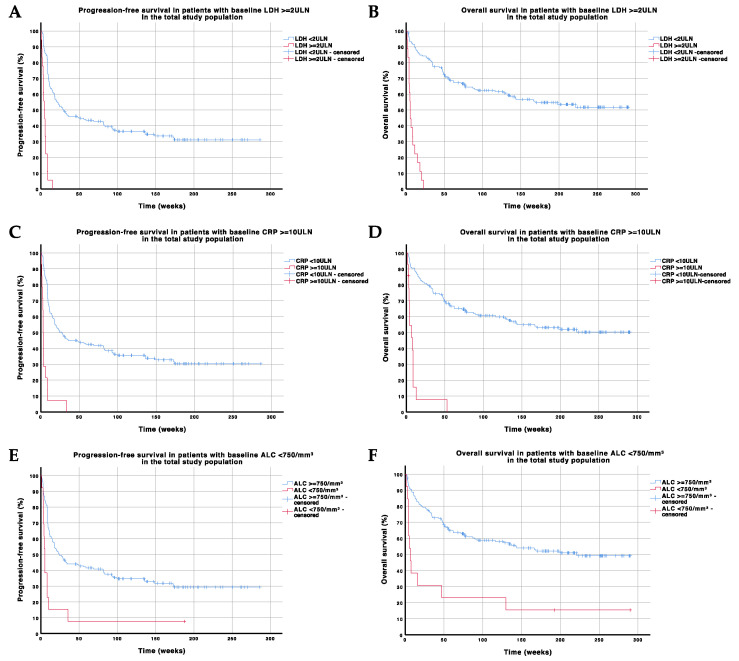
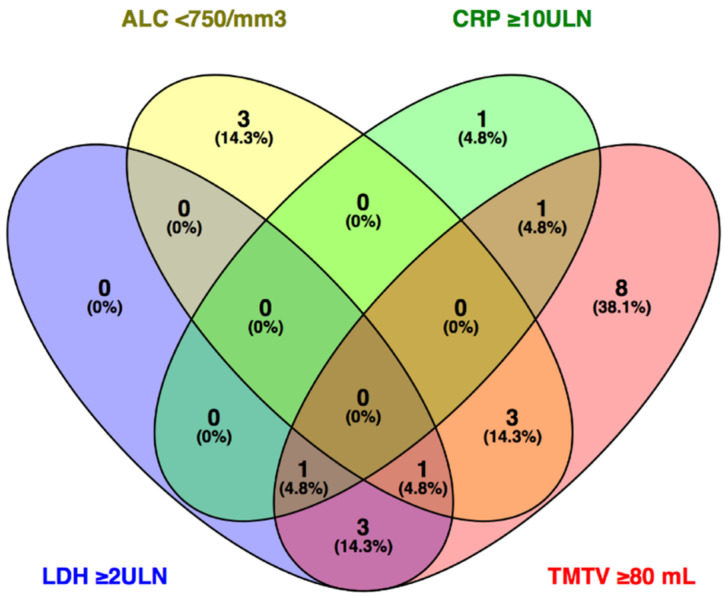
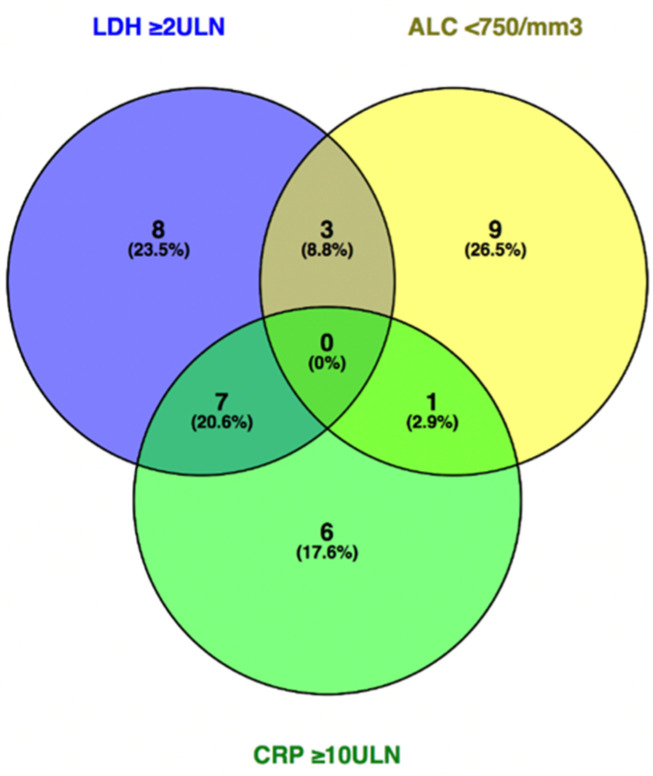
183 patients were included (stage IV 85.2%, WHO performance status ≥1 31.1%; pembrolizumab first-line 25.7%), of whom 112 underwent baseline F-FDG-PET/CT imaging, 58 had circulating tumor DNA (ctDNA) assessments, and GEP was available in 27 patients. Active brain metastases, a higher number of metastatic sites, lower albumin and absolute lymphocyte count (ALC), higher C-reactive protein (CRP) and neutrophil-to-lymphocyte ratio, higher total metabolic tumor volume (TMTV), and higher ctDNA levels were associated with worse survival. Elevated lactate dehydrogenase (LDH) ≥ 2ULN (upper limit of normal), CRP ≥ 10ULN, or ALC < 750/mm delineate a subpopulation where treatment with pembrolizumab is futile. A TMTV ≥ 80 mL encompassed 17/21 patients with LDH ≥ 2ULN, CRP ≥ 10ULN, or ALC < 750/mm. No significant associations were observed between baseline GEP scores and survival.
Multiple baseline variables correlate with survival on pembrolizumab. TMTV is a more comprehensive baseline biomarker than CRP, LDH, or ALC in predicting the futility of pembrolizumab.
帕博利珠单抗可改善晚期黑色素瘤患者的生存率。尚未对预测帕博利珠单抗单药治疗获益的基线变量进行全面分析。
收集在一家大学医院接受帕博利珠单抗治疗的晚期黑色素瘤患者的生存数据。进行多变量Cox回归分析,以将基线临床、实验室和放射学特征以及NanoString IO360基因表达谱(GEP)与生存率相关联。
纳入183例患者(IV期占85.2%,世界卫生组织体能状态≥1占31.1%;帕博利珠单抗一线治疗占第25.7%),其中112例接受了基线F-FDG-PET/CT成像,58例进行了循环肿瘤DNA(ctDNA)评估,27例患者可获得基因表达谱。有活动性脑转移、转移部位数量较多、白蛋白和绝对淋巴细胞计数(ALC)较低、C反应蛋白(CRP)和中性粒细胞与淋巴细胞比值较高、总代谢肿瘤体积(TMTV)较高以及ctDNA水平较高与较差的生存率相关。乳酸脱氢酶(LDH)升高≥2倍正常上限(ULN)、CRP≥10倍ULN或ALC<750/mm界定了一个接受帕博利珠单抗治疗无效的亚组人群。TMTV≥80 mL涵盖了21例LDH≥2倍ULN、CRP≥10倍ULN或ALC<750/mm患者中的17例。未观察到基线GEP评分与生存率之间存在显著关联。
多个基线变量与帕博利珠单抗治疗的生存率相关。在预测帕博利珠单抗治疗无效方面,TMTV是比CRP、LDH或ALC更全面的基线生物标志物。