Pistone Alessandro, Scolaro Cristina, Visco Annamaria
Department of Engineering, University of Messina, Contrada Di Dio, I-98166 Messina, Italy.
Institute of Polymers, Composites and Biomaterials-CNR IPCB, Via Paolo Gaifami 18, 9-95126 Catania, Italy.
Polymers (Basel). 2021 Jan 6;13(2):173. doi: 10.3390/polym13020173.
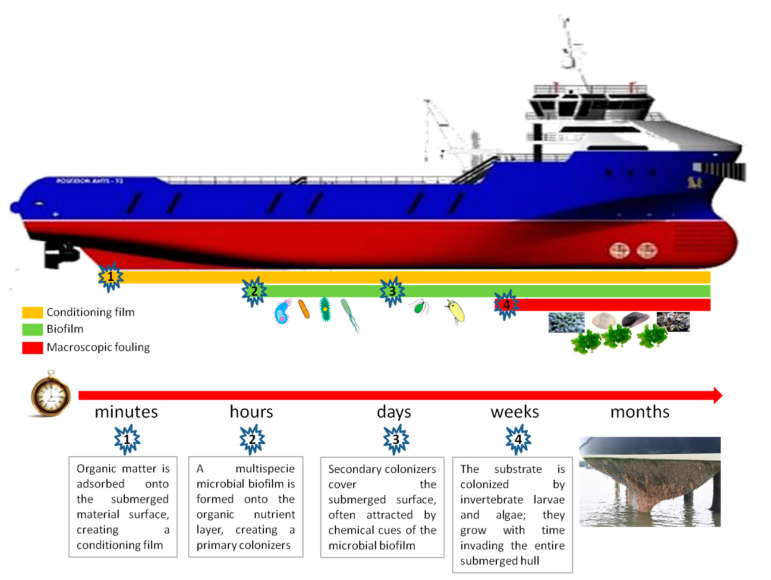
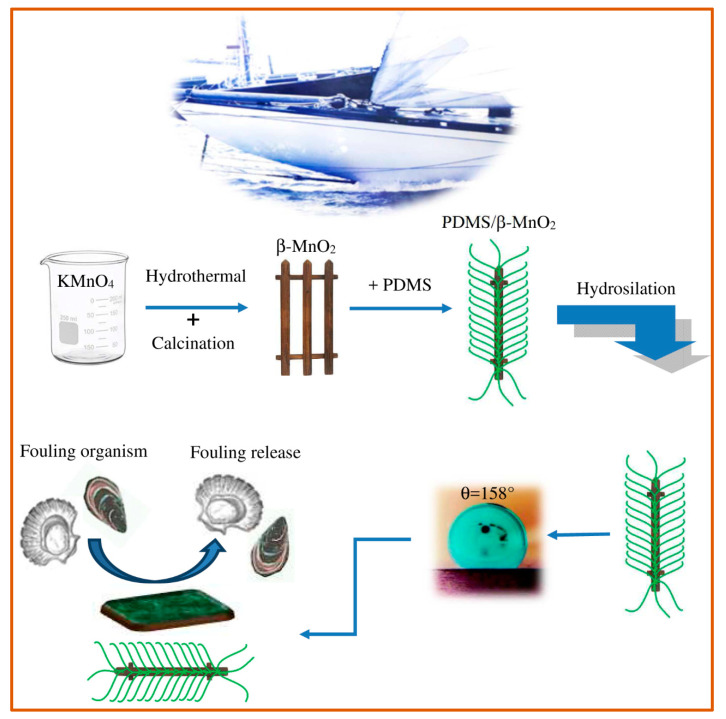
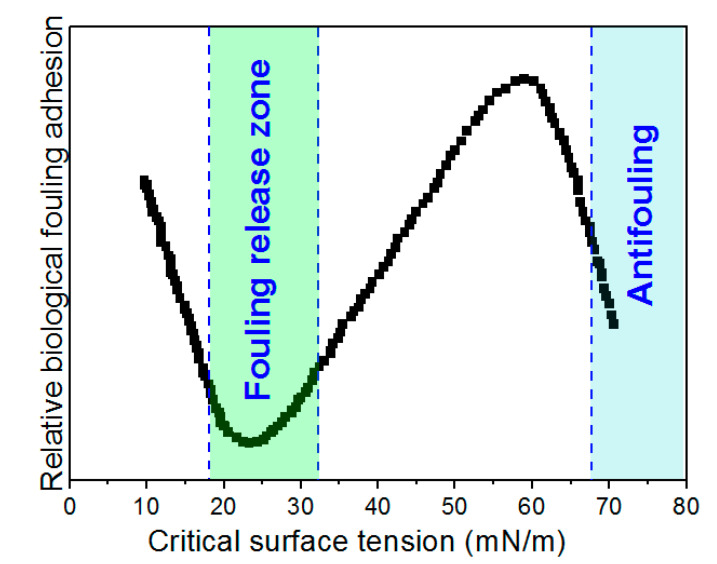
The accumulation of marine organisms on ship hulls, such as microorganisms, barnacles, and seaweeds, represents a global problem for maritime industries, with both economic and environmental costs. The use of biocide-containing paints poses a serious threat to marine ecosystems, affecting both target and non-target organisms driving science and technology towards non-biocidal solutions based on physico-chemical and materials properties of coatings. The review reports recent development of hydrophobic protective coatings in terms of mechanical properties, correlated with the wet ability features. The attention is focused mainly on coatings based on siloxane and epoxy resin due to the wide application fields of such systems in the marine industry. Polyurethane and other systems have been considered as well. These coatings for anti-fouling applications needs to be both long-term mechanically stable, perfectly adherent with the metallic/composite substrate, and capable to detach/destroy the fouling organism. Prospects should focus on developing even "greener" antifouling coatings solutions. These coatings should also be readily addressable to industrial scale-up for large-scale product distribution, possibly at a reasonable cost.
海洋生物在船体上的积聚,如微生物、藤壶和海藻,对海运业来说是一个全球性问题,会带来经济和环境成本。含杀生剂涂料的使用对海洋生态系统构成严重威胁,影响目标生物和非目标生物,促使科学技术朝着基于涂料物理化学和材料特性的非杀生解决方案发展。该综述报告了疏水防护涂料在机械性能方面的最新进展,这些性能与湿润能力特征相关。由于此类体系在海洋工业中的广泛应用领域,关注点主要集中在基于硅氧烷和环氧树脂的涂料上。聚氨酯和其他体系也已被考虑。这些用于防污应用的涂料需要长期保持机械稳定性,与金属/复合基材完美附着,并能够分离/破坏污损生物。未来应专注于开发更“绿色”的防污涂料解决方案。这些涂料还应易于实现工业规模扩大,以便大规模产品分销,成本可能要合理。