Department of Civil Engineering, University of Parsian, Qazvin 3176795591, Iran.
Department of Industrial Engineering (DIEF), University of Florence, 50123 Florence, Italy.
Int J Environ Res Public Health. 2021 Jan 6;18(2):373. doi: 10.3390/ijerph18020373.
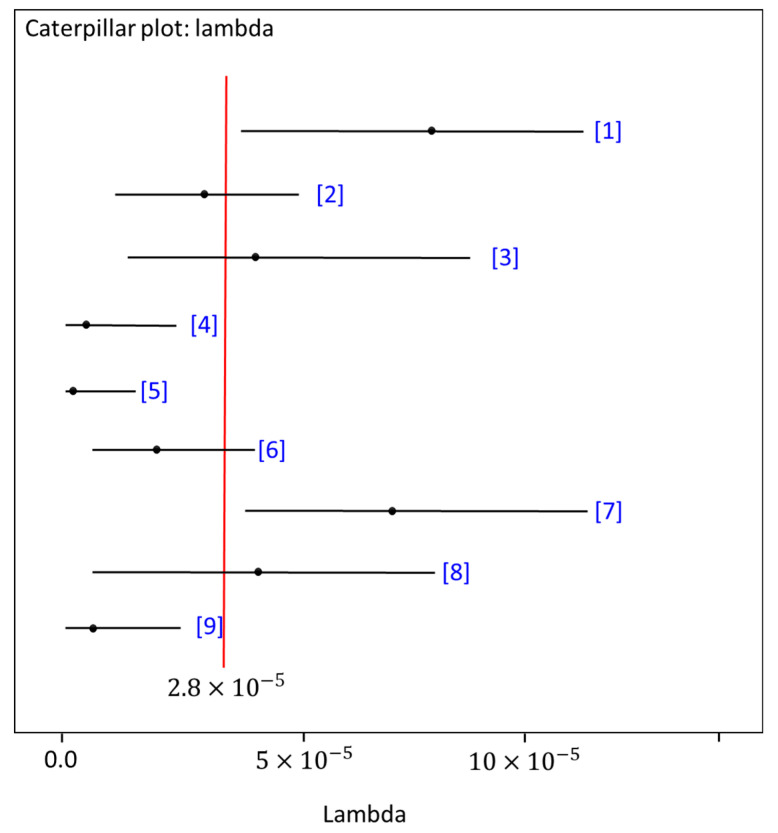
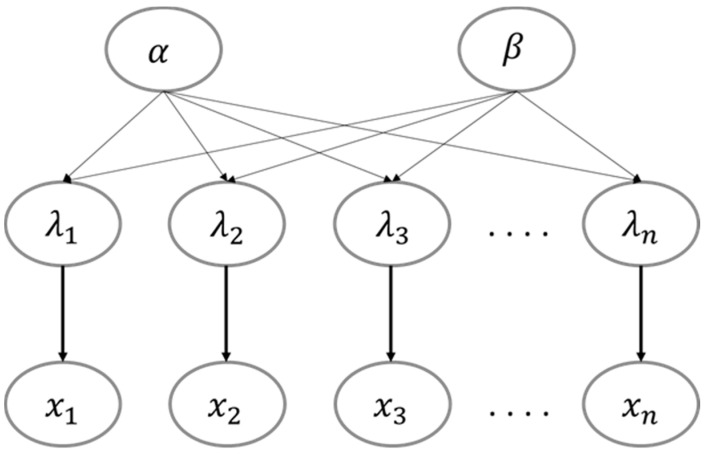
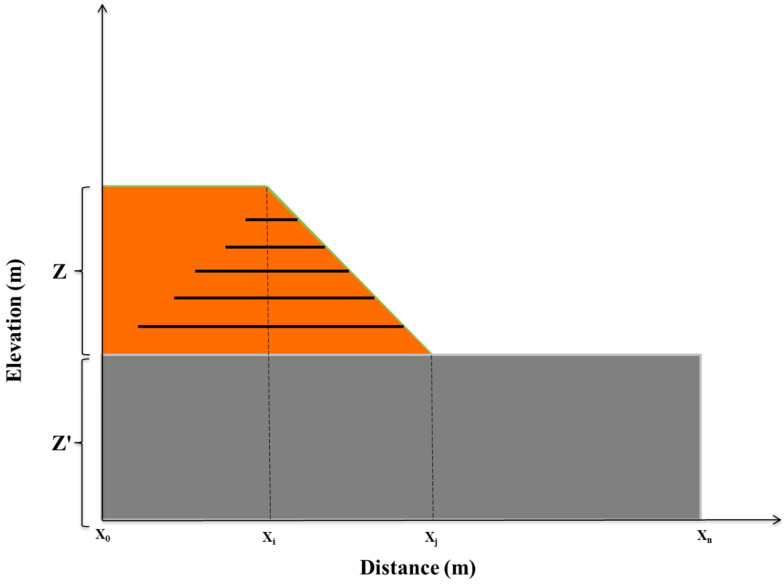
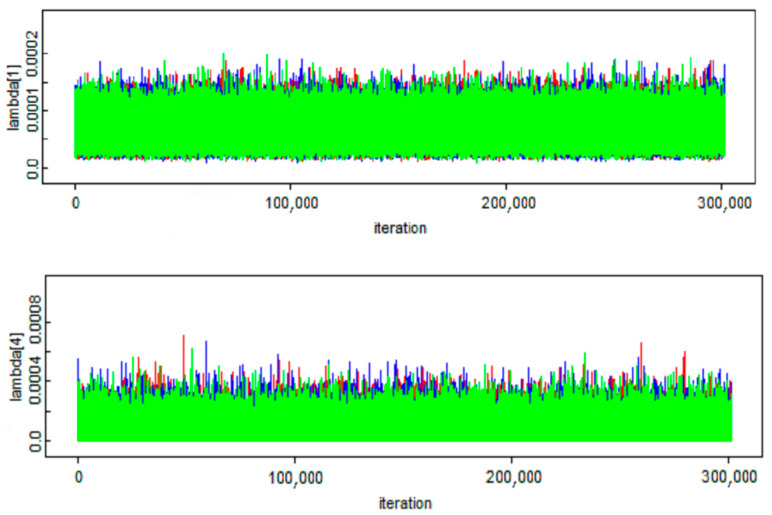
Geosynthetics are extensively utilized to improve the stability of geotechnical structures and slopes in urban areas. Among all existing geosynthetics, geotextiles are widely used to reinforce unstable slopes due to their capabilities in facilitating reinforcement and drainage. To reduce settlement and increase the bearing capacity and slope stability, the classical use of geotextiles in embankments has been suggested. However, several catastrophic events have been reported, including failures in slopes in the absence of geotextiles. Many researchers have studied the stability of geotextile-reinforced slopes (GRSs) by employing different methods (analytical models, numerical simulation, etc.). The presence of source-to-source uncertainty in the gathered data increases the complexity of evaluating the failure risk in GRSs since the uncertainty varies among them. Consequently, developing a sound methodology is necessary to alleviate the risk complexity. Our study sought to develop an advanced risk-based maintenance (RBM) methodology for prioritizing maintenance operations by addressing fluctuations that accompany event data. For this purpose, a hierarchical Bayesian approach (HBA) was applied to estimate the failure probabilities of GRSs. Using Markov chain Monte Carlo simulations of likelihood function and prior distribution, the HBA can incorporate the aforementioned uncertainties. The proposed method can be exploited by urban designers, asset managers, and policymakers to predict the mean time to failures, thus directly avoiding unnecessary maintenance and safety consequences. To demonstrate the application of the proposed methodology, the performance of nine reinforced slopes was considered. The results indicate that the average failure probability of the system in an hour is 2.8×10⁻⁵ during its lifespan, which shows that the proposed evaluation method is more realistic than the traditional methods.
土工合成材料被广泛用于提高城市地区岩土结构和边坡的稳定性。在所有现有的土工合成材料中,土工织物由于其在促进加固和排水方面的能力而被广泛用于加固不稳定的边坡。为了减少沉降并提高承载能力和边坡稳定性,已经建议在路堤中经典地使用土工织物。然而,已经报道了一些灾难性事件,包括在没有土工织物的情况下边坡的失效。许多研究人员已经使用不同的方法(分析模型、数值模拟等)研究了土工织物加筋边坡(GRS)的稳定性。由于它们之间存在差异,收集数据中的源到源不确定性增加了评估 GRS 失效风险的复杂性。因此,开发一种合理的方法来减轻风险的复杂性是必要的。我们的研究旨在通过解决伴随事件数据的波动来开发一种先进的基于风险的维护(RBM)方法,以便优先进行维护操作。为此,应用了层次贝叶斯方法(HBA)来估计 GRS 的失效概率。通过似然函数和先验分布的马尔可夫链蒙特卡罗模拟,HBA 可以合并上述不确定性。城市设计师、资产经理和政策制定者可以利用该建议方法来预测平均失效时间,从而直接避免不必要的维护和安全后果。为了演示建议方法的应用,考虑了九个加固边坡的性能。结果表明,系统在一小时内的平均失效概率在其寿命期间为 2.8×10⁻⁵,这表明所提出的评估方法比传统方法更现实。