Szabo Ildiko, Zoratti Mario, Biasutto Lucia
Department of Biology, University of Padova, Italy; CNR Institute of Neurosciences, Padova, Italy.
CNR Institute of Neurosciences, Padova, Italy.
Redox Biol. 2021 Jun;42:101846. doi: 10.1016/j.redox.2020.101846. Epub 2020 Dec 24.
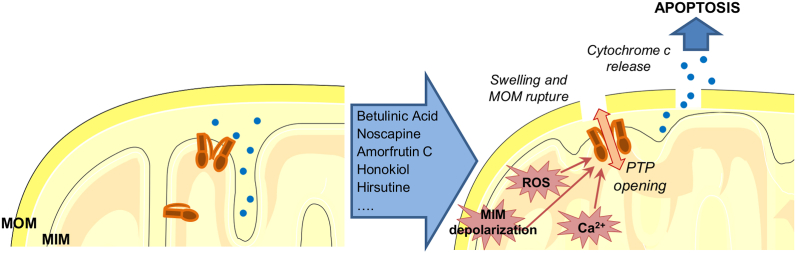
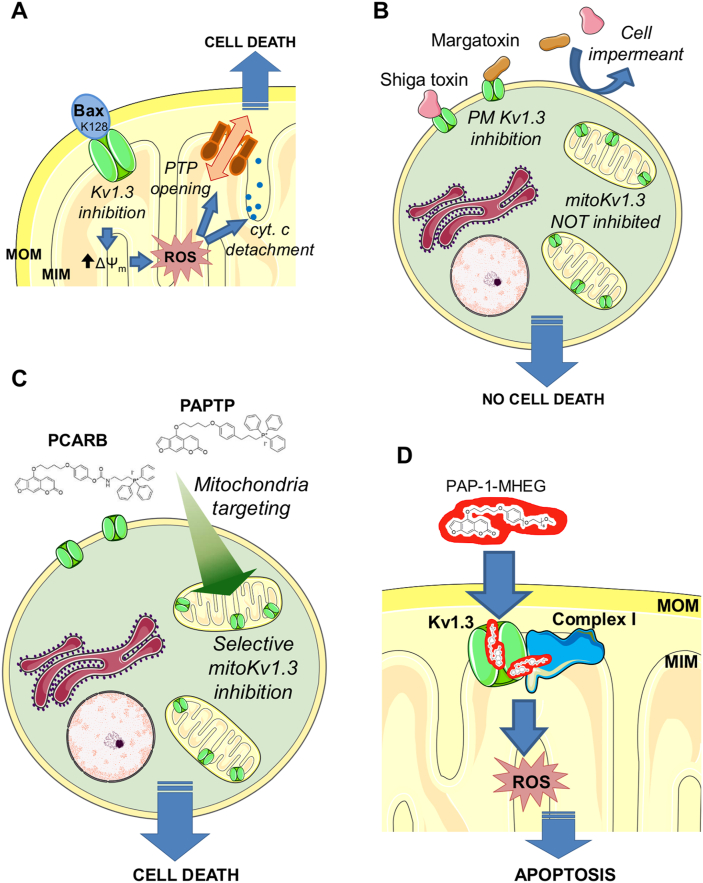
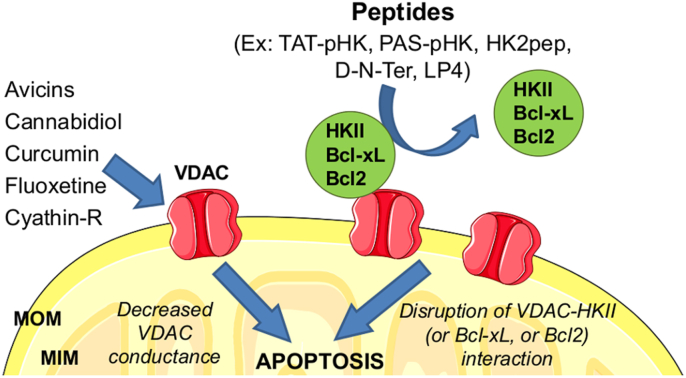
Pharmacological targeting of mitochondrial ion channels is emerging as a promising approach to eliminate cancer cells; as most of these channels are differentially expressed and/or regulated in cancer cells in comparison to healthy ones, this strategy may selectively eliminate the former. Perturbation of ion fluxes across the outer and inner membranes is linked to alterations of redox state, membrane potential and bioenergetic efficiency. This leads to indirect modulation of oxidative phosphorylation, which is/may be fundamental for both cancer and cancer stem cell survival. Furthermore, given the crucial contribution of mitochondria to intrinsic apoptosis, modulation of their ion channels leading to cytochrome c release may be of great advantage in case of resistance to drugs triggering apoptotic events upstream of the mitochondrial phase. In the present review, we give an overview of the known mitochondrial ion channels and of their modulators capable of killing cancer cells. In addition, we discuss state-of-the-art strategies using mitochondriotropic drugs or peptide-based approaches allowing a more efficient and selective targeting of mitochondrial ion channel-linked events.
将线粒体离子通道作为药物作用靶点正逐渐成为一种有前景的消除癌细胞的方法;由于与健康细胞相比,大多数此类通道在癌细胞中存在差异表达和/或调控,该策略可能会选择性地消除癌细胞。跨线粒体外膜和内膜的离子通量扰动与氧化还原状态、膜电位和生物能量效率的改变有关。这会导致氧化磷酸化的间接调节,而氧化磷酸化对于癌细胞和癌症干细胞的存活或许至关重要。此外,鉴于线粒体对内在凋亡的关键作用,在对线粒体阶段上游触发凋亡事件的药物产生抗性的情况下,调节其离子通道导致细胞色素c释放可能具有很大优势。在本综述中,我们概述了已知的线粒体离子通道及其能够杀死癌细胞的调节剂。此外,我们还讨论了使用线粒体靶向药物或基于肽的方法的最新策略,这些方法能够更有效且选择性地靶向与线粒体离子通道相关的事件。