Department of Coronary Disease and Heart Failure, Jagiellonian University Medical College, 80 Pradnicka Street, 31-202, Krakow, Poland.
Faculty of Pharmacy, Jagiellonian University Medical College, Krakow, Poland.
Sci Rep. 2021 Jan 8;11(1):83. doi: 10.1038/s41598-020-80230-3.
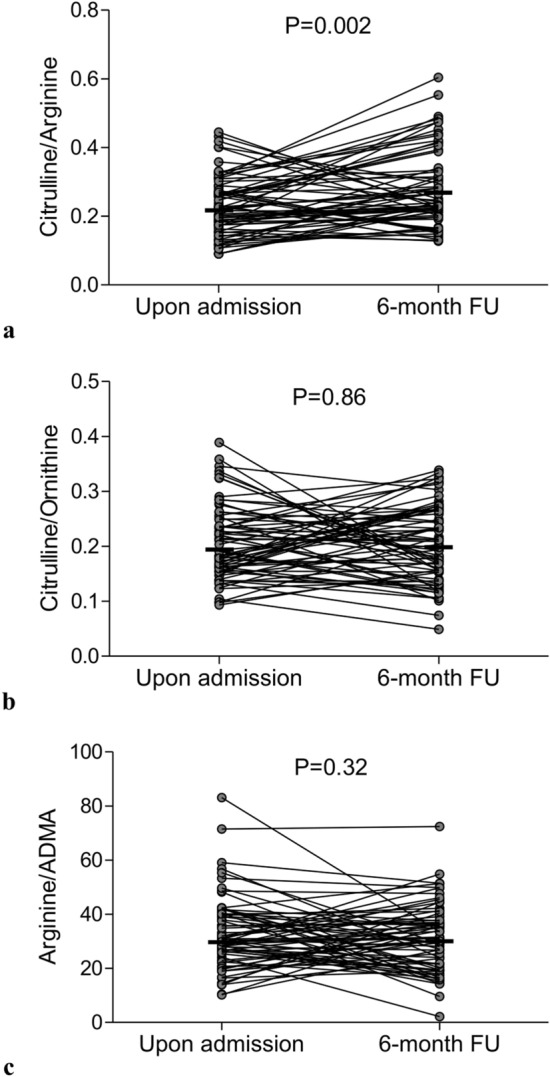
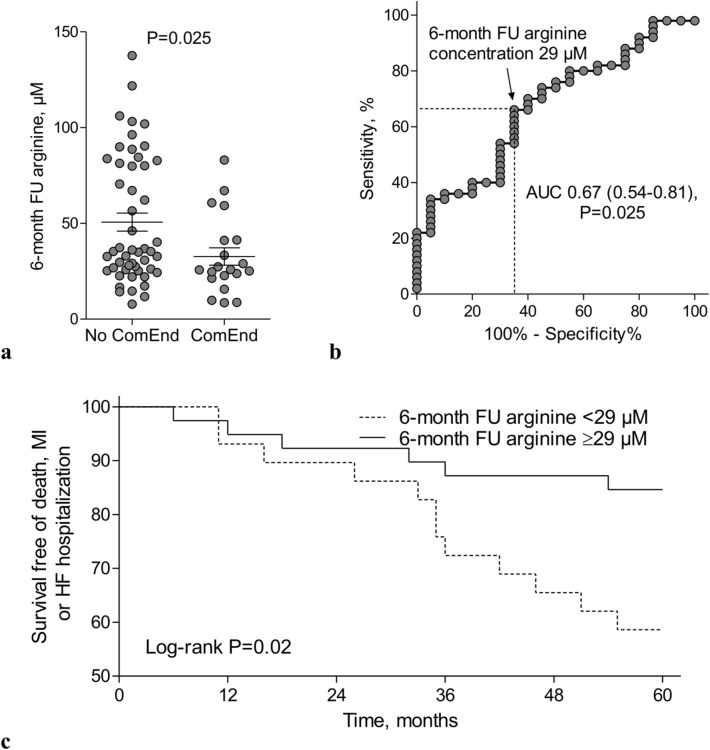
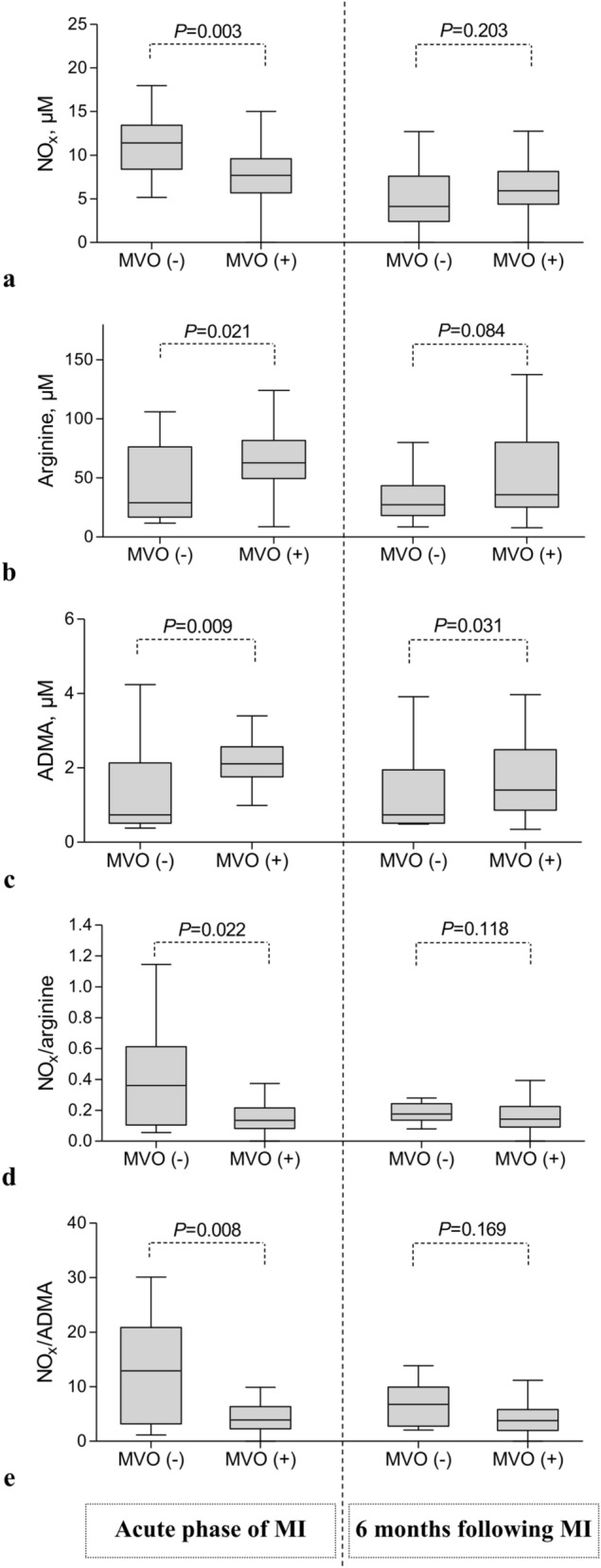
The arginine metabolism as a target for cardioprotection in patients with ST-segment elevation myocardial infarction (STEMI) remains insufficiently understood. Arginine, ornithine, citrulline, asymmetric dimethylarginine (ADMA) and proline plasma levels were measured using liquid chromatography and tandem mass spectrometry in 70 consecutive STEMI patients upon admission and at 6-month follow-up and were compared with left ventricular function, volumes, and infarct characteristics determined by cardiac magnetic resonance imaging, and with 5-year clinical outcomes. Baseline median concentration of arginine was higher by 49% (P = 0.002) when compared to 6-month measurements and was correlated with an ischemia risk area (R = 0.34, P = 0.004) and infarct size (R = 0.33, P = 0.006). Following ischemia median citrulline/arginine index decreased when compared with 6-month result (P = 0.002), while citrulline/ornithine and arginine/ADMA ratios maintained unchanged indicating a shift of arginine metabolism from nitric oxide synthase (NOS) towards arginase. The 6-month arginine concentration reached the area under the ROC curve of 0.67 (95% confidence interval 0.54-0.81) for prediction of death, myocardial infarction or heart failure hospitalization and its value of < 29 µM was associated with lower event free survival (P = 0.02). In STEMI patients, during ischemia conversion of elevated plasma arginine was shifted from NOS towards arginase. Decreased 6-month arginine concentrations were associated with worse long-term outcomes.
精氨酸代谢作为 ST 段抬高型心肌梗死(STEMI)患者的心脏保护靶点的机制仍不明确。在 70 例连续 STEMI 患者入院时和 6 个月随访时,使用液相色谱-串联质谱法测定精氨酸、瓜氨酸、不对称二甲基精氨酸(ADMA)和脯氨酸的血浆水平,并与心脏磁共振成像确定的左心室功能、容量和梗死特征进行比较,同时与 5 年临床结局进行比较。与 6 个月测量值相比,精氨酸的基线中位数浓度高 49%(P = 0.002),且与缺血风险面积(R = 0.34,P = 0.004)和梗死面积(R = 0.33,P = 0.006)相关。与 6 个月结果相比,缺血后精氨酸/瓜氨酸指数中位数降低(P = 0.002),而精氨酸/鸟氨酸和精氨酸/ADMA 比值保持不变,表明精氨酸代谢从一氧化氮合酶(NOS)向精氨酸酶转移。6 个月时的精氨酸浓度达到预测死亡、心肌梗死或心力衰竭住院的 ROC 曲线下面积 0.67(95%置信区间 0.54-0.81),其值<29µM 与无事件生存时间降低相关(P = 0.02)。在 STEMI 患者中,缺血时升高的血浆精氨酸从 NOS 向精氨酸酶转化。6 个月时精氨酸浓度降低与长期预后不良相关。