Graduate School of Advanced Science and Engineering, Hiroshima University, Higashi-Hiroshima, 739-8527, Japan.
Graduate School of Engineering, Hiroshima University, Higashi-Hiroshima, 739-8527, Japan.
Sci Rep. 2021 Jan 8;11(1):187. doi: 10.1038/s41598-020-80578-6.
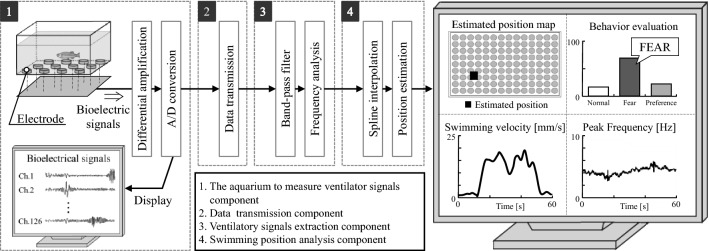
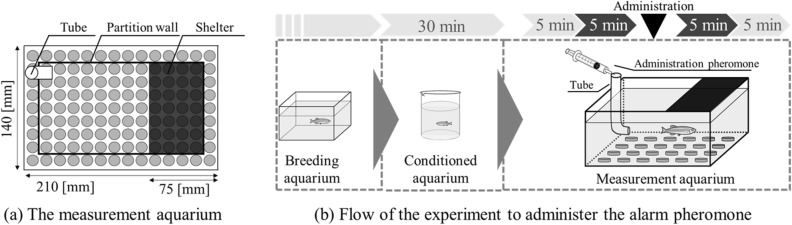
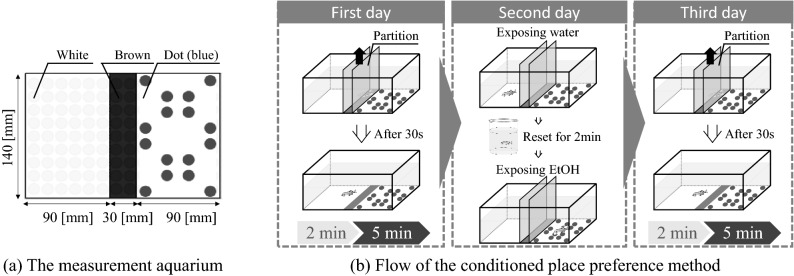
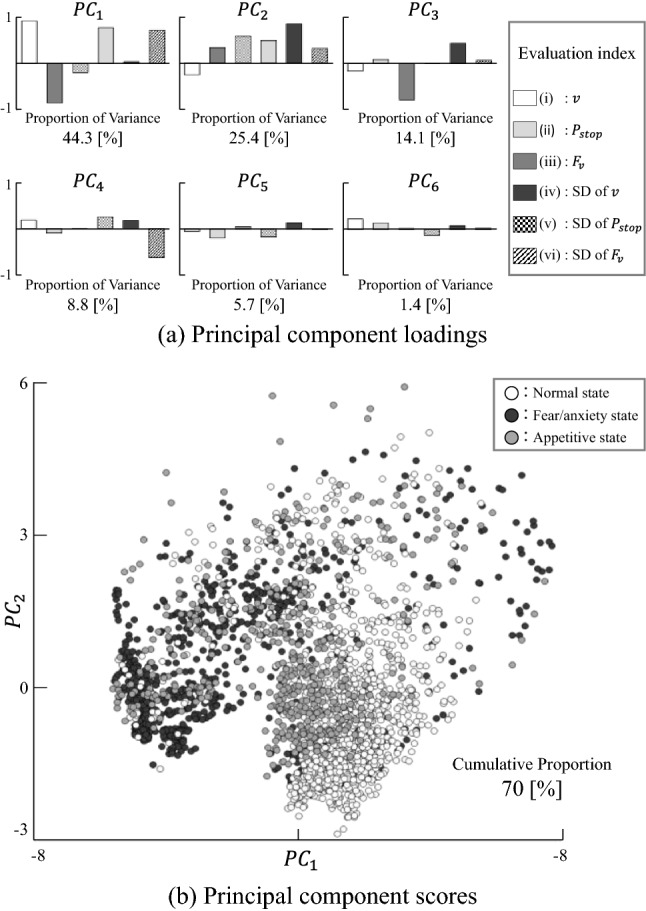
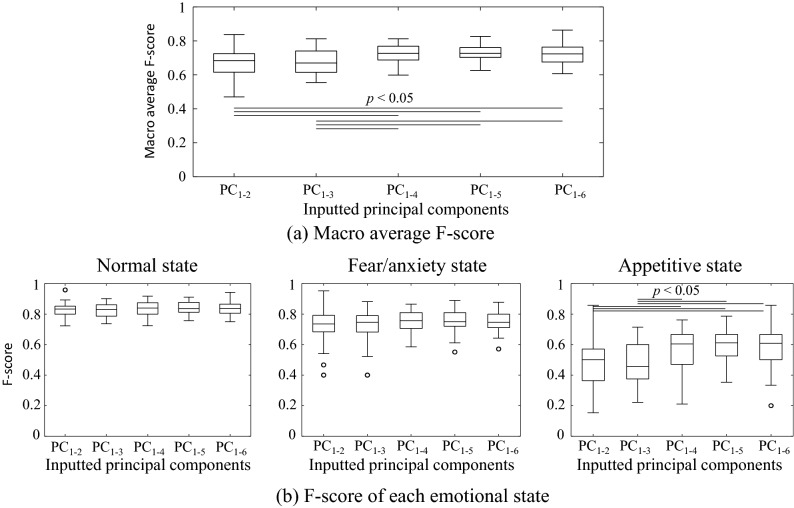
Fear, anxiety, and preference in fish are generally evaluated by video-based behavioural analyses. We previously proposed a system that can measure bioelectrical signals, called ventilatory signals, using a 126-electrode array placed at the bottom of an aquarium and achieved cameraless real-time analysis of motion and ventilation. In this paper, we propose a method to evaluate the emotional state of fish by combining the motion and ventilatory indices obtained with the proposed system. In the experiments, fear/anxiety and appetitive behaviour were induced using alarm pheromone and ethanol, respectively. We also found that the emotional state of the zebrafish can be expressed on the principal component (PC) space extracted from the defined indices. The three emotional states were discriminated using a model-based machine learning method by feeding the PCs. Based on discrimination performed every 5 s, the F-score between the three emotional states were as follows: 0.84 for the normal state, 0.76 for the fear/anxiety state, and 0.59 for the appetitive behaviour. These results indicate the effectiveness of combining physiological and motional indices to discriminate the emotional states of zebrafish.
鱼类的恐惧、焦虑和偏好通常通过基于视频的行为分析来评估。我们之前提出了一种使用放置在水族箱底部的 126 电极阵列来测量称为通气信号的生物电信号的系统,并实现了无摄像头的运动和通气实时分析。在本文中,我们提出了一种通过结合使用所提出的系统获得的运动和通气指数来评估鱼类情绪状态的方法。在实验中,分别使用警报信息素和乙醇来诱导恐惧/焦虑和食欲行为。我们还发现,从定义的指标中提取的主成分 (PC) 空间可以表示斑马鱼的情绪状态。通过向 PCs 提供信息,使用基于模型的机器学习方法来区分三种情绪状态。基于每 5 秒执行的区分,三种情绪状态之间的 F 分数如下:正常状态为 0.84,恐惧/焦虑状态为 0.76,食欲行为状态为 0.59。这些结果表明,结合生理和运动指标来区分斑马鱼的情绪状态是有效的。