ELSC Edmond & Lily Safra Center for Brain Research and Silberman Life Sciences Institute, Hebrew University, Jerusalem, Israel.
Mortimer B. Zuckerman Mind Brain and Behavior Institute and Department of Neuroscience, Columbia University, New York, NY, USA.
Atten Percept Psychophys. 2021 Apr;83(3):1312-1328. doi: 10.3758/s13414-020-02174-0. Epub 2021 Jan 8.
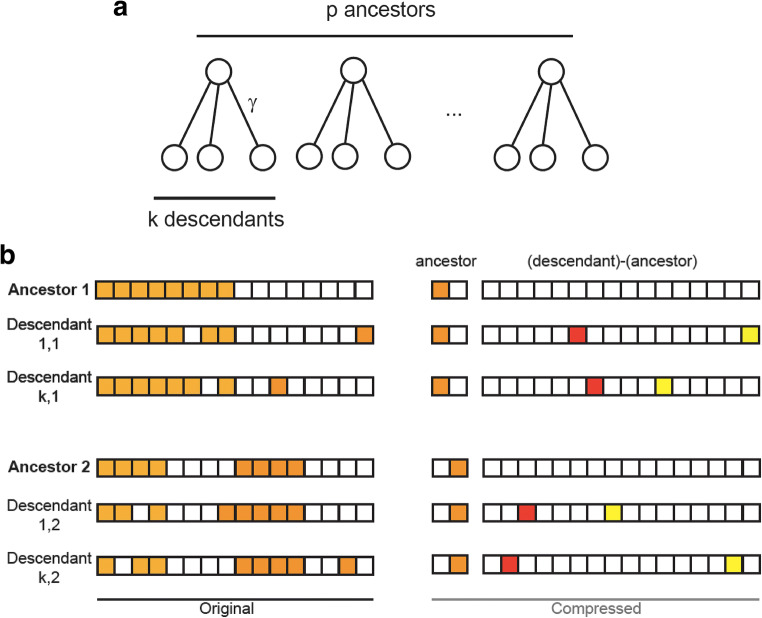
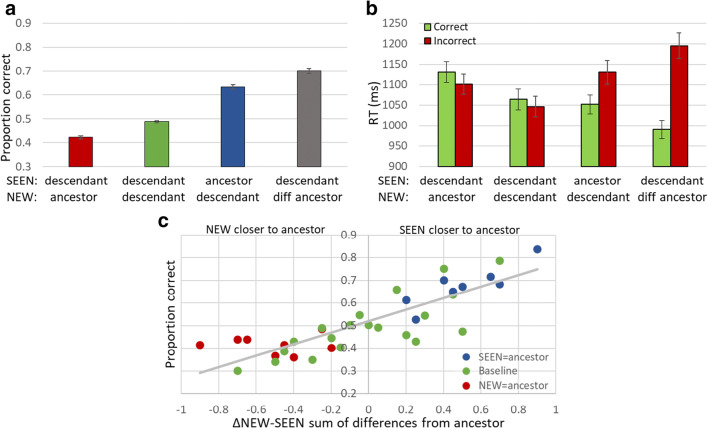
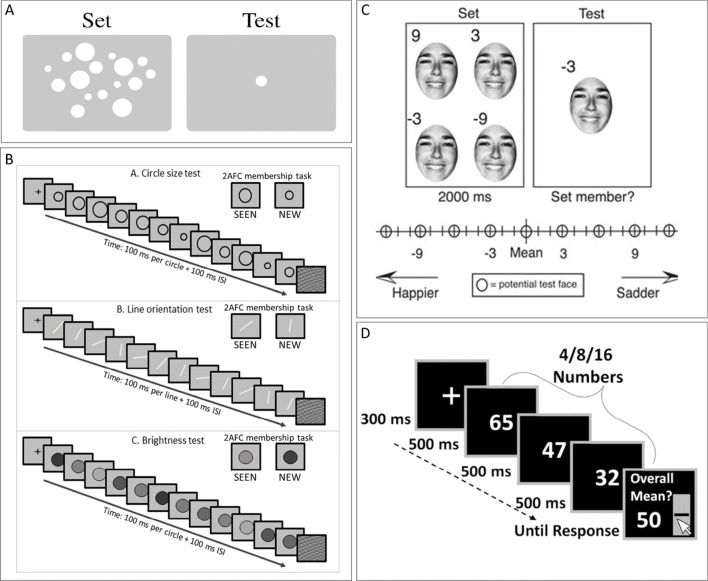
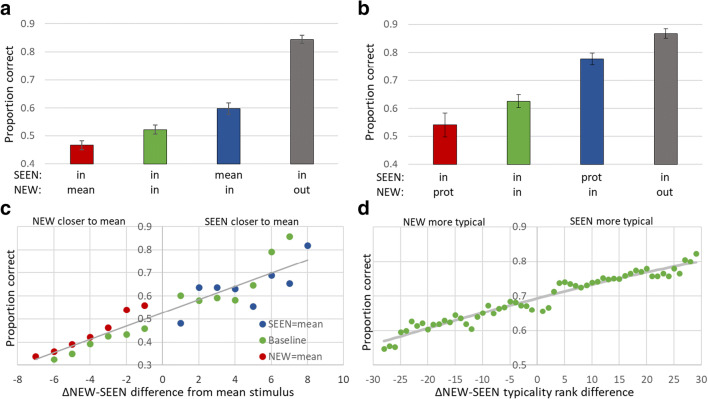
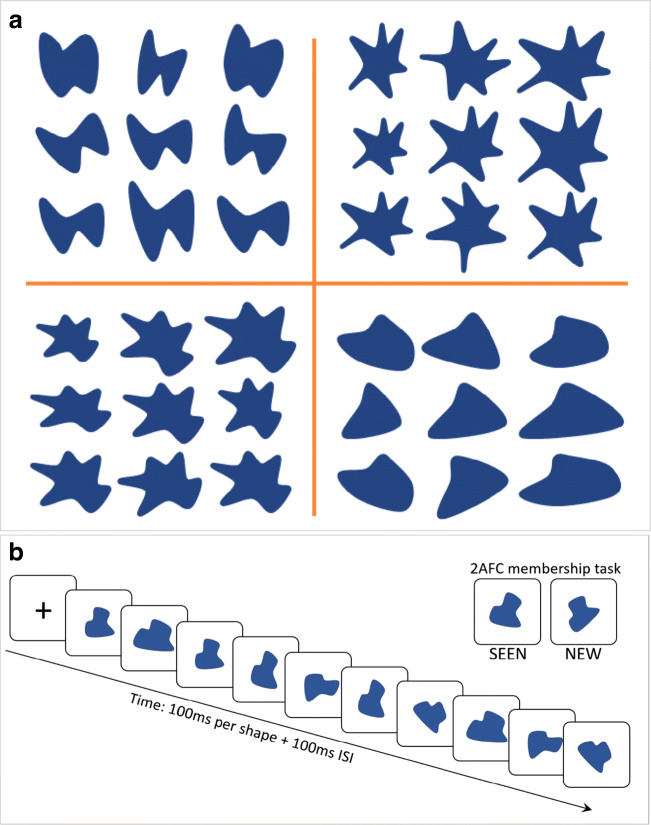
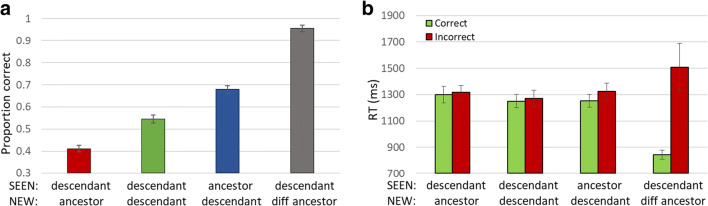
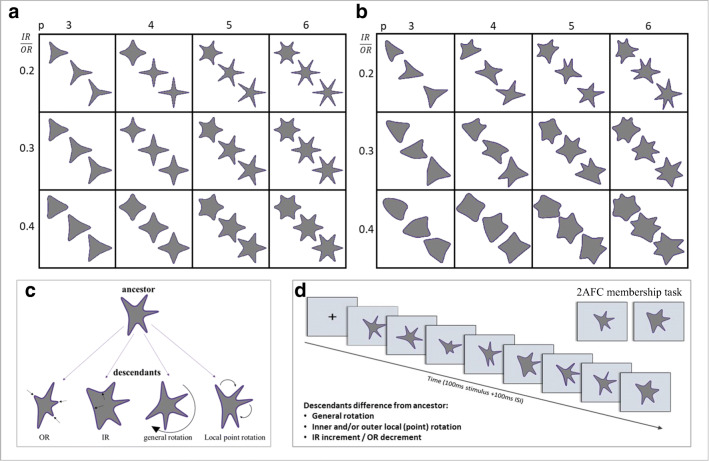
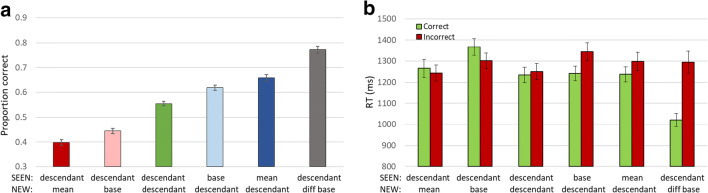
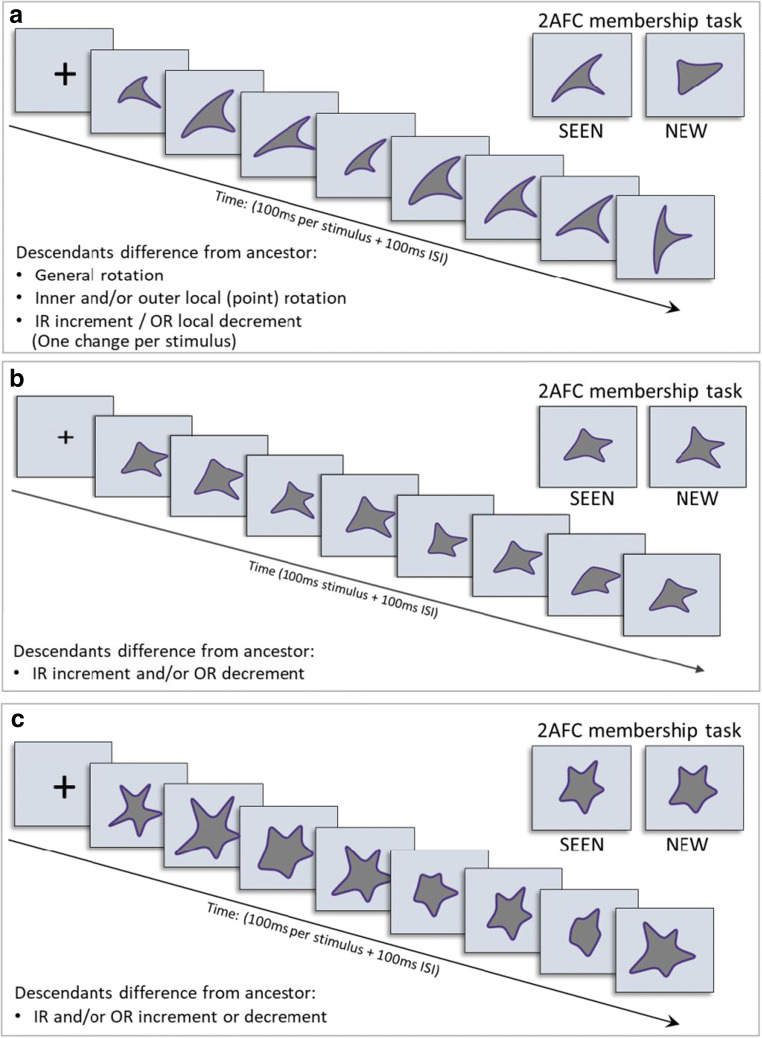
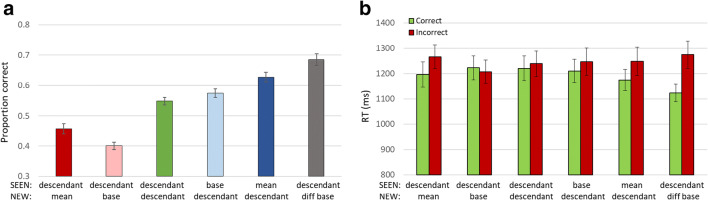
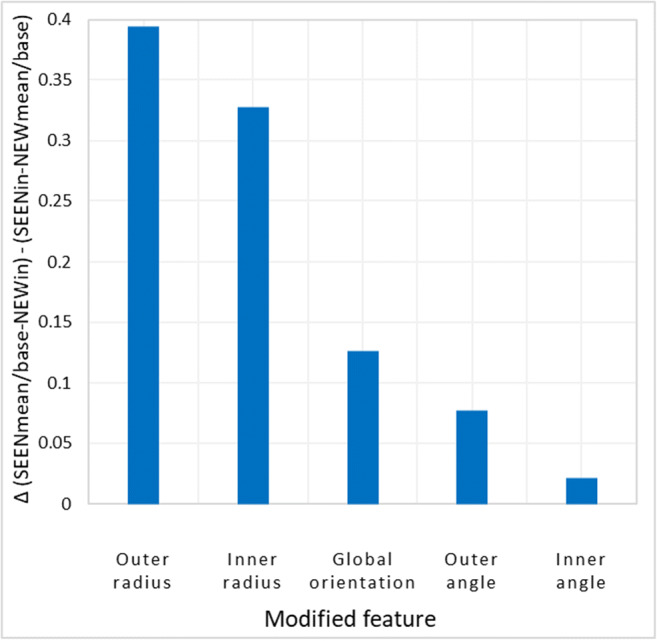
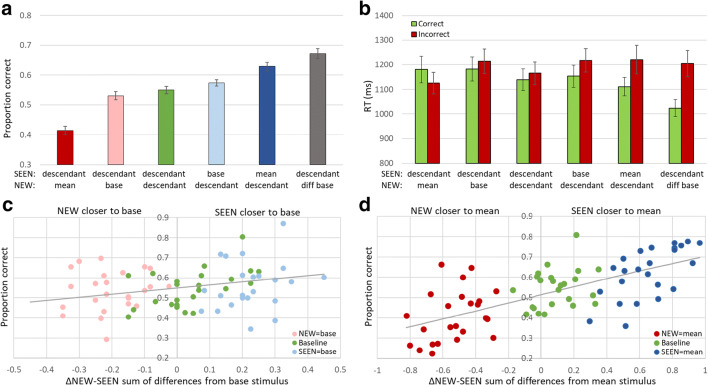
Perception, representation, and memory of ensemble statistics has attracted growing interest. Studies found that, at different abstraction levels, the brain represents similar items as unified percepts. We found that global ensemble perception is automatic and unconscious, affecting later perceptual judgments regarding individual member items. Implicit effects of set mean and range for low-level feature ensembles (size, orientation, brightness) were replicated for high-level category objects. This similarity suggests that analogous mechanisms underlie these extreme levels of abstraction. Here, we bridge the span between visual features and semantic object categories using the identical implicit perception experimental paradigm for intermediate novel visual-shape categories, constructing ensemble exemplars by introducing systematic variations of a central category base or ancestor. In five experiments, with different item variability, we test automatic representation of ensemble category characteristics and its effect on a subsequent memory task. Results show that observer representation of ensembles includes the group's central shape, category ancestor (progenitor), or group mean. Observers also easily reject memory of shapes belonging to different categories, i.e. originating from different ancestors. We conclude that complex categories, like simple visual form ensembles, are represented in terms of statistics including a central object, as well as category boundaries. We refer to the model proposed by Benna and Fusi (bioRxiv 624239, 2019) that memory representation is compressed when related elements are represented by identifying their ancestor and each one's difference from it. We suggest that ensemble mean perception, like category prototype extraction, might reflect employment at different representation levels of an essential, general representation mechanism.
总体集合统计的感知、表示和记忆引起了越来越多的关注。研究发现,在不同的抽象层次上,大脑将相似的项目表示为统一的感知。我们发现,全局集合感知是自动的、无意识的,会影响后续对个体成员项目的感知判断。低水平特征集合(大小、方向、亮度)的集合均值和范围的内隐效应已在高级类别对象中得到复制。这种相似性表明,类似的机制是这些极端抽象水平的基础。在这里,我们使用相同的内隐感知实验范式,将视觉特征和语义对象类别联系起来,用于中间的新视觉形状类别,通过引入中心类别基或祖先的系统变化来构建集合范例。在五个实验中,我们使用不同的项目可变性,测试集合类别特征的自动表示及其对后续记忆任务的影响。结果表明,观察者对集合的表示包括群体的中心形状、类别祖先(祖先)或群体均值。观察者也很容易拒绝对属于不同类别(即来自不同祖先)的形状的记忆。我们得出的结论是,复杂的类别,如简单的视觉形式集合,是以包括中心对象以及类别边界的统计信息表示的。我们提到了 Benna 和 Fusi 提出的模型(bioRxiv 624239,2019),即当通过识别其祖先和每个元素与其的差异来表示相关元素时,记忆表示会被压缩。我们认为,总体均值感知,类似于类别原型提取,可能反映了在不同的表示水平上使用了一种基本的、通用的表示机制。