Cattelan Jessy, Castellano Sara, Merdji Hamid, Audusseau Jean, Claude Baptiste, Feuillassier Léa, Cunat Sibylle, Astrié Marc, Aquin Camille, Buis Guillaume, Gehant Edgar, Granier Amandine, Kercha Hassiba, Le Guillou Camille, Martin Guillaume, Roulot Kevin, Meziani Ferhat, Putois Olivier, Helms Julie
Service de Médecine Intensive-Réanimation, Nouvel Hôpital Civil, Hôpitaux universitaires de Strasbourg, Strasbourg, France.
SuLiSoM UR 3071, Faculté de Psychologie, Université de Strasbourg, Strasbourg, France.
J Intensive Care. 2021 Jan 9;9(1):5. doi: 10.1186/s40560-020-00520-w.
During COVID-19 pandemic, visits have been prohibited in most French ICUs. Psychological effects, for reference persons (RPs), of remote-only communication have been assessed.
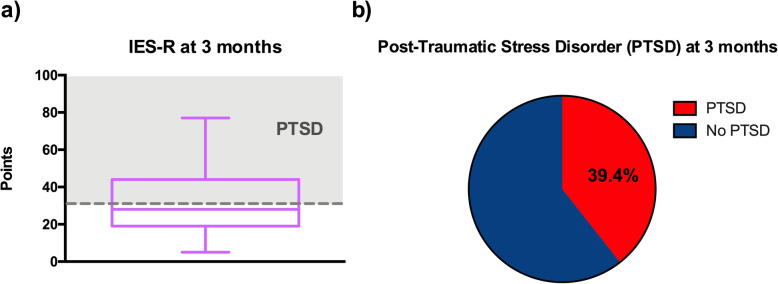
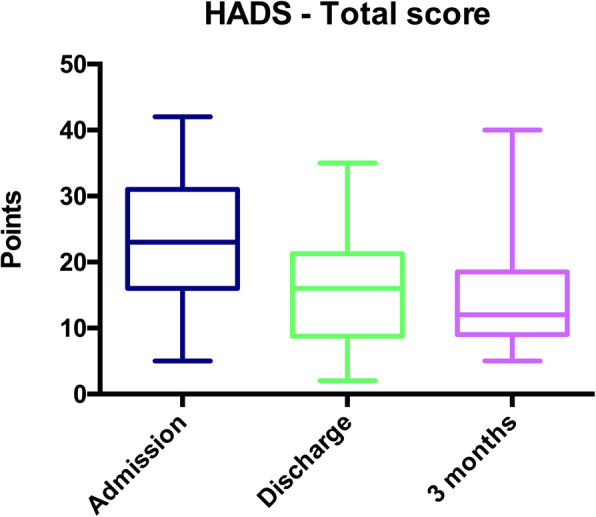
All RPs of patients referred to ICU for COVID-19 were included. HADS, IES-R, and satisfaction were evaluated at admission, discharge/death, and 3 months. At 3 months, a psychologist provided a qualitative description of RPs' psychological distress.
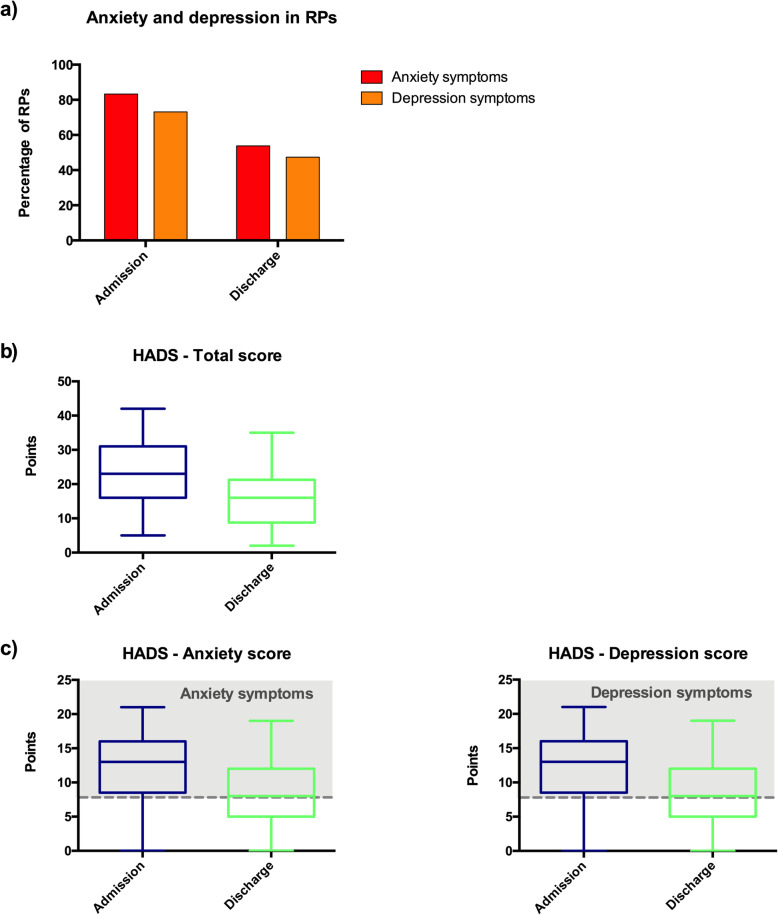
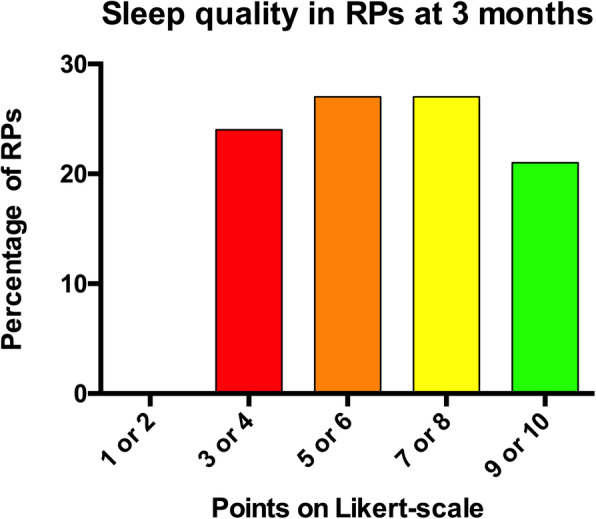
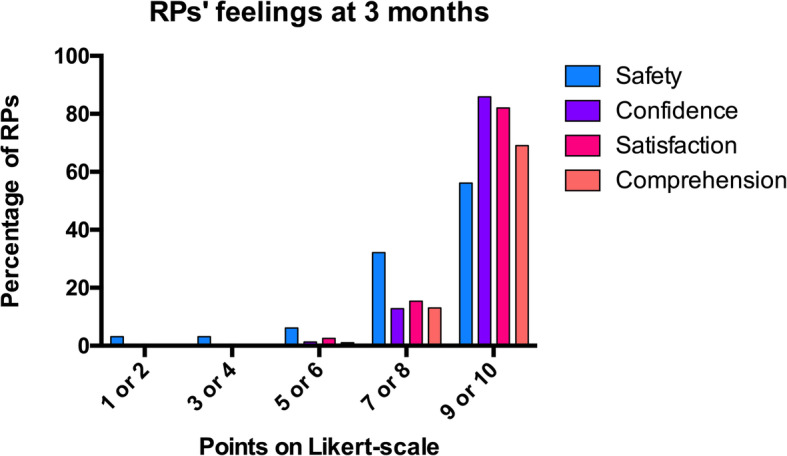
Eighty-eight RPs were included. Prevalence of anxiety and depression was 83% and 73% respectively. At 3 months, lower HADS decrease was associated with patient death/continued hospitalization, and/or sleeping disorders in RPs (p < 0.01). Ninety-nine percent RPs felt the patient was safe (9 [7; 10]/10 points, Likert-type scale), confident with caregivers (10 [9; 10]/10 points), and satisfied with information provided (10 [9; 10]/10 points). All RPs stressed the specific-type of "responsibility" associated with being an RP in a remote-only context, leading RPs to develop narrow diffusion strategies (67%) and restrict the array of contacted relatives to a very few and/or only contacting them rarely. 10 RPs (30%) related the situation to a prior traumatic experience.
RPs experienced psychological distress and reported that being an RP in a remote-only communication context was a specific responsibility and qualified it as an overall negative experience.
NCT04385121 . Registered 12 May 2020. https://clinicaltrials.gov/ .
在新冠疫情期间,法国大多数重症监护病房禁止家属探视。本研究评估了仅通过远程沟通对家属造成的心理影响。
纳入所有因新冠疫情被转诊至重症监护病房患者的家属。在入院时、出院/死亡时以及3个月时评估医院焦虑抑郁量表(HADS)、创伤后应激障碍自评量表(IES-R)以及满意度。在3个月时,由一名心理学家对家属的心理困扰进行定性描述。
共纳入88名家属。焦虑和抑郁的患病率分别为83%和73%。在3个月时,HADS得分下降较少与患者死亡/持续住院以及家属睡眠障碍相关(p<0.01)。99%的家属认为患者是安全的(李克特量表评分为9[7;10]/10分),对医护人员有信心(10[9;10]/10分),并对所提供的信息感到满意(10[9;10]/10分)。所有家属都强调了在仅通过远程沟通的情况下作为家属所具有的特殊“责任感”,这使得家属们制定了有限的传播策略(67%),并将联系的亲属范围限制在极少数人,和/或很少与他们联系。10名家属(30%)将这种情况与之前的创伤经历联系起来。
家属经历了心理困扰,并表示在仅通过远程沟通的情况下作为家属是一项特殊的责任,并将其描述为总体负面经历。
NCT04385121。于2020年5月12日注册。https://clinicaltrials.gov/ 。