Department of Biology, Georgia State University , Atlanta, Georgia.
Neuroscience Institute, Georgia State University , Atlanta, Georgia.
Channels (Austin). 2021 Dec;15(1):165-179. doi: 10.1080/19336950.2020.1870086.
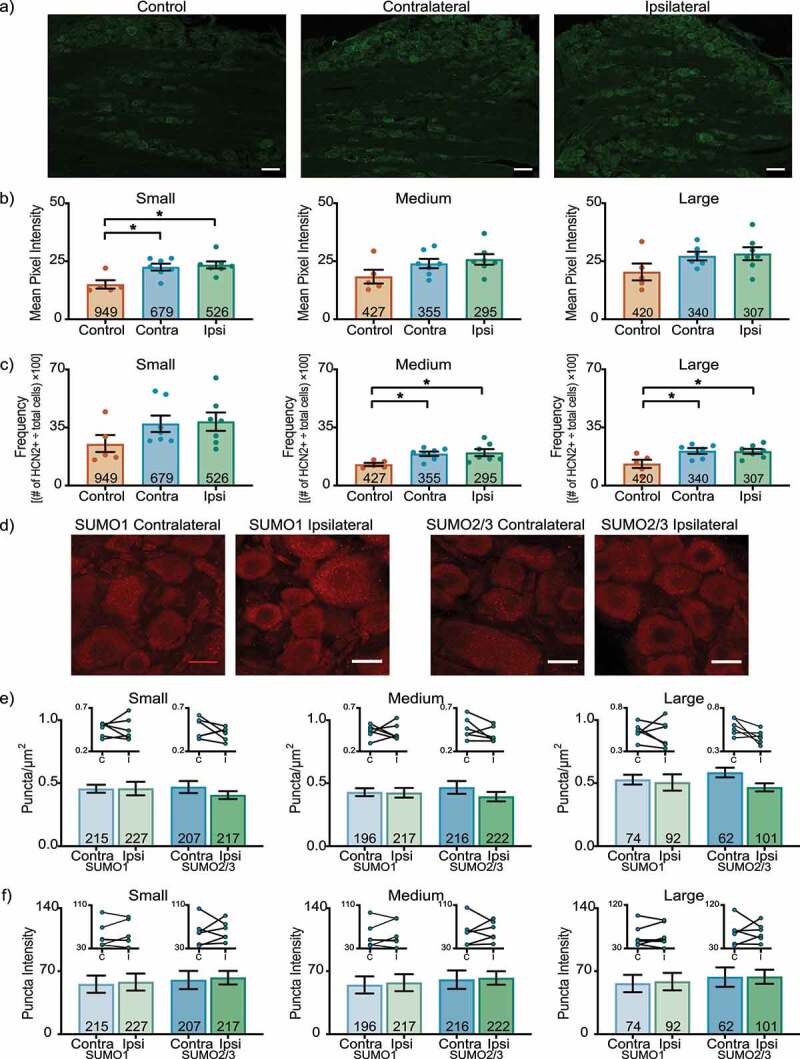
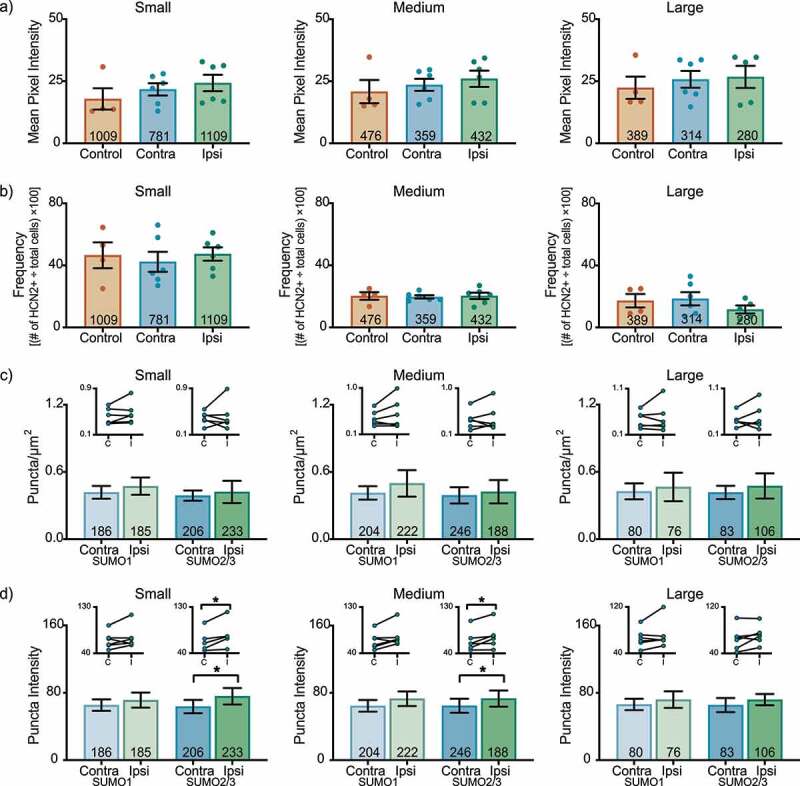
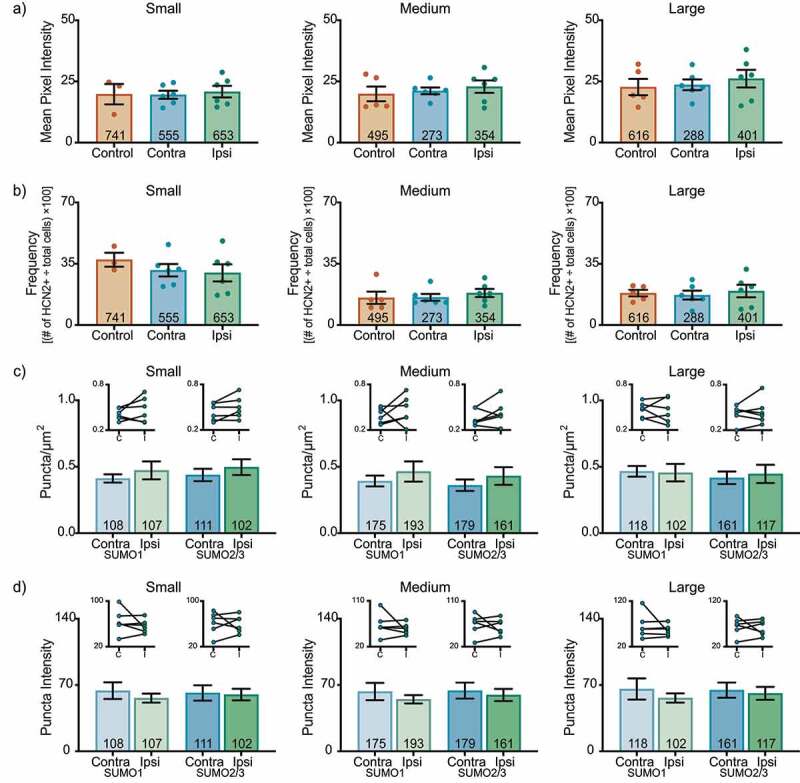
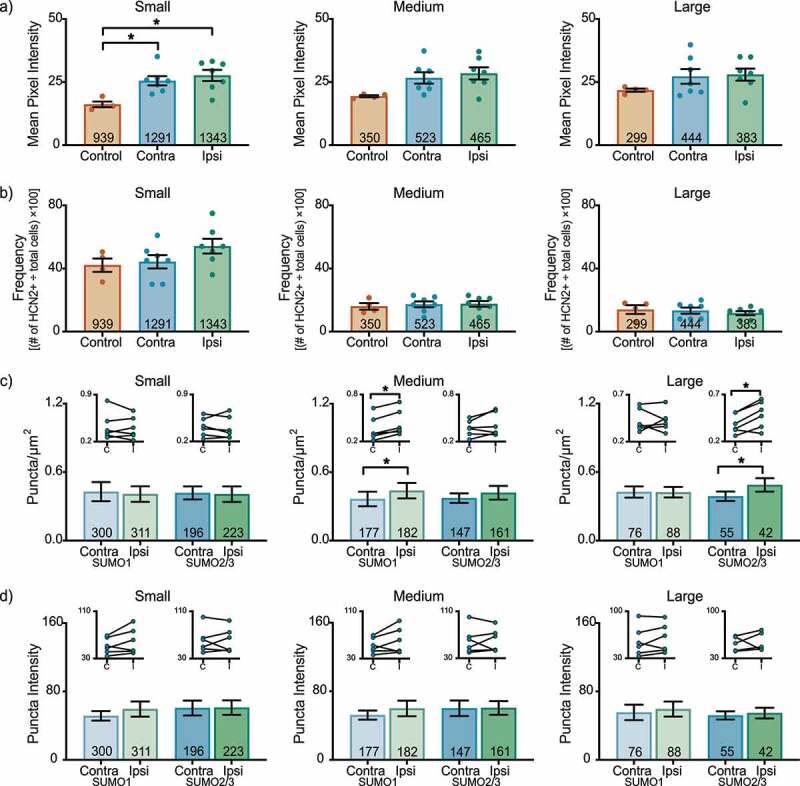
Nociceptor sensitization following nerve injury or inflammation leads to chronic pain. An increase in the nociceptor hyperpolarization-activated current, I, is observed in many models of pathological pain. Pharmacological blockade of I prevents the mechanical and thermal hypersensitivity that occurs during pathological pain. Alterations in the Hyperpolarization-activated Cyclic Nucleotide-gated ion channel 2 (HCN2) mediate I-dependent thermal and mechanical hyperalgesia. Limited knowledge exists regarding the nature of these changes during chronic inflammatory pain. Modifications in HCN2 expression and post-translational SUMOylation have been observed in the Complete Freund's Adjuvant (CFA) model of chronic inflammatory pain. Intra-plantar injection of CFA into the rat hindpaw induces unilateral hyperalgesia that is sustained for up to 14 days following injection. The hindpaw is innervated by primary afferents in lumbar DRG, L4-6. Adjustments in HCN2 expression and SUMOylation have been well-documented for L5 DRG during the first 7 days of CFA-induced inflammation. Here, we examine bilateral L4 and L6 DRG at day 1 and day 3 post-CFA. Using L4 and L6 DRG cryosections, HCN2 expression and SUMOylation were measured with immunohistochemistry and proximity ligation assays, respectively. Our findings indicate that intra-plantar injection of CFA elicited a bilateral increase in HCN2 expression in L4 and L6 DRG at day 1, but not day 3, and enhanced HCN2 SUMOylation in ipsilateral L6 DRG at day 1 and day 3. Changes in HCN2 expression and SUMOylation were transient over this time course. Our study suggests that HCN2 is regulated by multiple mechanisms during CFA-induced inflammation.
伤害感受器敏化是在神经损伤或炎症后发生的,会导致慢性疼痛。在许多病理性疼痛模型中都观察到伤害感受器超极化激活电流(I)增加。I 的药理学阻断可防止病理性疼痛期间发生的机械性和热敏感性。HCN2(超极化激活环核苷酸门控离子通道 2)的改变介导 I 依赖性热和机械性痛觉过敏。在慢性炎症性疼痛中,关于这些变化的性质知之甚少。在完全弗氏佐剂(CFA)慢性炎性疼痛模型中观察到 HCN2 表达和翻译后 SUMO 化的改变。向大鼠后爪足底内注射 CFA 会引起单侧痛觉过敏,在注射后长达 14 天内持续存在。后爪由 L4-6 腰椎 DRG 的初级传入纤维支配。在 CFA 诱导的炎症的前 7 天内,已经很好地记录了 L5 DRG 中 HCN2 表达和 SUMO 化的调整。在这里,我们在 CFA 后第 1 天和第 3 天检查双侧 L4 和 L6 DRG。使用 L4 和 L6 DRG 冷冻切片,通过免疫组织化学和接近连接测定分别测量 HCN2 表达和 SUMO 化。我们的发现表明,向足底内注射 CFA 会在 L4 和 L6 DRG 中引起双侧 HCN2 表达增加,在第 1 天而非第 3 天,并且在同侧 L6 DRG 中增强 HCN2 SUMO 化在第 1 天和第 3 天。在此时间过程中,HCN2 表达和 SUMO 化的变化是短暂的。我们的研究表明,在 CFA 诱导的炎症过程中,HCN2 受到多种机制的调节。