Mohammad Abu-Taweel Gasem, Al-Fifi Zarraq
Department of Biology, College of Sciences, Jazan University, P.O. Box 2079, Jazan 45142, Saudi Arabia.
Saudi J Biol Sci. 2021 Jan;28(1):125-134. doi: 10.1016/j.sjbs.2020.09.011. Epub 2020 Sep 12.
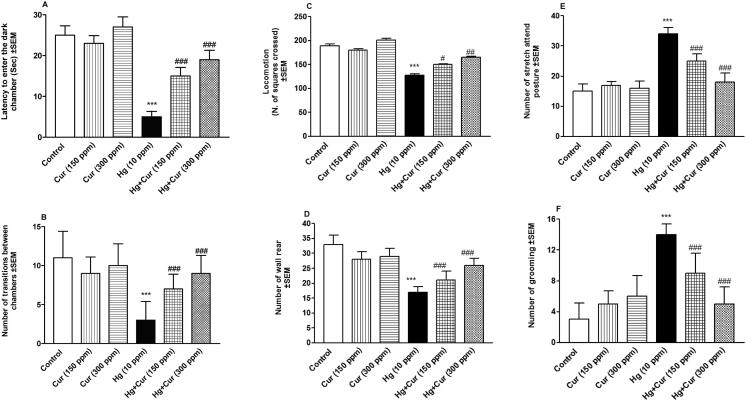
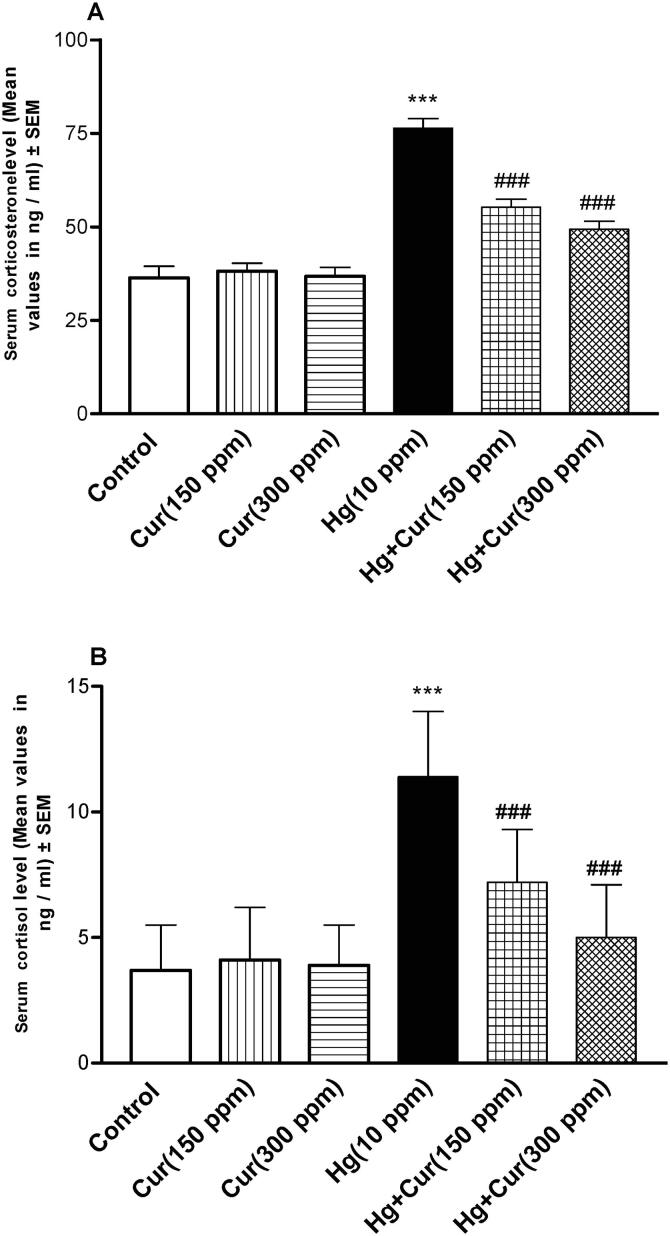
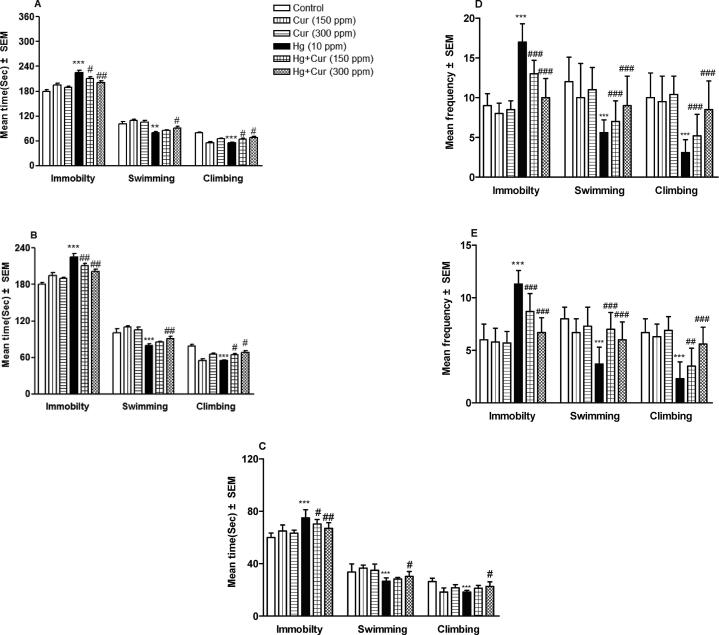
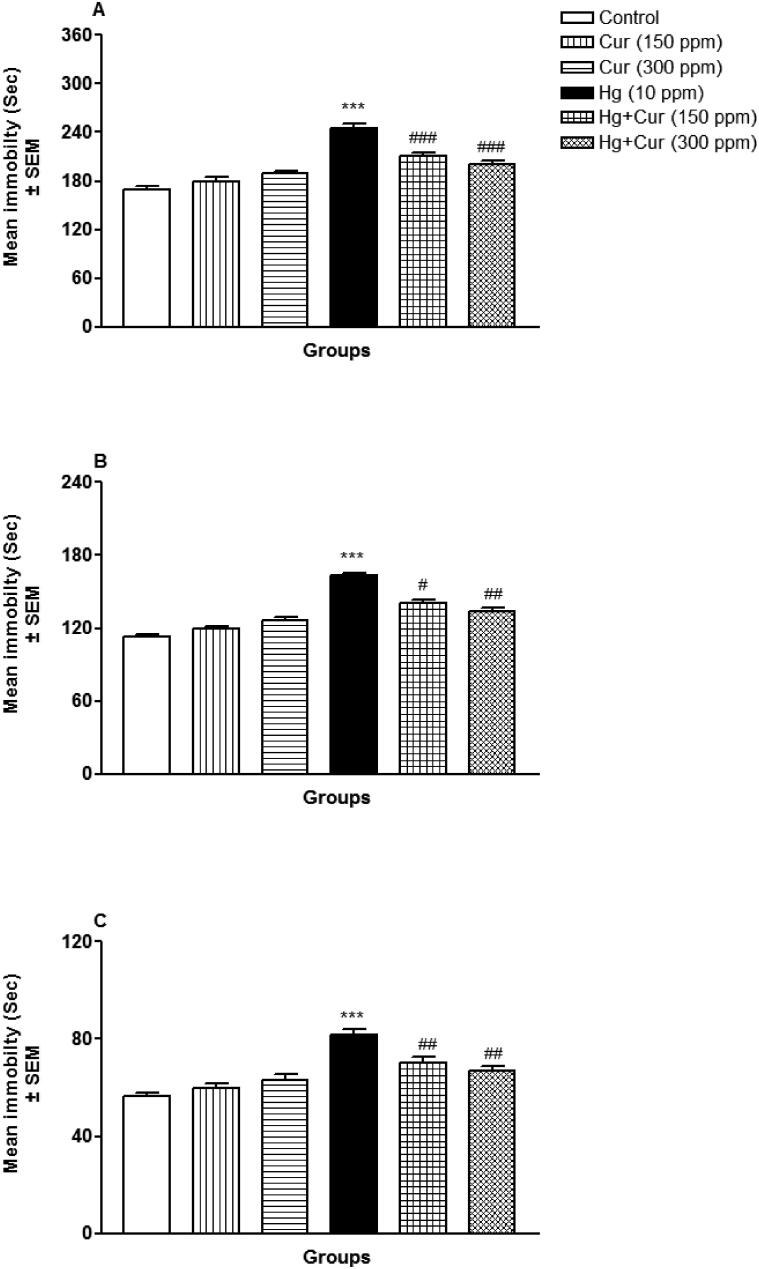
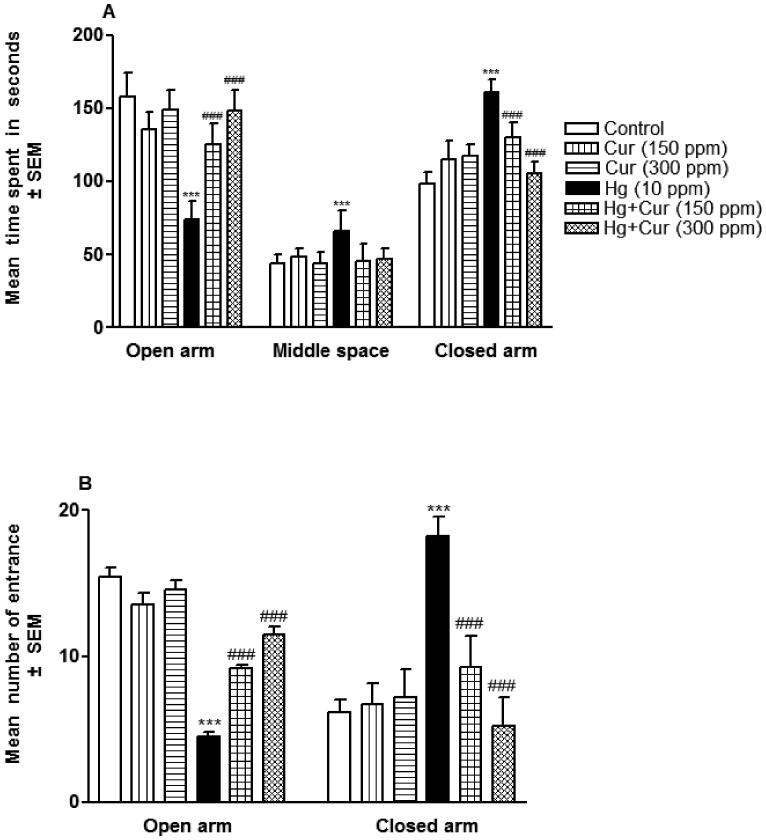
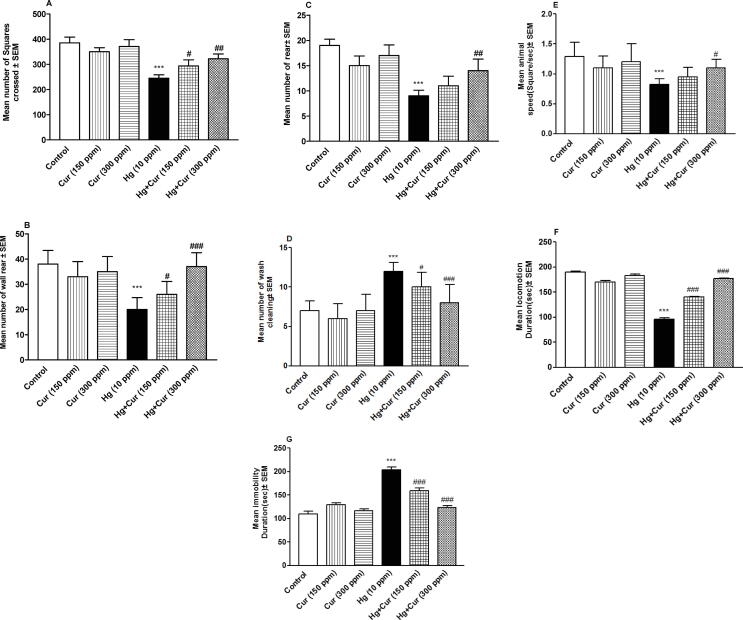
The main objective of this work is to analyze the perinatal protective effects of curcumin (Cur) on the toxicity of inorganic mercury (mercuric chloride - HgCl) in the developing mice offspring on their behavioral and biochemical changes. Six groups of pregnant mice (consisting of ten animals in each) were allocated in a way that Group I consuming tap water was used as control. Groups II to VI were the experimentally treated groups in which Group II and III received 150 and 300 ppm of curcumin, respectively; Group IV was given 10 ppm of HgCl; and Group V and VI were also exposed to 10 ppm of HgCl but concurrently they were also treated with 150 and 300 ppm of curcumin, respectively. Appearance of vaginal plug was considered as the first day of pregnancy and all treatment started from day one of pregnancy until post-natal day 15 (PD 15) and the mothers were switched to plain tap water thereafter. At the age of PD 40, the male pups were subjected to measuring the depression in the light-dark chambers, forced swimming and tail suspension tests and to measuring their anxiety in plus-maze and open-field tests. Subsequently, after behavioral tests, the levels of corticosterone and cortisol hormones were estimated in the plasma of the experimental offspring. Behavioral tests were measured in the HgCl treated offspring for the light-dark chambers; forced swimming test; tail suspension test; plus-maze test; and open -field test showed significant alterations in their depression, anxiety and locomotory activities. Biochemical estimation of corticosterone and cortisol hormones in the plasma of these offspring showed significant depletion in their levels. Treatment of these offspring with curcumin significantly and dose dependently ameliorated all the behavioral and biochemical disruptive effects in the offspring due to HgCl toxicity. In conclusion, curcumin ameliorates the toxic effects of HgCl in the offspring during gestation and lactation periods. Thus, exposure to HgCl to mothers during pregnancy needs careful monitoring for minimizing its toxicity. Curcumin appears to be a promising ameliorating agent for such HgCl toxicity; however, further studies are needed for establishing these preliminary findings.
本研究的主要目的是分析姜黄素(Cur)对发育中小鼠后代无机汞(氯化汞-HgCl)毒性的围产期保护作用,以及对其行为和生化变化的影响。将六组怀孕小鼠(每组十只)进行分配,其中第一组饮用自来水作为对照组。第二组至第六组为实验处理组,其中第二组和第三组分别接受150 ppm和300 ppm的姜黄素;第四组给予10 ppm的HgCl;第五组和第六组也暴露于10 ppm的HgCl,但同时分别接受150 ppm和300 ppm的姜黄素处理。阴道栓出现被视为怀孕第一天,所有处理从怀孕第一天开始直至产后第15天(PD 15),之后母亲们改用普通自来水。在PD 40时,对雄性幼崽进行明暗箱实验、强迫游泳和悬尾实验以测量其抑郁情况,并进行十字迷宫和旷场实验以测量其焦虑情况。随后,在行为测试后,测定实验后代血浆中皮质酮和皮质醇激素的水平。在HgCl处理的后代中进行的明暗箱实验、强迫游泳实验、悬尾实验、十字迷宫实验和旷场实验显示,它们的抑郁、焦虑和运动活动有显著改变。这些后代血浆中皮质酮和皮质醇激素的生化测定显示其水平显著降低。用姜黄素处理这些后代可显著且剂量依赖性地改善由于HgCl毒性导致的后代所有行为和生化干扰效应。总之,姜黄素可改善HgCl在妊娠和哺乳期对后代的毒性作用。因此,孕期母亲接触HgCl需要仔细监测,以尽量降低其毒性。姜黄素似乎是一种有前景的改善HgCl毒性的药物;然而,需要进一步研究来证实这些初步发现。