Division of Molecular Medicine, Hefei National Laboratory for Physical Sciences at Microscale, The CAS Key Laboratory of Innate Immunity and Chronic Disease, School of Life Sciences, University of Science and Technology of China, Hefei, China.
Institute of Immunology, University of Science and Technology of China, Hefei, China.
Front Immunol. 2020 Dec 23;11:591269. doi: 10.3389/fimmu.2020.591269. eCollection 2020.
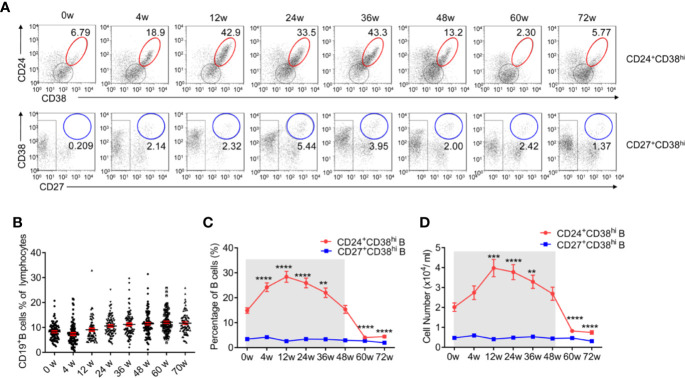
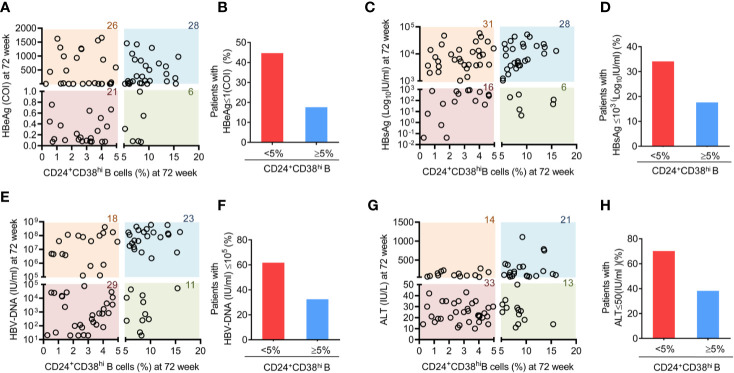
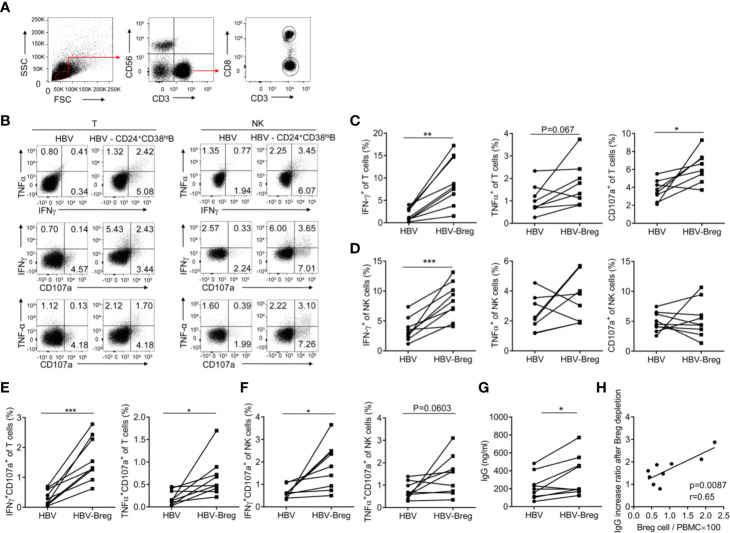
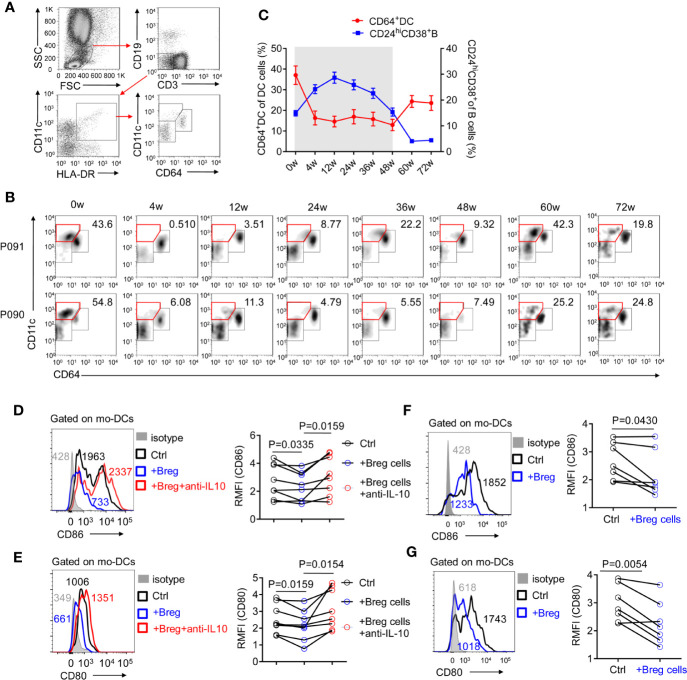
Type I interferon is widely used for antiviral therapy, yet has yielded disappointing results toward chronic HBV infection. Here we identify that PEG-IFNα-2b therapy toward persistent infection in humans is a double-edged sword of both immunostimulation and immunomodulation. Our studies of this randomised trial showed persistent PEG-IFNα-2b therapy induced large number of CD24CD38 B cells and launched a CD24CD38 B cells centered immunosuppressive response, including downregulating functions of T cells and NK cells. Patients with low induced CD24CD38 B cells have achieved an improved therapeutic effect. Specifically, using the anti-CD24 antibody to deplete CD24CD38 B cells without harming other B cell subsets suggest a promising strategy to improve the therapeutic effects. Our findings show that PEG-IFNα-2b therapy toward persistent infection constitutes an immunomodulation effect, and strategies to identifying the molecular basis for the antiviral versus immunomodulatory effects of PEG-IFNα-2b to selectively manipulate these opposing activities provide an opportunity to ameliorate anti-virus immunity and control viral infection.
I 型干扰素被广泛用于抗病毒治疗,但在慢性乙型肝炎病毒感染方面的疗效并不理想。在这里,我们发现聚乙二醇干扰素 α-2b 治疗持续性感染对人类来说是一把双刃剑,既具有免疫刺激作用,也具有免疫调节作用。我们对这项随机试验的研究表明,持续的聚乙二醇干扰素 α-2b 治疗会诱导大量 CD24CD38 B 细胞,并引发以 CD24CD38 B 细胞为中心的免疫抑制反应,包括下调 T 细胞和 NK 细胞的功能。诱导产生低水平 CD24CD38 B 细胞的患者会获得更好的治疗效果。具体来说,使用抗 CD24 抗体耗竭 CD24CD38 B 细胞而不损害其他 B 细胞亚群,提示了一种有前途的策略,可以改善治疗效果。我们的研究结果表明,聚乙二醇干扰素 α-2b 治疗持续性感染构成了一种免疫调节作用,而确定聚乙二醇干扰素 α-2b 的抗病毒与免疫调节作用的分子基础,以选择性地操纵这些相反的活性的策略,为改善抗病毒免疫和控制病毒感染提供了机会。