Harris Leonard, Darby Peter
Department of Surgery, Joseph Brant Hospital, Burlington, Ontario, Canada.
Department of Anesthesia, McMaster Children's Hospital - Hamilton Health Sciences, Hamilton, Ontario, Canada.
Plast Reconstr Surg Glob Open. 2020 Dec 22;8(12):e3314. doi: 10.1097/GOX.0000000000003314. eCollection 2020 Dec.
Nutritional supplements are common in other surgical specialties but not widely used in the plastic surgery setting. This study compares the surgical outcomes of patients using our standard ERAS protocol involving arnica and bromelain with an updated ERAS protocol using perisurgical nutritional supplementation using a staged administration of nutraceuticals.
In total, 300 female abdominoplasty patients were randomly provided with perioperative supplementation consisting of arnica and bromelain, or a 3-stage nutraceutical regimen containing arginine, citrulline, glutamine, bromelain, and vitamin C. Narcotic use in recovery and post-operative drainage were measured, and both groups completed a self-assessment of bruising coloration, days to independent activity, perceived pain, and documented the quantity of narcotic and non-prescription pain killers they took over a 14-day recovery period.
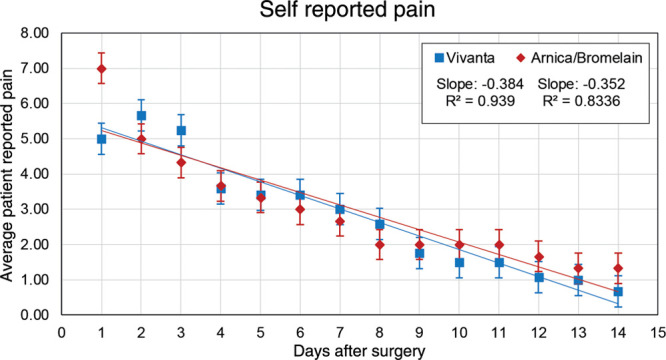
There were 130 patients in the nutraceutical group and 80 in the arnica and bromelain group; patients were excluded due to non-compliance or due to incomplete data. Patients taking the nutraceutical regimen reported a shorter duration of pain and had a 41% reduction in narcotic use in recovery and experienced 48% less post-operative drainage. Home use of narcotic pain killers decreased by 25%. There also was a trend toward decreased and earlier clearing/maturation of bruising as well as return to daily activates without assistance. Patients also reported an increase in satisfaction with their surgical experience.
This study demonstrated that perioperative supplementation with nitric oxide precursors, antioxidants, and proteolytic enzymes in a staged fashion can positively affect post-operative outcomes and is an adjunct to enhanced surgical recovery protocols.
营养补充剂在其他外科专科中很常见,但在整形手术中使用并不广泛。本研究比较了使用包含山金车和菠萝蛋白酶的标准加速康复外科(ERAS)方案的患者与使用围手术期营养补充(采用营养保健品分阶段给药)的更新ERAS方案的患者的手术结局。
总共300名接受腹部整形手术的女性患者被随机给予围手术期补充剂,其中一组为山金车和菠萝蛋白酶,另一组为包含精氨酸、瓜氨酸、谷氨酰胺、菠萝蛋白酶和维生素C的三阶段营养保健品方案。测量了恢复过程中的麻醉药物使用情况和术后引流量,两组患者都完成了关于瘀伤颜色、独立活动天数、疼痛感知的自我评估,并记录了他们在14天恢复期内服用的麻醉和非处方止痛药的数量。
营养保健品组有130名患者,山金车和菠萝蛋白酶组有80名患者;部分患者因未遵守方案或数据不完整而被排除。服用营养保健品方案的患者报告疼痛持续时间较短,恢复过程中的麻醉药物使用减少了41%,术后引流量减少了48%。家庭使用麻醉性止痛药减少了25%。瘀伤的减轻和更早消退/成熟以及无需帮助即可恢复日常活动也有一定趋势。患者还报告对手术体验的满意度有所提高。
本研究表明,以分阶段方式补充一氧化氮前体、抗氧化剂和蛋白水解酶可对术后结局产生积极影响,是增强手术恢复方案的辅助手段。