Zhao Shuang, Hao Chang-Lai, Zhao En-Hong, Jiang Hua-Mao, Zheng Hua-Chuan
Department of Oncology and Experimental Center, The Affiliated Hospital of Chengde Medical University, Chengde, China.
Department of Hematology, The Affiliated Hospital of Chengde Medical University, Chengde, China.
Front Oncol. 2020 Nov 30;10:600322. doi: 10.3389/fonc.2020.600322. eCollection 2020.
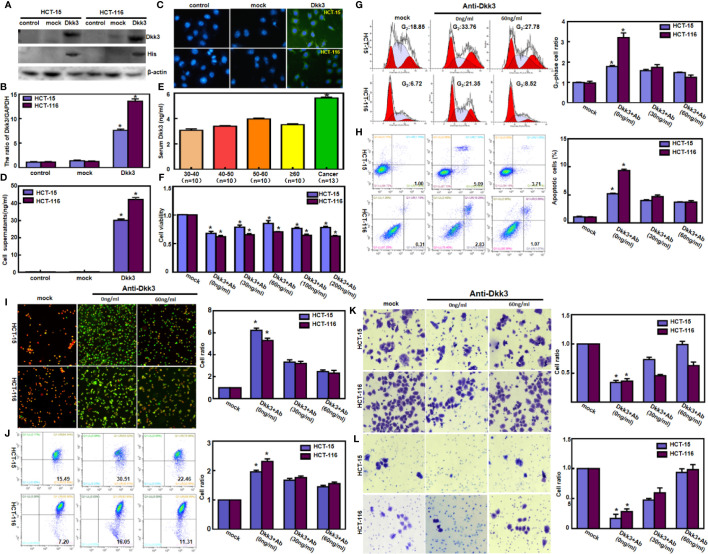
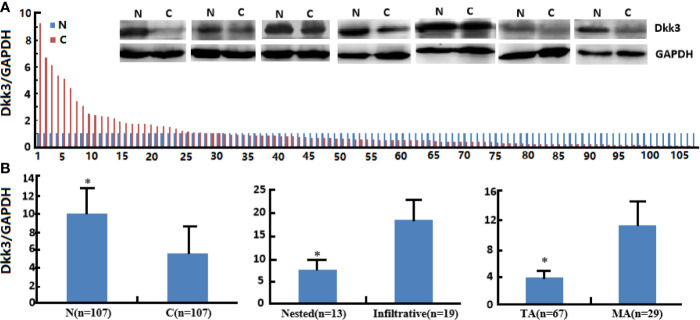
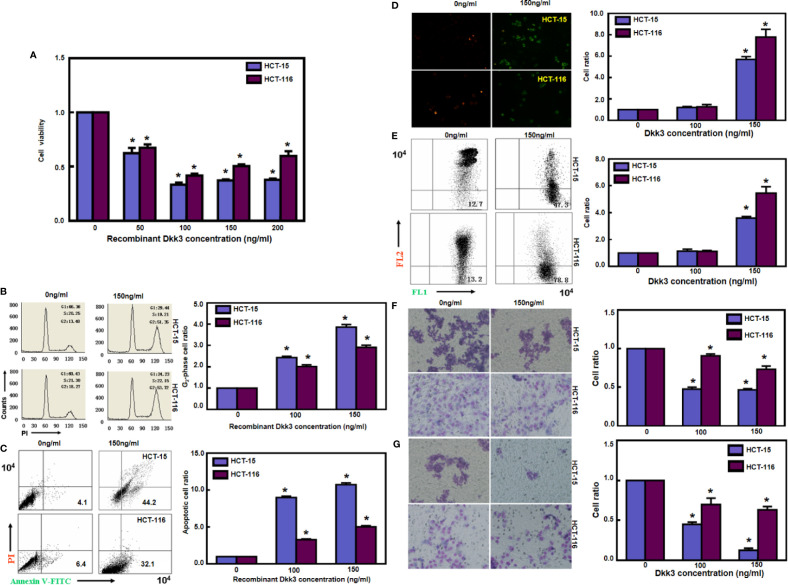
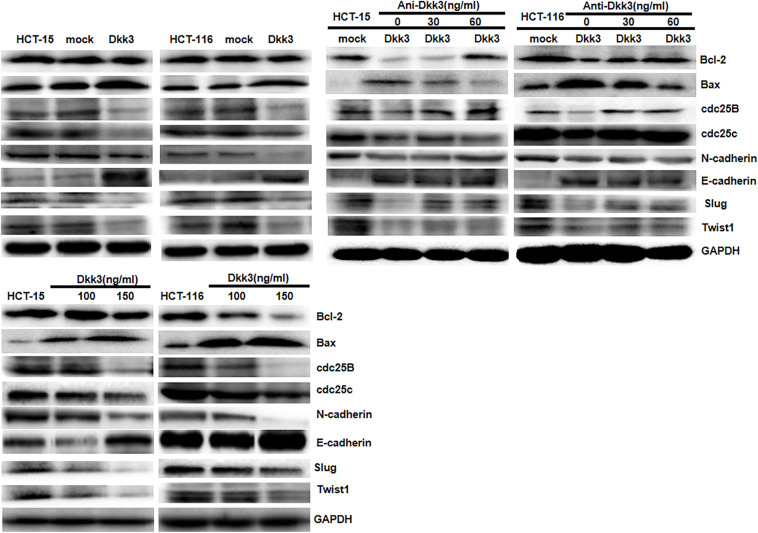
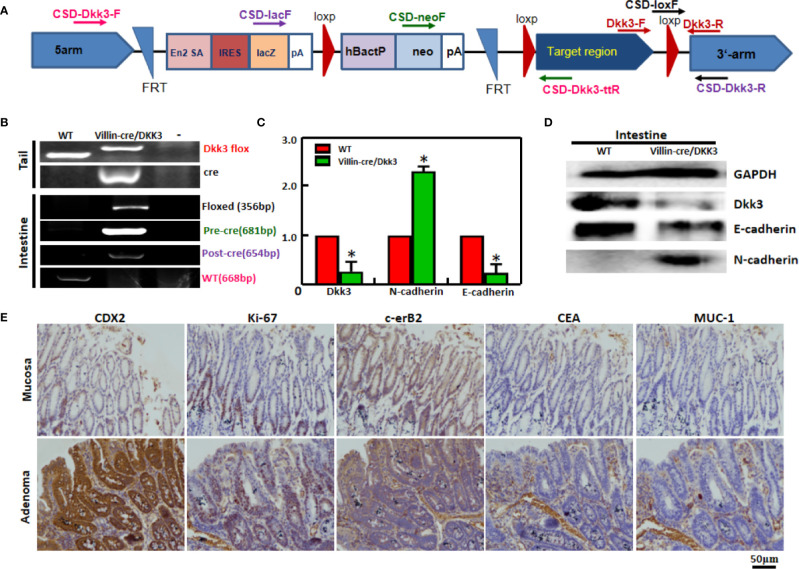
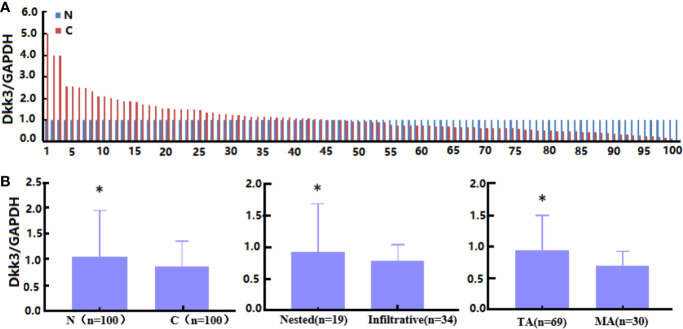
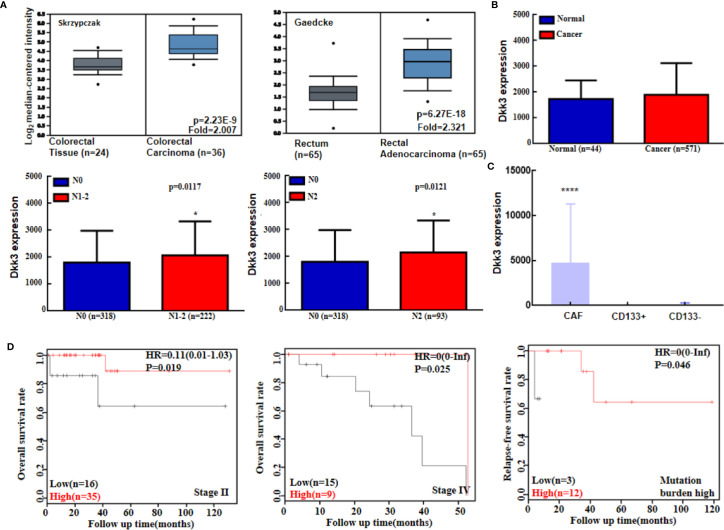
Dkk3 has been discovered during comparison of immortalized and parental cells. Its expression has been shown to reduce colony formation and induce apoptosis of cancer cells, acting as a tumor suppressor. Herein, we demonstrate that Dkk3 overexpression or protein treatment may inhibit colorectal cancer cell proliferation, migration, and invasion and that they may promote apoptosis and G phase arrest with hypoexpression of Bcl-2, cdc25B, cdc25c, N-cadherin, slug, and twist and hyperexpression of Bax and E-cadherin. This effect is consistent with that of recombinant Dkk3 exposure and blocked with anti-Dkk3 antibody. Dkk3 deletion in intestinal cells was not associated with the emergence of epithelial lesions; however, adenoma emerged after sodium desoxycholate treatment. At both mRNA and protein levels, Dkk3 expression was higher in normal than in cancer tissues (<0.05). mRNA expression was negatively associated with its promoter methylation, growth pattern, differentiation, and favorable prognosis in the patients with colorectal cancer (<0.05). -related signal pathways in colorectal cancer included those of cellular adhesion and migration, melanogenesis, chemokine, Hedgehog, JAK-STAT, TOLL-like receptor, TGF-β, MAPK, and calcium signaling (<0.05). These findings indicate that Dkk3 expression levels can help assess cancer aggressiveness and patient prognosis. It might also suppress aggressive phenotypes and tumorigenesis as a molecular target in gene therapy.
Dkk3是在永生化细胞与亲代细胞的比较过程中被发现的。其表达已被证明可减少癌细胞的集落形成并诱导其凋亡,起到肿瘤抑制因子的作用。在此,我们证明Dkk3的过表达或蛋白处理可能抑制结肠直肠癌细胞的增殖、迁移和侵袭,并且它们可能通过Bcl-2、cdc25B、cdc25c、N-钙黏蛋白、slug和twist的低表达以及Bax和E-钙黏蛋白的高表达来促进细胞凋亡和G期阻滞。这种作用与重组Dkk3暴露的作用一致,并被抗Dkk3抗体阻断。肠道细胞中的Dkk3缺失与上皮病变的出现无关;然而,脱氧胆酸钠处理后出现了腺瘤。在mRNA和蛋白水平上,正常组织中的Dkk3表达均高于癌组织(<0.05)。在结直肠癌患者中,mRNA表达与其启动子甲基化、生长模式、分化及良好预后呈负相关(<0.05)。结直肠癌中与Dkk3相关的信号通路包括细胞黏附与迁移、黑素生成、趋化因子、Hedgehog、JAK-STAT、Toll样受体、TGF-β、MAPK和钙信号通路(<0.05)。这些发现表明,Dkk3表达水平有助于评估癌症的侵袭性和患者预后。它也可能作为基因治疗中的分子靶点抑制侵袭性表型和肿瘤发生。